WHAT IS CHORIORETINITIS?: Chorioretinitis Symptoms&Causes&Treatment&Prevention&Diagnosis
Chorioretinitis
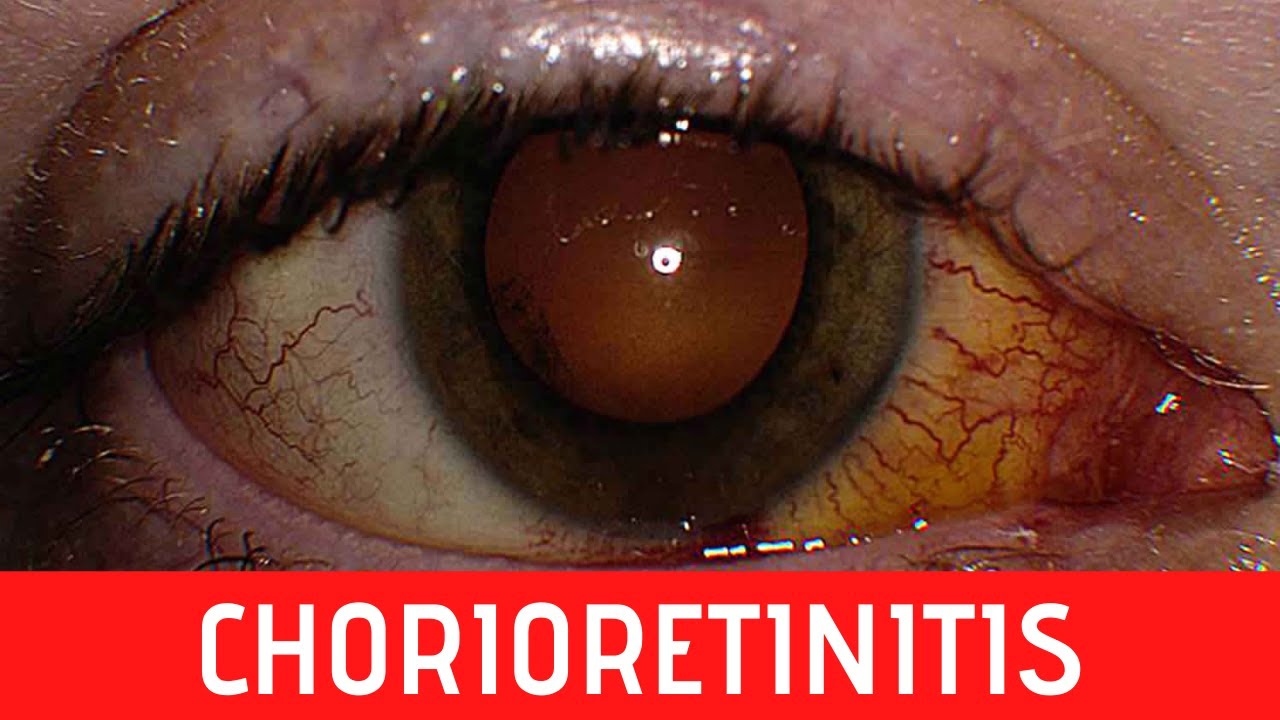
Chorioretinitis is a type of uveitis involving the posterior segment of the eye, which includes inflammation of the choroid and the retina of the eye.
Chorioretinitis may be caused by infection or by autoimmune diseases.
It is sometimes caused by an infection that you had when you were young, although the symptoms may not appear for 10 to 20 years.
Factors that may increase your chance of getting Chorioretinitis:
Weak immune status
Exposure to pets, raw or undercooked meat, or contaminated water
Rheumatoid arthritis
Sarcoidosis
Syphilis
Tuberculosis
Congenital toxoplasmosis
Symptoms of Chorioretinitis
Pain or redness in the eye
Blurred vision, or seeing floating objects in your vision
Sensitivity to light or glare
Excessive tearing
Sensation of sparks or flashes of light
Impaired night vision
Impaired color vision
There are other conditions where these symptoms may present themselves that may not indicate chorioretinitis. Therefore, it is important to see an ophthalmologist immediately if you are experiencing any of these symptoms to get an accurate diagnosis to protect your vision and begin treatment if necessary.
To help reduce your chance of chorioretinitis:
Have regular eye exams, especially if there is eye pain or vision problems
Monitor and properly treat any autoimmune diseases.
EXTRA
Is Chorioretinitis curable?
Chorioretinitis is usually treated with a combination of corticosteroids and antibiotics. However, if there is an underlying cause such as HIV, specific therapy can be started as well.
How is Chorioretinitis diagnosed?
Histologic Findings
Chorioretinitis is usually diagnosed using ophthalmologic examination and not using histologic findings of the retina.
Granulomatous changes can be evident in biopsy samples of lymph nodes, liver, or spleen in histoplasmosis, sarcoidosis, and tuberculosis.
What is Chorioretinal inflammation?
This is an inflammatory and exudative condition of the choroid and the retina. When the choroid alone is involved it is called choroiditis. It may be congenital or acquired at any age - particularly in the immunocompromised where it may be the ocular manifestation of severe systemic disease.
Does TB affect eyes?
TB affects the lungs in 80% of patients, while in the remaining 20% the disease may affect other organs, including the eye, in which the choroid has one of the highest oxygen tension in the body.
Can you go blind from uveitis?
Uveitis can be serious and lead to permanent vision loss. That is why it is important to diagnose and treat uveitis as early as possible, ideally before irreversible damage has occurred. Uveitis causes about 30,000 new cases of blindness each year in the United States.
What is congenital toxoplasmosis?
Congenital toxoplasmosis is a group of symptoms that occur when an unborn baby (fetus) is infected with the parasite Toxoplasma gondii.
What is Choroiditis?
Chorioretinitis is an inflammation of the choroid, which is a lining of the retina deep in the eye. This inflammation can affect vision.
What is Chorioretinal inflammation?
This is an inflammatory and exudative condition of the choroid and the retina. When the choroid alone is involved it is called choroiditis. It may be congenital or acquired at any age - particularly in the immunocompromised where it may be the ocular manifestation of severe systemic disease.
What is Chorioretinal degeneration?
Chorioretinal atrophy (CR) is the result of loss of the choriocapillaris, Retinal Pigment Epithelium (RPE), and the outer layers of the sensory retina. This may be due to loss of circulation from the choriocapillaris or from an inflammatory event. The result is a “window view” of the choroid and sometimes the sclera.
Toxoplasma chorioretinitis, more simply known as ocular toxoplasmosis, is possibly the most common cause of infections in the back of the eye (posterior segment) worldwide. The causitive agent is Toxoplasma gondii, and in the United States, most cases are acquired congenitally.
What causes scars on the retina?
People can develop retinal scarring from severe myopia, ocular histoplasmosis syndrome, and wet age-related macular degeneration (AMD). Scarring results from inflammation, caused by irritation of the retina. Severe occurences can cause swelling of the retina, wrinkling of the surface tissue, or even retinal detachment.
Can toxoplasmosis cause eye problems?
Toxoplasmosis is a disease that results from infection with the parasite Toxoplasma gondii. In the eye, Toxoplasma infections frequently cause significant inflammation and subsequent scarring which may temporarily or permanently impair vision.
How long does toxoplasmosis stay in your body?
How long does toxoplasmosis last? Symptoms of an acute episode of toxoplasmosis, if any, are usually gone in about 7 days. Cysts remain in the body for life.

Информация по комментариям в разработке