More info at Jenn M Smith - AloeHoarder on facebook or aloehoarder.wordpress.com
Photos and info to go along with the reel I posted, since I didn’t want to put a wall of text in the caption (likely wouldn’t have all fit anyway.) I have more examples of these things in my photo albums.
1. Sunburn…caused by being moved too quickly into more sun than they were used to. Not a sign they don’t like direct sun..it’s the lack of acclimation they don’t like, not the sun itself. Slowly increase the amount of light a plant gets, especially if you are moving an indoor plant outdoors. Causes bleached scarring. “I moved my Aloe outside into the sun and it died!” Yeah, because you didn’t acclimate it. Not because they don’t like direct sun.
2. Stress colors. Not usually a big deal, but they tend to freak people out and are often mistaken for sunburn. They are not even always sun related, either…they are caused by change in the environment. Moving a plant into more light can cause it, but it will go away once the plant acclimates! Thirst and cooler temps can cause it, as well as separating or repotting. Just repotted a pup and it turned brown? It’s adjusting to being on its own. Stress colors are not harmful…don’t let the plant stay stressed (like the thirst example photo) but don’t panic just because it changed color. Green doesn’t always equal healthy, and a little bit of stress color every now and then is much healthier than etiolation.
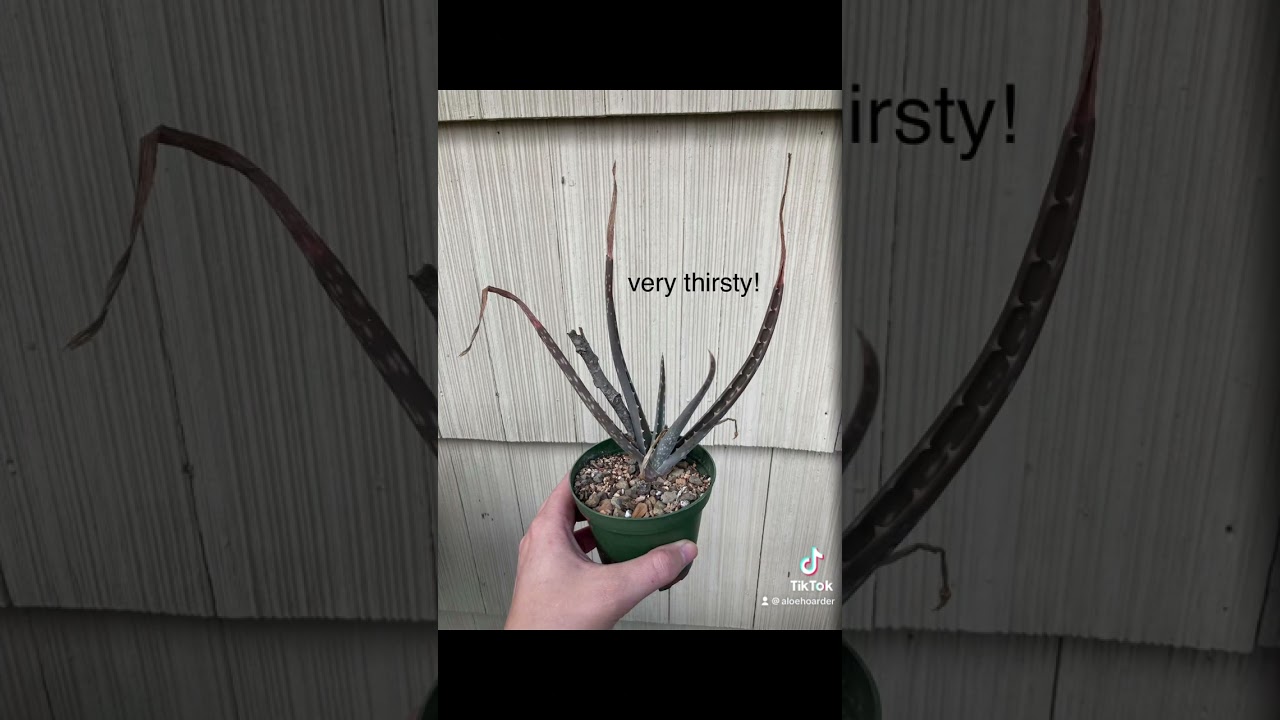
3. Thirst. This pic shows a fairly extreme example, that pup got shoved in the back of the greenhouse and forgotten about. Signs of thirst are when the leaves start to thin and curl in at the sides, start to have discolored leaf tips (and then crispy leaf tips), and the stress colors along with the other signs. Under and overwatering can both cause this…so if a good drench doesn’t bring any signs of improvement, it’d be a good idea to unpot, check the roots and evaluate your soil mix. Overwatering is watering too frequently, and can also be caused or made worse by poor draining/organic soil (and a weakened etiolated plant is more susceptible to overwatering.) Aloes like good drenches, infrequently, and to dry out quickly.
4. Etiolation. These are only a couple examples of what etiolation (or lack of adequate light) can look like, and it can kind of vary depending on variety or age of the plant. Typically for plain old Aloe vera (barbadensis), if your indoor plant is pale, laying flat out, or tall and top heavy with droopy leaves - it’s not getting enough sun. Some varieties do have leaves that lay more flat out (maculata, etc), but they should still be strong and kinda holding themselves out…not weakly laying flat or drooping down. Look for the new growth consistently becoming thinner and paler, or leaf characteristics like teeth, spots and texture becoming less apparent. Compare the older compact growth with newer thin, spaced out growth. The “chinensis” variety tends to stay in the juvenile distichous form when grown indoors (like the first etiolation picture example.) Look for photos of the variety you have growing outdoors..that should give you a good idea of what it should look like. The Agaveville forum has a good Aloe gallery, and I have more good sites or groups to check out in my pinned post.
5. Edema. Caused by too much water/poor drainage, or fluctuations in heat and humidity. Usually happens to my plants in the spring when we start getting warmer and more humid with the thunderstorms rolling through…one post I saw was because someone had their plant too close to a candle warmer. With too much water you might also see splits in the leaves. Edema can cause dried scars that look similar to sunburn.
6. Aloe mites. I’m gonna let Debra Lee Baldwin handle this one - https://debraleebaldwin.com/pests/how...
They are manageable, but how worth it to do so is up to you. Just gonna say, if you collect any amount of Aloes, you have or will run into Aloe mites. Especially if you have any of the complex hybrids, like the Star Aloe line from Altman Plants.
7. Rot. Again, too much water and/or poor drainage. Many of the issues caused by overwatering are made worse by lack of adequate light. This is why (maybe just IMO) it’s such common advice that Aloes prefer to be potbound…because keeping Aloes in tiny pots has given indoor growers that don’t provide adequate light or well draining soil better success in not killing their plants.
8. Fungal spots. Overwatering (too often and/or poor drainage), high humidity, lack of airflow. Some varieties seem to be more prone to fungus spots out in my yard. Thrips can cause damage that sometimes looks like fungus spots (the smaller dots, not the larger spots that dry up.)

Информация по комментариям в разработке