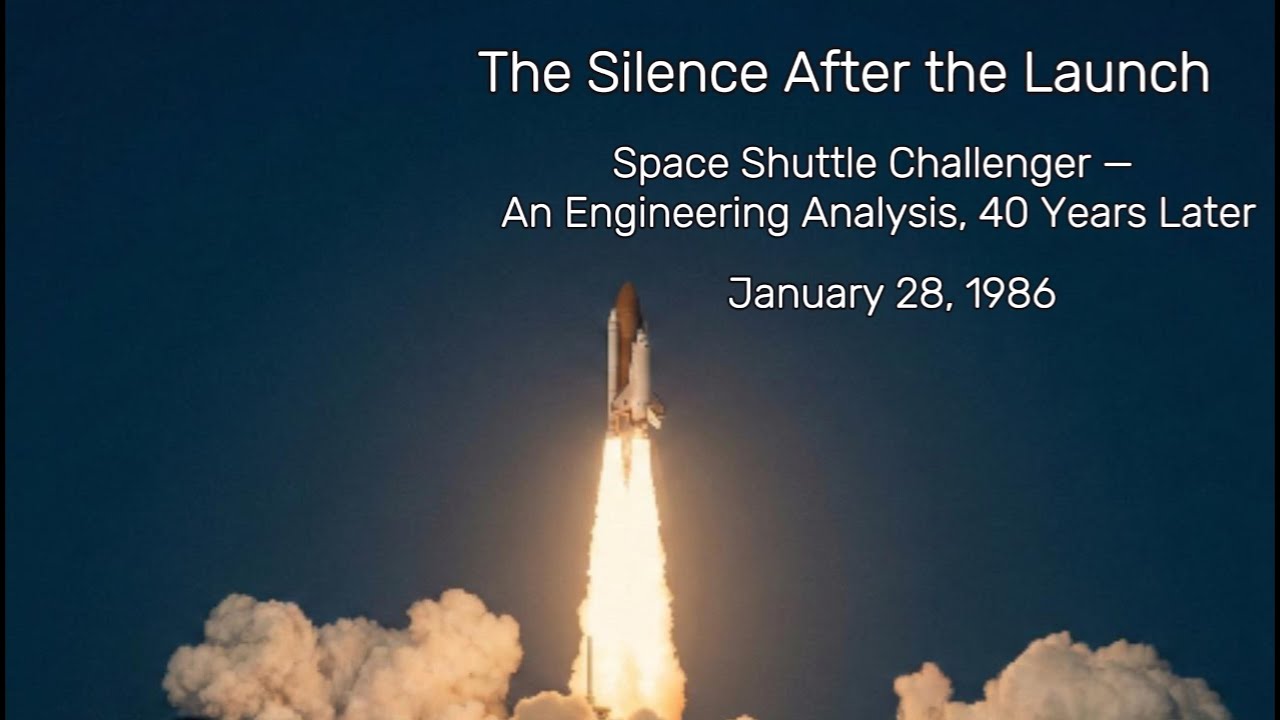
Forty years ago, on January 28, 1986, the Space Shuttle Challenger broke apart 73 seconds after launch, claiming the lives of seven brave crew members and forever changing how we approach spaceflight safety. This two-part documentary examines one of engineering's darkest days through dramatic retelling, personal memory, and technical analysis.
PART 1:
A dramatic retelling of the Challenger disaster as it unfolded, told through multiple perspectives—the crew preparing for launch, mission control tracking the ascent, families and students watching with pride, and a personal reflection from someone who witnessed the tragedy unfold on television as a 15-year-old student. We explore the excitement surrounding Christa McAuliffe's Teacher in Space mission, the frustrating delays leading up to launch day, the bitterly cold morning at Cape Canaveral, and the 73 seconds that ended in catastrophe.
This segment includes an authentic first-hand account of learning about the disaster in a school hallway, watching the footage loop endlessly on cafeteria TVs—a powerful reminder of how an entire generation experienced this tragedy in real-time.
PART 2:
A comprehensive technical and organizational analysis examining what went wrong, why it happened, and what changed as a result. We explain the O-ring failure mechanism in clear, accessible terms, explore the normalization of deviance that allowed known risks to persist, and discuss the reversal of burden of proof that prioritized schedule over safety.
Learn about the specific changes implemented after Challenger—redesigned solid rocket booster joints, restructured decision-making processes, enhanced oversight systems, and the lessons that continue to shape spaceflight today. We examine how these lessons apply beyond aerospace to medicine, aviation, civil engineering, and any field where safety depends on listening to technical expertise.
THE CREW REMEMBERED:
Commander Francis Richard Scobee, 46 - Air Force pilot, aerospace engineer
Pilot Michael John Smith, 40 - Navy aviator making his first spaceflight
Mission Specialist Judith Arlene Resnik, 36 - Electrical engineer, second American woman in space
Mission Specialist Ellison Shoji Onizuka, 39 - First Asian American in space
Mission Specialist Ronald Ervin McNair, 35 - MIT physicist who broke barriers
Payload Specialist Gregory Bruce Jarvis, 41 - Engineer who waited years for his chance
Teacher in Space Sharon Christa McAuliffe, 37 - "I touch the future. I teach."
DISCLAIMER: This channel is produced for educational and entertainment purposes only. The content presented is not professional engineering advice, technical consultation, or safety guidance. Engineering's Darkest Days examines historical events to understand what went wrong and what we learned—it should not be used as a reference for engineering decisions, design work, or safety protocols. For professional engineering guidance, always consult qualified, licensed engineers and follow current industry standards and regulations.
This video includes a personal first-hand reflection of witnessing the Challenger disaster as a 15-year-old student, providing an authentic perspective on how this tragedy impacted those who experienced it in real-time.
#Challenger #NASA #SpaceShuttle #EngineeringDisaster #ChristaMcAuliffe #SpaceExploration #EngineeringHistory #SafetyCulture #TrueCrime #Documentary
In memory of the crew of Space Shuttle Challenger - January 28, 1986
Their courage endures. They are not forgotten.

Информация по комментариям в разработке