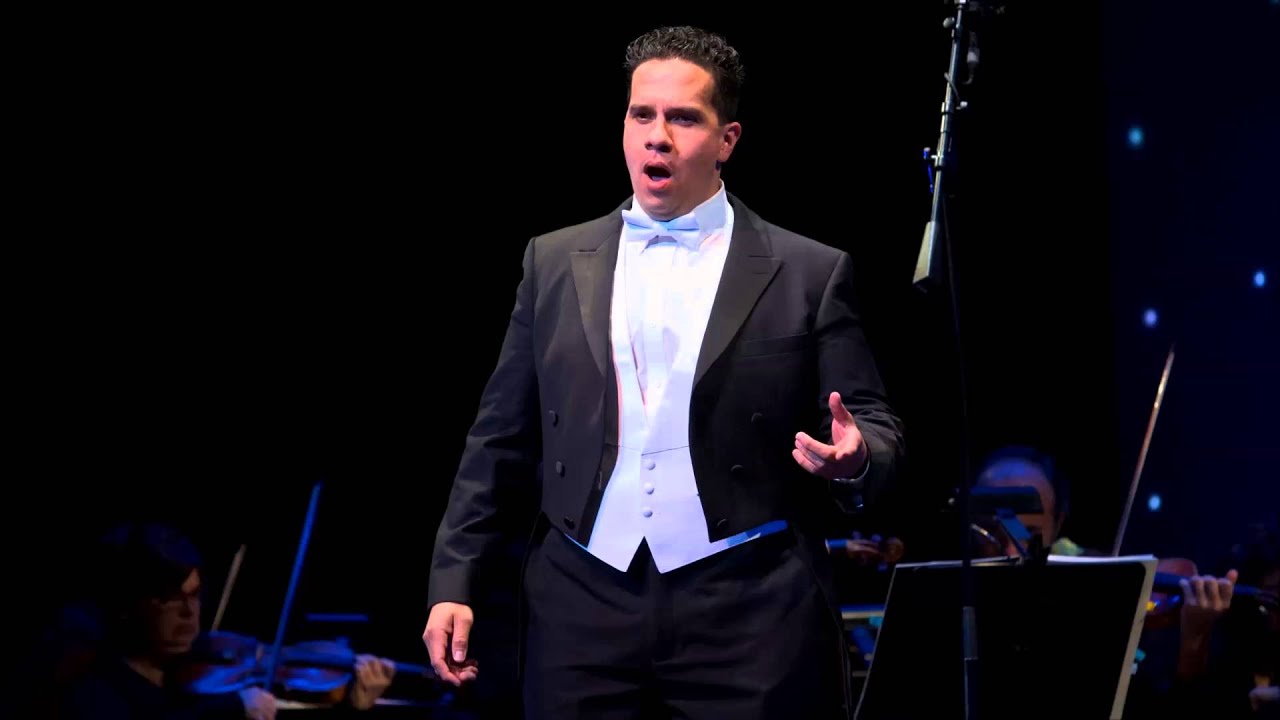
"Mis Amores" (Simon Madera) Fabian Robles, Tenor
Interpretada por:
Fabian Robles, Tenor
Julio Suarez - piano
Frank Torres - Violin
#FabianRoblesTenor
Subscribe to my Youtube Channel: / fabiantenor
Subscribe to Fabebook Page: / fabiantenor
*****
The "Danza" is the maximum artistic expression of the Puerto Rican culture. It is the musical form of the New World that most resembles European classical music. It is a form very rich in melodic and harmonic contents with a very deep character. Some are melancholic and romantic: with long phrases, rich harmonies and three or more clearly defined parts. Others are fast and lively: very short pieces of a playful character. Some are hard to classify in one or the other category, but all retain the essence that characterizes this musical from.
The first part, called the "paseo", usually consisted of 8 measures , and lacked a rhythmic base but served as a tonal introduction. The second part, which was called the "merengue" (which is the name of a delicious candy made of whipped egg whites and sugar) was extended from its original 16 measures to 34 in 1854 and up to 130 later on. Other parts began to appear and a new musical form began to take shape.
Apparently, the original danza was very unsophisticated and was rejected by some of the high class people of that time (but not by the youth), maybe due to the fact that couples could get very close together and could talk privately to their ears. This caused governor Juan de la Pezuela to emit a decree prohibiting it, but it didn't prevail. Some titles of those first "danzas" were: The tail of the pig; Oh, I want to eat pork chops, and others by the same style.
The form continued evolving until it was taken by the young pianist Manuel G. Tavarez, who just arrived from his studies in Paris, and took it to a new artistic level. His disciple, Juan Morel Campos took it from where he left it and developed it to its maximum expression, composing more than 300 danzas, most of them masterpieces of an exquisite beauty. The evolved danza was inspired mostly on women and love and their titles reflected that change: Margarita, "From your side to paradise", "Laura and Georgina" (one of the most exquisite and popular dedicated to the beautiful Capó sisters from Ponce), "My sorrows", etc.
***********
Simon Madera was born in Mayagüez, Puerto Rico on April 28, 1875. His father was his first music teacher and by the age of 12, he performed his first concert for which he had composed a waltz entitled `Juanita`. By age 16, he became the band leader for the Mayagüez Fireman's Band.
Madera was an excellent musician. He was well known for his ability in playing the violin and clarinet. His best and most popular composition is Mis Amores, a beautiful danza which he composed at age 18. In addition to danzas, he composed waltzes and works for chamber music.
Madera lived his last years in Guayama, city that received his best as a music teacher. He died there on August 18, 1957
*********
Simon Madera:
Nació en Mayagüez , Puerto Rico el 28 de abril de 1875. Su padre fue su primer maestro de música y ya a los 12 años de edad ofreció su primer concierto en Mayagüez y escribió su primera composición: un vals titulado "Juanita". A los 16 años ocupó el puesto de Director de la Banda de Bomberos de Mayagüez.
Don Simón fue compositor de música y excelente intrumentalista, sobre todo se distinguió en el manejo del violín y clarinete. Su mejor obra y pieza de más popularidad es su danza Mis Amores la cual compuso a los 18 años. Además de danzas, compuso valses y música de cámara.
Don Simón vivió sus últimos años en Guayama, ciudad que le le dedicó lo mejor de su espíritu y pedagogía musical. Falleció en dicha ciudad el 18 de Agosto de 1957.

Информация по комментариям в разработке