⚙️ 1. Selection of special alloy steel
• Made from high-strength alloy steel containing:
• Carbon (C): increases hardness.
• Manganese (Mn), Chromium (Cr), Molybdenum (Mo), Nickel (Ni): improve toughness, fatigue strength, and corrosion resistance.
• Common steel grades:
35CrMo, 40Cr, SCM435, 42CrMo4, 10B21, 10B38.
• The steel is melted and refined in an electric arc furnace (EAF) or induction furnace, ensuring high purity.
⸻
🔩 2. Rolling and drawing the steel rod
• After casting, the steel is hot-rolled into round bars (10–36 mm in diameter).
• Then it is cold-drawn to achieve precise dimensions and surface finish.
• The bars are tested mechanically (yield strength, tensile strength, elongation).
⸻
🧱 3. Bolt forming process
a. Cutting blanks:
• Automatic cutting machines cut the steel bar into pieces according to bolt length.
b. Head forging:
• Small bolts: formed by cold heading on multi-die machines.
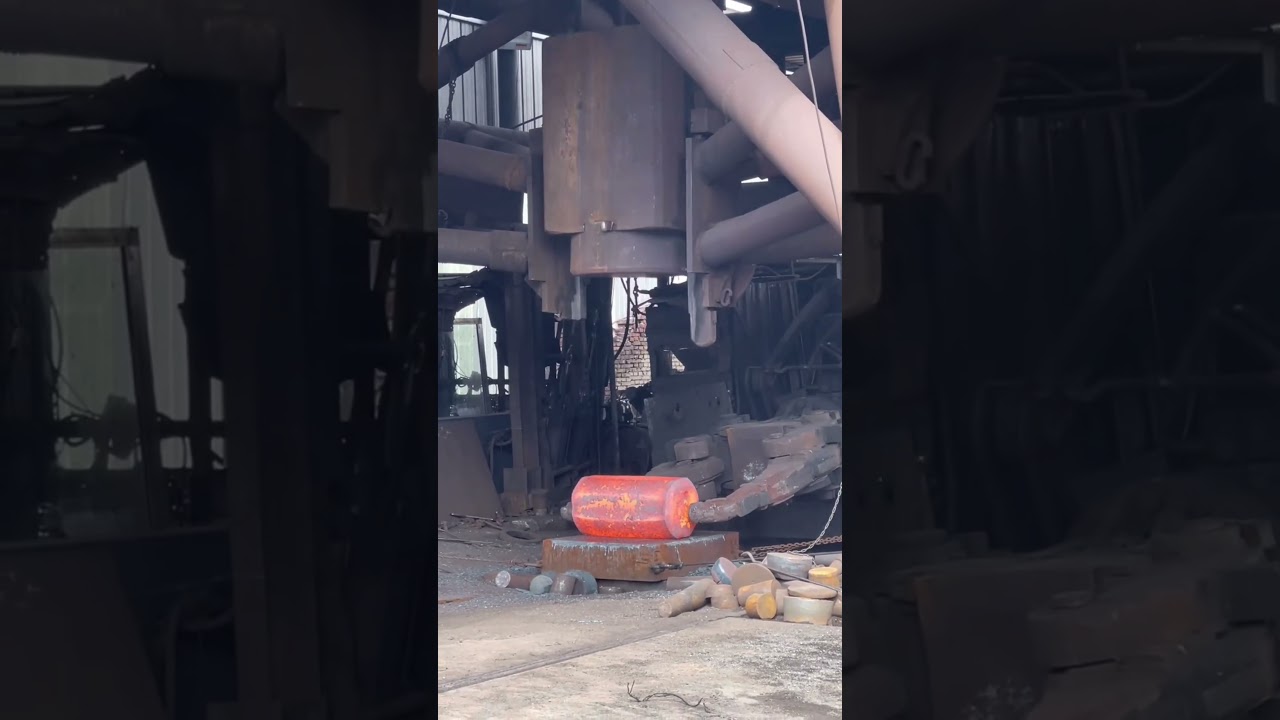
• Large bolts (M20 and above): formed by hot forging at 900–1000°C, then shaped in steel dies.
c. Thread rolling:
• Threads are made by rolling, not cutting — using thread rolling dies or rollers.
• This process compresses the metal surface, increasing tensile strength and fatigue resistance.
⸻
🔥 4. Heat treatment (the most critical stage)
Bolts are quenched and tempered to achieve strength grades such as 8.8, 10.9, or 12.9.
Process:
1. Quenching:
• Heat to 850–900°C → rapidly cool in oil or water.
• Refines the metal grain, increasing hardness.
2. Tempering:
• Reheat to 400–600°C, then cool slowly.
• Reduces brittleness and improves toughness and ductility.
👉 After this stage, bolts reach tensile strengths between 800 – 1200 MPa.
⸻
🧰 5. Surface finishing and coating
• Coated for corrosion resistance using hot-dip galvanizing, electroplating (zinc), or Dacromet coating.
• Dimensional inspection includes length, thread pitch, alignment, and surface hardness.
⸻
🧪 6. Quality inspection
• Each batch is tested for mechanical properties, torque–tension relationship, and coating thickness.
• Only bolts meeting international standards (ISO, ASTM, JIS) are certified as high-strength structural bolts.

Информация по комментариям в разработке