ABS in Bikes Explained | How Anti-Lock Braking System Saves Lives | Bike Safety Technology
📘 Description (Approx. 500 Words)
Have you ever wondered why modern bikes stop more safely than older models? The answer lies in one powerful safety technology — ABS (Anti-Lock Braking System). In this video/article, we break down ABS in bikes in a simple, practical, and real-world manner so that every rider can understand how it works, why it matters, and how it saves lives.
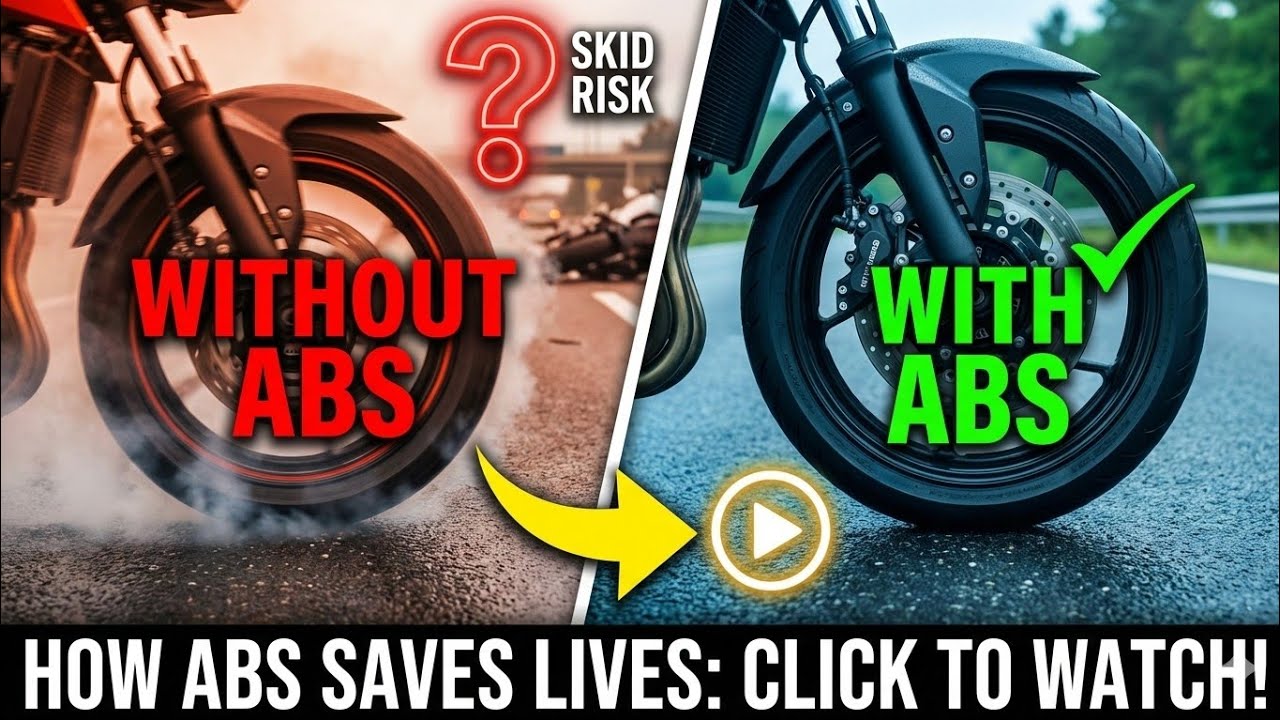
When a bike is braked suddenly, especially on wet roads, sand, gravel, or uneven surfaces, the wheels can lock. Once the wheel locks, the bike starts skidding, and the rider loses steering control. This is where ABS technology comes into action. ABS prevents wheel lock-up by rapidly modulating brake pressure, allowing the rider to maintain balance and directional control even during emergency braking.
In bikes, ABS works using three main components:
• Wheel speed sensors that continuously monitor wheel rotation
• Electronic Control Unit (ECU) that processes data in real time
• Hydraulic modulator that adjusts brake pressure instantly
Whenever the system detects that a wheel is about to lock, ABS automatically reduces braking force and reapplies it multiple times per second. This process happens so fast that it is almost impossible for a human rider to replicate manually.
One of the biggest advantages of ABS in bikes is reduced stopping distance on slippery roads. While ABS may not always give the shortest stopping distance on dry roads, it ensures maximum stability and control, which is far more important in real-world riding conditions. Studies and accident data clearly show that bikes equipped with ABS have significantly fewer fatal crashes.
In countries like India, ABS has become mandatory for bikes above 125cc, highlighting its importance in road safety. There are different types of ABS used in motorcycles, such as Single-Channel ABS, Dual-Channel ABS, and Cornering ABS, each offering varying levels of protection depending on riding conditions and bike category.
This content is especially useful for:
• New riders learning about bike safety
• Engineering students studying automotive systems
• Riders planning to buy a new motorcycle
• Anyone curious about modern vehicle technology
By understanding ABS, riders can ride with more confidence, better control, and improved safety awareness. Remember — speed thrills, but control saves lives. If you value your safety and want to become a smarter rider, learning about ABS is not optional, it’s essential.
👉 Subscribe for more science-based bike technology explanations, real-world engineering concepts, and practical safety knowledge.
🔖 Hashtags
#ABSInBikes
#AntiLockBrakingSystem
#BikeSafety
#MotorcycleABS
#RoadSafety
#TwoWheelerTechnology
#BikeEngineering
#AutomotiveTechnology
#SafeRiding
#BikeKnowledge
#MechanicalEngineering
#IndianRoads
#LearnWithScience
🏷️ Tags
ABS in bikes
anti lock braking system
motorcycle abs explained
how abs works in bikes
bike braking system
abs vs non abs bike
bike safety technology
two wheeler abs
motorcycle safety system
engineering explained abs
road safety bikes
modern bike technology
abs compulsory in india
mechanical engineering bikes

Информация по комментариям в разработке