Fall asleep while traveling through the entire observable universe, guided only by verified science and the quiet vastness of space. 🌌
This sleep story is built on real cosmology, astrophysics, and observational astronomy, narrated slowly to help your mind relax while your imagination drifts across billions of galaxies.
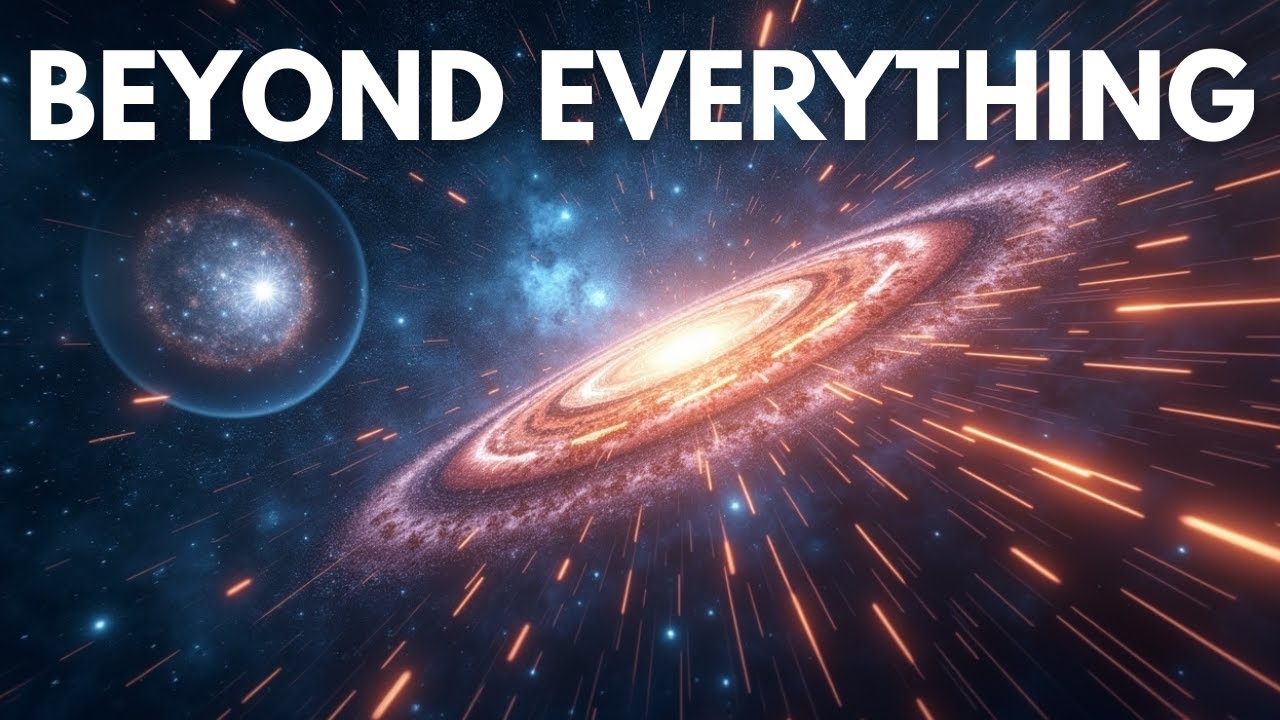
We begin in the Milky Way, a barred spiral galaxy approximately 100,000 light-years in diameter, containing an estimated 100–400 billion stars. Our Sun orbits the galactic center once every 225–250 million years, at a distance of about 26,000 light-years from the supermassive black hole Sagittarius A*, which has a mass of roughly 4 million Suns.
Leaving our galaxy, we pass through the Local Group, a gravitationally bound collection of over 50 known galaxies, dominated by the Milky Way and the Andromeda Galaxy (M31). Andromeda lies 2.5 million light-years away and is moving toward us at about 110 km/s, with a confirmed future merger expected in approximately 4–5 billion years.
Beyond the Local Group lies the Virgo Supercluster, a structure spanning more than 110 million light-years, containing thousands of galaxies. Our universe is organized into filaments, walls, and voids, forming what astronomers call the cosmic web, shaped primarily by dark matter, which makes up about 85% of all matter in the universe.
As we travel farther, we observe galaxies of many types — spiral, elliptical, and irregular — each evolving according to gravity, gas dynamics, star formation, and feedback from supermassive black holes. Some galaxies shine brightly with active star formation, while others are ancient and quiet, composed mostly of old stars formed billions of years ago.
The journey continues outward toward the edge of the observable universe, which has a radius of approximately 46.5 billion light-years. Although the universe is 13.8 billion years old, cosmic expansion causes distant regions to appear much farther away. Astronomers estimate that the observable universe contains over 2 trillion galaxies, based on deep-field observations from the Hubble Space Telescope and James Webb Space Telescope.
We also pass through eras of cosmic history — from the modern universe back toward the Cosmic Microwave Background, the faint radiation left over from 380,000 years after the Big Bang, when atoms first formed and light could finally travel freely through space.
Throughout this journey, there is no speculation — only what science has confirmed through observation, measurement, and theory. Every distance, structure, and phenomenon described is rooted in peer-reviewed astronomy and cosmology.
Let the immensity of space quiet your thoughts. Let the steady expansion of the universe slow your breathing. And as galaxies drift by at unimaginable distances, allow yourself to rest, knowing that even in its vastness, the universe follows elegant and measurable laws.
Perfect for deep sleep, night listening, relaxation, and learning while you sleep.

Информация по комментариям в разработке