"Nature’s quietest creatures hold profound value—observe, and you’ll uncover its secrets."
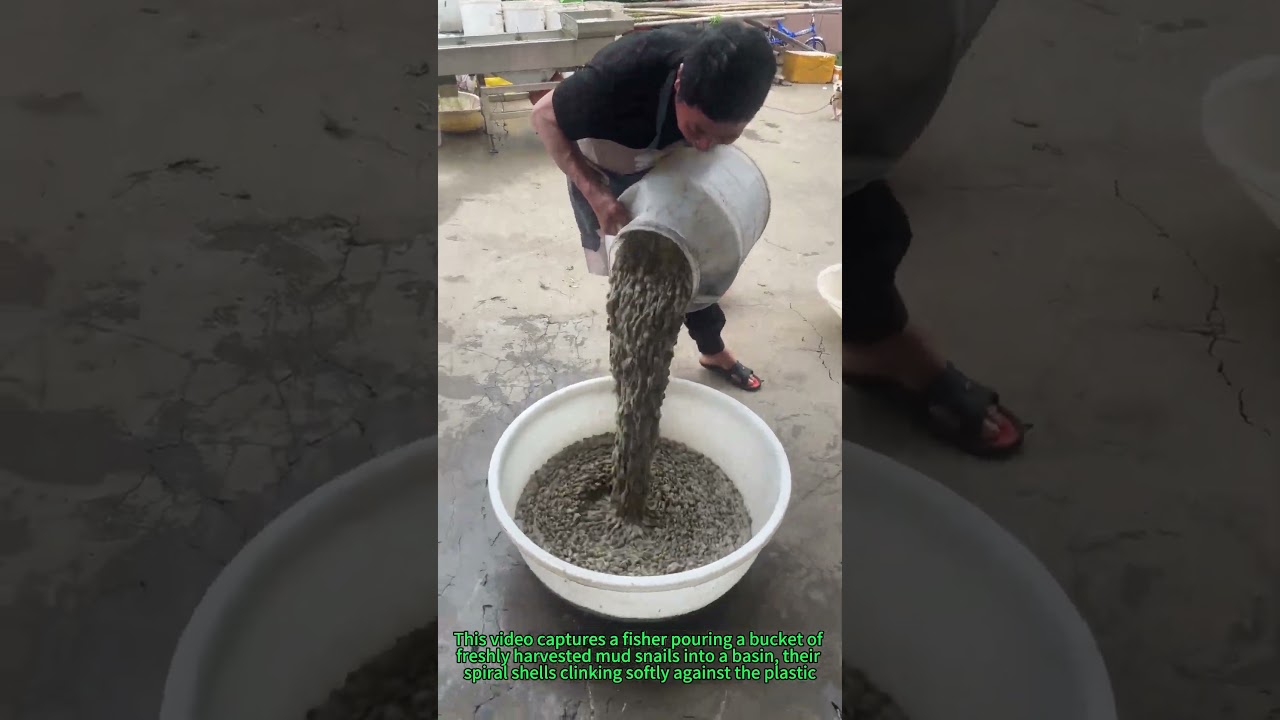
This video captures a fisher pouring a bucket of freshly harvested mud snails into a basin, their spiral shells clinking softly against the plastic. Mud snails (commonly Tylodina or Umbonium species) are small but remarkable marine gastropods, thriving in intertidal zones where mud and sand meet the sea. This simple act of transferring them from bucket to basin reveals their story: from hidden sediment dwellers to coastal culinary staples.
Characteristics of mud snails:
Mud snails are adapted to life in soft, oxygen-poor sediments. Their rounded, spiral shells (often 2-4cm in diameter) protect them from predators and drying out during low tide. A muscular "foot" (the soft, fleshy part we eat) allows them to burrow quickly into mud when disturbed, leaving only their siphon (a tube-like organ) exposed to filter plankton and organic debris from the water. They’re primarily nocturnal, emerging at night to feed, which helps them avoid daytime predators like crabs and birds.
Why they matter:
Beyond their role in the ecosystem, mud snails are a cornerstone of coastal livelihoods and cuisine.
Culinary value: Their tender, briny flesh is a delicacy in many coastal regions. When cooked (steamed, stir-fried, or pickled), they release a sweet, oceanic flavor, rich in protein, iron, and zinc—nutrients vital for local diets.
Economic impact: Small-scale fishers, often women or elders, harvest mud snails seasonally (dry seasons yield plumper, sweeter specimens). Selling them at local markets provides supplementary income, strengthening community resilience.
Ecological role: As filter feeders, mud snails clean water by consuming excess algae and organic matter, preventing sediment from becoming toxic. Their burrows also aerate the mud, supporting other bottom-dwelling organisms like clams and worms.
Key considerations for sustainable harvesting:
Avoid overharvesting: Only collect snails above 3cm (smaller ones are juvenile, crucial for repopulation). Leave behind egg masses (visible as white clusters on shells) to ensure future generations.
Protect habitats: Avoid trampling mudflats—disturbed sediment smothers clams, snails, and microorganisms. Use shallow nets or rakes instead of heavy tools to minimize damage.
Handle with care: Mud snails spoil quickly in warm water. After harvesting, rinse them gently in seawater to remove sand, then store in a container with damp seaweed (not freshwater, which kills them) to keep them alive until cooking.
This unassuming transfer from bucket to basin is more than a step in the harvest—it’s a testament to how small, intentional acts sustain both people and the planet. Mud snails, with their quiet adaptability, remind us that the sea’s greatest treasures often lie in plain sight, waiting to be cherished.

Информация по комментариям в разработке