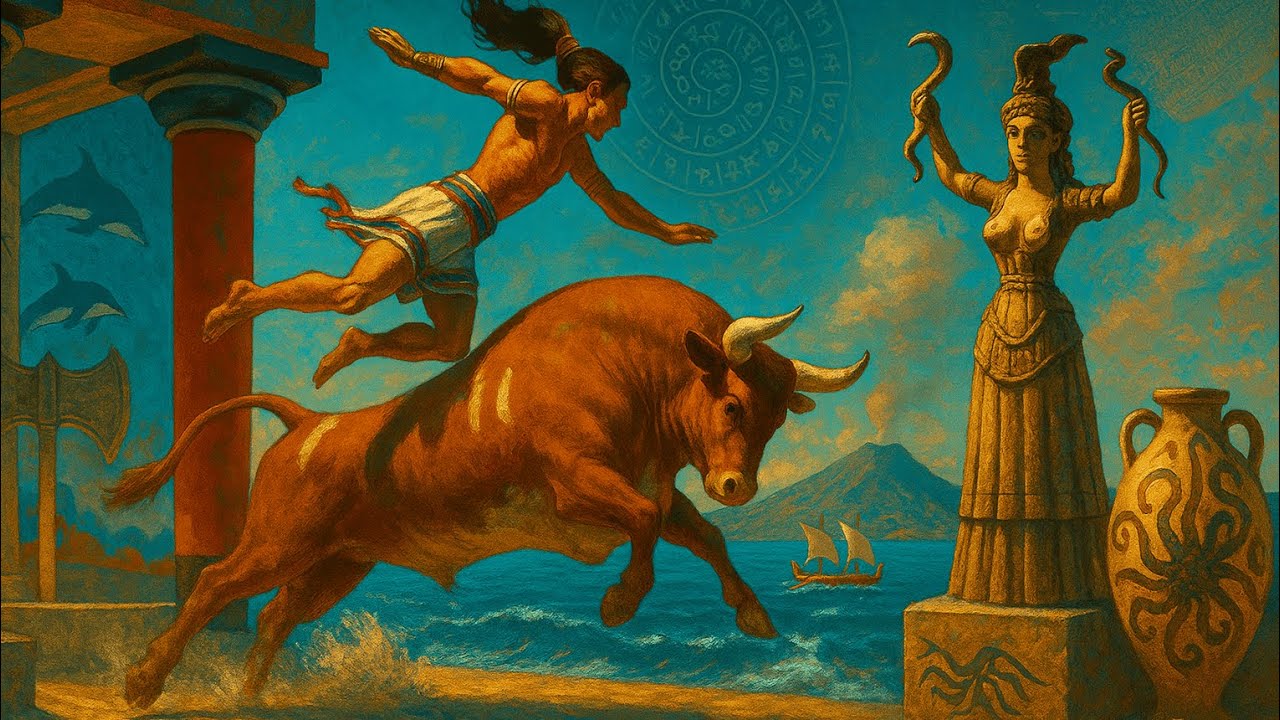
Dive into the world of the Minoans—Bronze Age Crete’s seafaring power—through a cinematic, evidence-based tour of palaces, peak sanctuaries, frescoes, and the mystery of Linear A. This episode walks the halls of Knossos, Phaistos, Malia, and Kato Zakros; crosses busy ports like Kommos, Mochlos, and Gournia; and follows artisans and priests at Palaikastro, Agia Triada, Amnissos, Arkalochori, and Kato Symi. See bull-leaping in the central court, the “Prince of the Lilies,” lustral basins and pillar crypts, kernos rings heavy with offerings, double-axe (labrys) shrines, snake-goddess figurines, octopus stirrup jars, dolphin frescoes, rhyta in the shapes of lions and bulls, and storage pithoi that fed a palace economy connected to Egypt, Cyprus, the Cyclades, and the Near East. Along the way, we spotlight the Phaistos Disk’s stamped symbols, Linear A tablets sealed by sudden fires, and hydraulic engineering at Knossos—terracotta pipes and graded drains that made Minoan palaces feel astonishingly modern.
What you’ll learn: who the Minoans were and why Crete became a maritime hub; how palatial centers functioned (courtyards, magazines, workshops, archives); what bull-leaping likely meant; why snake-goddess imagery, bees, and double axes dominate Minoan religion; how peak sanctuaries, pillar crypts, and lustral basins structured ritual; and how international trade moved copper, obsidian, ivory, papyrus, incense, and luxury goods across the Aegean. We trace contacts with Egypt (Keftiu ships, papyrus exchanges, blue monkeys in frescoes), Melos and Cyprus (obsidian and copper ingots), and the Cyclades (Phylakopi gifts), then follow the island’s crises—earthquakes, fires, possible Thera (Santorini) aftershocks, famine, and finally the Mycenaean takeover that overwrote dolphins and lilies with chariots and spears. From pithoi and wine presses at Vathypetro to archives burnt at Kato Zakros, from opium-poppy rites to healing votives at peak sanctuaries, this narrative shows a complex society rising, thriving, and fading into Greek myth as the Labyrinth itself becomes legend.
Minoan civilization explained, Knossos palace tour, Phaistos Disk mystery, Linear A decipherment status, bull-leaping fresco meaning, snake goddess figurines, labrys double axe, lustral basin, peak sanctuary, kernos stone, rhyton, octopus stirrup jar, Minoan frescoes, Minoan religion and rituals, Minoan trade with Egypt and Cyprus, Keftiu in Egyptian art, Melos obsidian, Thera/Santorini eruption timeline, Mycenaean conquest of Crete, Late Bronze Age collapse, Gournia town plan, Palaikastro Kouros context, Agia Triada sarcophagus, Arkalochori cave axes, Kato Zakros archives, Vathypetro wine press, Kommos harbor, Mochlos workshops, Amnissos dolphins, Gournia weavers and murex dye, Pseira seals, Phylakopi gifts.
Who it’s for: students and teachers searching “Minoan civilization documentary,” “Knossos explained,” “Linear A and Phaistos Disk,” “Bronze Age Crete,” “Minoan religion and art,” or “Mycenaean takeover of Crete”; history fans wanting a clear timeline that blends archaeology, art history, and myth. By the end you’ll be able to identify key sites and objects, understand how palaces coordinated economy and ritual, and place the end of Minoan Crete within the wider Aegean story—from flourishing sea trade to ruins where rain slowly erases the last bull-leapers from palace walls.

Информация по комментариям в разработке