Why I get the Big Bucks... | Margin Call (2011)
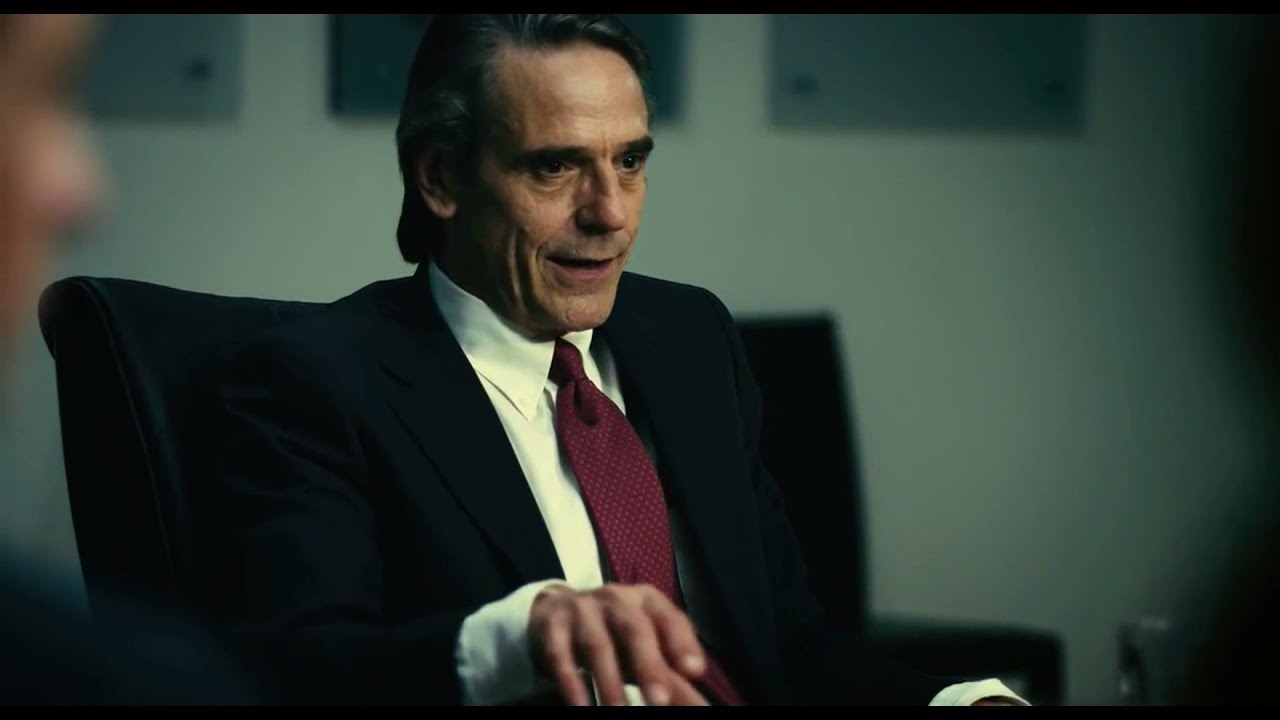
Sullivan's findings are accurate, and firm CEO John Tuld is called. Upon Tuld's arrival, after Sullivan explains the problem, Rogers, Cohen, and Tuld spar regarding a course of action. Cohen's strategy, favored by Tuld, is a fire sale of the problematic assets, but Rogers points out that this will have significant negative effects on the broader market, in addition to destroying the firm's present trading partnerships. Tuld counters that such effects are likely to occur in any case and stresses his desire to avoid bankruptcy regardless of the cost.
About the Movie:
In 2007 or 2008, an unnamed investment bank begins laying off a large number of employees. Among those affected is Eric Dale, head of risk management. Dale's attempts to speak about the implications of his current project are ignored, but he gives a flash drive containing his work to Peter Sullivan, a junior analyst in his department. Sullivan, intrigued, works late to complete Dale's model.
Sullivan discovers that the assumptions underpinning the firm's present risk profile are wrong; historical volatility levels in mortgage-backed securities are being exceeded, which means that the firm's position in those assets is overleveraged and a decline in their value large enough to cause the firm's bankruptcy could occur in the near future. Sullivan urges his colleague, Seth Bregman, to return to work with head of credit trading Will Emerson; Emerson in turn summons Sam Rogers, his boss, after reviewing Sullivan's findings. Attempts by the four to contact Dale end unsuccessfully, due to his company phone having been shut off.
A subsequent meeting of division head Jared Cohen, chief risk management officer Sarah Robertson, and other senior executives concludes that Sullivan's findings are accurate, and firm CEO John Tuld is called. Upon Tuld's arrival, after Sullivan explains the problem, Rogers, Cohen, and Tuld spar regarding a course of action. Cohen's strategy, favored by Tuld, is a fire sale of the problematic assets, but Rogers points out that this will have significant negative effects on the broader market, in addition to destroying the firm's present trading partnerships. Tuld counters that such effects are likely to occur in any case and stresses his desire to avoid bankruptcy regardless of the cost.
After the meeting with Tuld, Emerson is informed by Dale's wife that Dale has returned home. Emerson travels to Dale's residence with Bregman and attempts to persuade Dale to return to the firm for the fire sale, but is unsuccessful. During the drive back, Bregman asks if he will lose his job; Emerson responds that he likely will, but, philosophizing on the nature of the financial markets, tells him not to lose faith that his work is necessary. Tuld selects Robertson to act as a scapegoat for the firm's overleveraged position, even when Robertson argues that she warned Tuld and Cohen about the situation over a year ago. Meanwhile, Tuld's subordinates are able to coax Dale into cooperating, and he commiserates during the trading day with Robertson, his former superior.
Rogers, having been convinced by Tuld that a fire sale is best for the firm, informs his traders of their task as they arrive for the day. He acknowledges the damage likely to be done to their reputations and careers, but reveals that as compensation, massive cash bonuses will be disbursed if most of the traders' assigned assets are sold by day's end. As trading progresses, the firm elicits suspicion and eventually anger, and incurs steepening losses, but is ultimately able to close its position.
Subsequently, another large portion of Rogers's traders are laid off. Rogers, despite not himself being affected, is angry, and confronts Tuld demanding to quit. Tuld dismisses Rogers's view of the situation by recalling past economic crises, saying that such events are bound to happen and Rogers should not feel guilty for acting in his and the firm's interests. Tuld asks Rogers to stay on for two more years; Rogers accepts, but protests that he still disagrees with Tuld's outlook and only needs the money. Tuld also tells Sam that Sullivan's going to be promoted.
The film ends with Rogers burying his euthanized dog in his ex-wife's front yard during the night. His ex-wife, after emerging to speak with him, notes that their son's firm sustained heavy losses but resisted bankruptcy.
Cast:
Kevin Spacey as Sam Rogers, a senior manager on the trading floor, Will's boss, and indirectly Peter's and Seth's.
Zachary Quinto as Peter Sullivan, one of Eric's risk analysts, who first uncovers the crisis.
Jeremy Irons as John Tuld, the CEO of the firm, who is flown in to deal with the crisis.
Paul Bettany as Will Emerson, head of credit trading.
#marginCall #motivation
Disclaimer:
The copyrights are held by their respective owners and the revenue from this video goes directly to them.

Информация по комментариям в разработке