#hurricanefiona #disaster #extremeweather
Heavy rainfall, strong winds, and storm surge were reported on 24-25 September across eastern Canada’s regions of Nova Scotia, Prince Edward Island, Newfoundland, and Quebec.
• According to media reports, one person is missing in Channel-Port Aux Basques Town (southern coast of Newfoundland), which is one of the most affected areas. More than 200 people have been displaced, and about 4,000 individuals in Channel-Port Aux Basques have been in a state of emergency, as several houses and roads have been destroyed.
• Additional 160 residents in Halifax City (Nova Scotia) were moved to evacuated centres. Power outages affected about 95% of the population in Prince Edward Island, about 80% of the residents in Nova Scotia, and 3,600 households in Newfoundland.
• On 25 September, the European Commission's Copernicus Emergency Management Service has been activated in rapid mapping mode (EMSR635) to provide satellite maps.
• Driere conditions are expected over eastern Canada on 26-27 September.
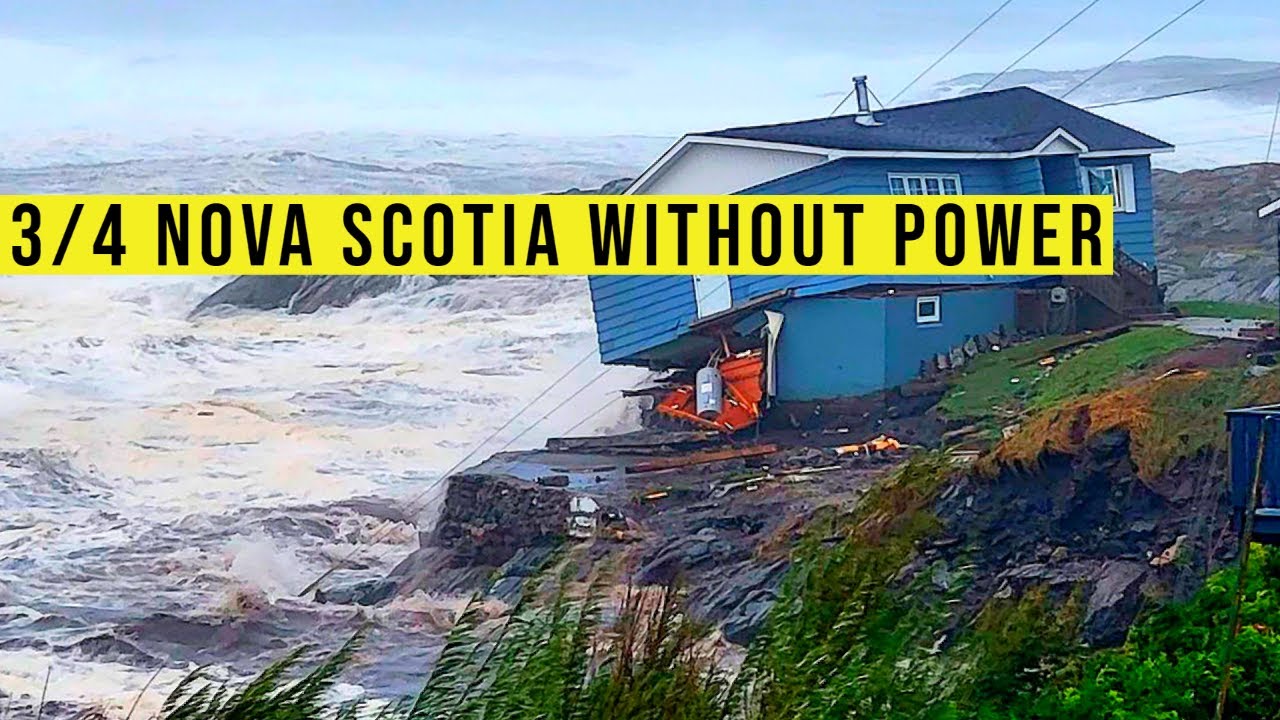
The storm named Fiona slammed into Canada’s eastern seaboard with hurricane-force winds and torrential rainfall Saturday, pulling buildings into the ocean, collapsing homes, toppling trees and knocking out power for hundreds of thousands of people.
Fiona first wreaked havoc in the Caribbean as a hurricane before moving up the Atlantic and making landfall again as a post-tropical cyclone. The storm ripped a path of destruction in Nova Scotia, New Brunswick, Prince Edward Island and Newfoundland before weakening and moving out to sea Sunday.
In Nova Scotia, where Fiona first made landfall. Powerful winds toppled trees and power lines, washed out roads, littered neighborhoods with debris, and in many cases, snapped whole power poles in half,
Officials are prioritizing power restoration after Fiona ravaged power lines and communication networks across the province,
One person in Newfoundland reportedly died in the storm. there haven’t been too many reports of serious injuries, though about 200 people are currently displaced from their homes.
Canadian Prime Minister Justin Trudeau said Saturday that the government approved Nova Scotia’s request for federal assistance and that Canadian Armed Forces will be deployed to help out in the region.
Several provinces were impacted by the heavy winds and rain, but none more than Nova Scotia.
Nearly three quarters of Nova Scotia lost electricity as Fiona pushed through. Peak wind gusts of 171 km/h (106 mph) were recorded in the province’s town of Arisaig Saturday. Meanwhile, Wreckhouse in Newfoundland saw 170 km/h (105 mph) gusts.
The Royal Canadian Mounted Police on Sunday recovered the body of a 73-year-old woman who had been washed out to sea the day before in Port aux Basques.
This is the first death attributed to Fiona in Canada. The storm claimed at least six other lives along its path – one in Guadeloupe, three in Puerto Rico and two in the Dominican Republic.

Информация по комментариям в разработке