Logo video2dn
  • Сохранить видео с ютуба
  • Категории
    • Музыка
    • Кино и Анимация
    • Автомобили
    • Животные
    • Спорт
    • Путешествия
    • Игры
    • Люди и Блоги
    • Юмор
    • Развлечения
    • Новости и Политика
    • Howto и Стиль
    • Diy своими руками
    • Образование
    • Наука и Технологии
    • Некоммерческие Организации
  • О сайте

Скачать или смотреть Pacific Transitions from La Niña to Neutral Phase

  • Meteo Times (TMT)
  • 2011-06-09
  • 442
Pacific Transitions from La Niña to Neutral Phase
LaNinaNeutralOceanTemperatureNoaaPacific
  • ok logo

Скачать Pacific Transitions from La Niña to Neutral Phase бесплатно в качестве 4к (2к / 1080p)

У нас вы можете скачать бесплатно Pacific Transitions from La Niña to Neutral Phase или посмотреть видео с ютуба в максимальном доступном качестве.

Для скачивания выберите вариант из формы ниже:

  • Информация по загрузке:

Cкачать музыку Pacific Transitions from La Niña to Neutral Phase бесплатно в формате MP3:

Если иконки загрузки не отобразились, ПОЖАЛУЙСТА, НАЖМИТЕ ЗДЕСЬ или обновите страницу
Если у вас возникли трудности с загрузкой, пожалуйста, свяжитесь с нами по контактам, указанным в нижней части страницы.
Спасибо за использование сервиса video2dn.com

Описание к видео Pacific Transitions from La Niña to Neutral Phase

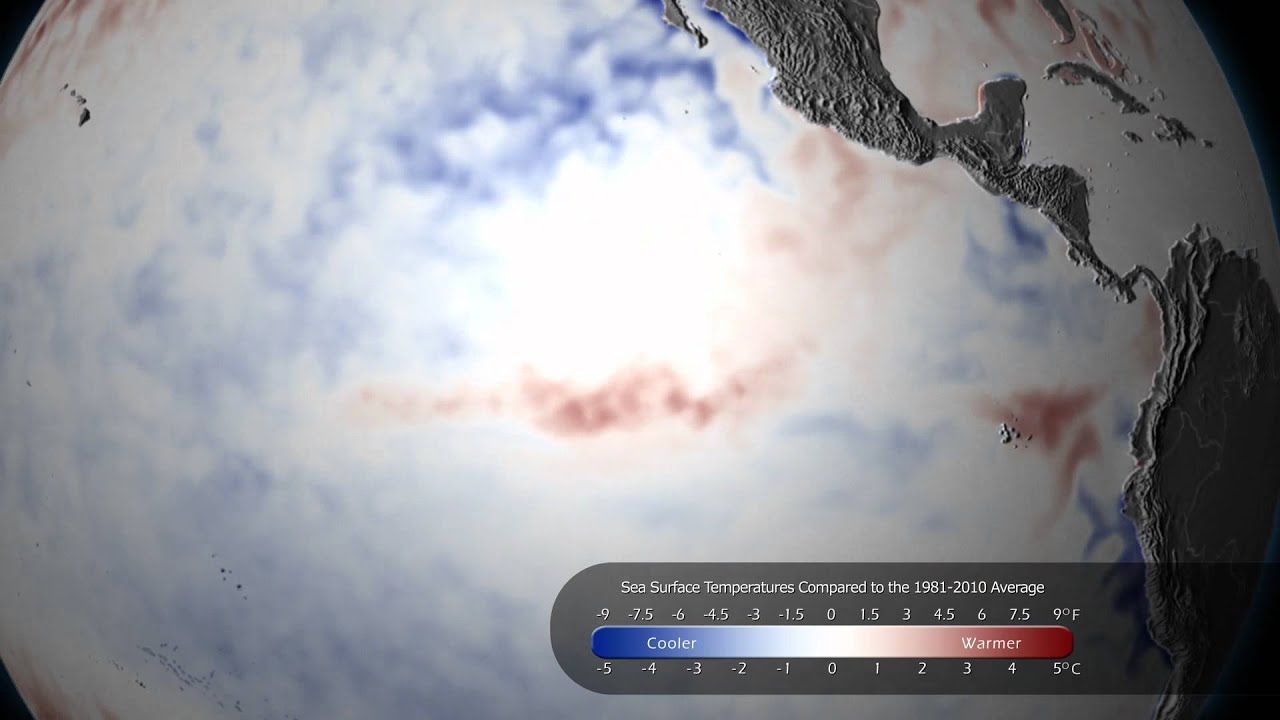
The Pacific basin undergoes a natural warming and cooling cycle every few years, called the El Niño-Southern Oscillation, or ENSO. Changes from the warmer than normal (El Niño) to cooler than normal (La Niña) phases affect seasonal weather patterns across the globe, especially in coastal Pacific areas where wind and rainfall patterns are greatly altered. Recent analysis by NOAA has shown that as of May 2011, the Pacific transitioned from La Niña to a neutral phase. How quickly the Pacific transitions from neutral to El Niño remains to be seen. However, an area of warmer than normal temperatures can be seen in sea surface temperature anomaly (SSTa) data, an indication of an emerging El Niño. SSTa shows areas that are cooler or warmer than normal, and is one of the primary datasets used by scientists to assess ENSO.

This animation starts on March 1, 2011 and runs until June 7, 2011, showing the daily SSTa imagery generated from the NOAA Optimum Interpolation SST product, which uses a variety of satellite and buoy observations. Note how the equatorial regions transition from blue to white and then red colors as the spring progresses. SSTa data can be monitored in real-time by accessing the global imagery at http://www.nnvl.noaa.gov/DailyImage.p...|Sea+Surface+Temp+Anomaly.

Video and caption from NOAA http://www.noaa.gov/

Комментарии

Информация по комментариям в разработке

Похожие видео

  • О нас
  • Контакты
  • Отказ от ответственности - Disclaimer
  • Условия использования сайта - TOS
  • Политика конфиденциальности

video2dn Copyright © 2023 - 2025

Контакты для правообладателей [email protected]