António Carreira (c. 1510-c. 1589)
00:00 Avé Maria a Quatro
05:02 Quarto Tento a Quatro em Sol
Manuel Rodrigues Coelho
(c. 1555-1635)
10:36 Tento do 8° tom natural
Anonymous (from manuscript no. 1607, Loc.G.7, Biblioteca Municipal do Porto, “Libro de Obras de Orgão de P.P. Fr. Roque da Cóceição. 1695")
15:50 Meyo Registo de 3° tom
Pedro de Araújo (c.1610-c.1700)
21:59 Fantasia de 4° tom
Anonymous (from “Libro de Obras de Orgão de P.P. Fr. Roque da Coceição, 1695”)
31:34 Batalha Famoza
Fr. Jacinto do Sacramento (1712-?)
47:58 Sonata em Ré menor
José da Madre de Deus (18th c.)
52:04 Fuga em Ré menor
Carlos Seixas (1704-1742)
56:55 Sonata No. 1 em Dó maior
1:00:57 Sonata No. 8 em Dó maior
1:08:30 Sonata No. 22 em Lá menor
Producer & Recording engineer: Ralph Dopmeyer
Digital editing: Northeastern Digital Recordings, Dr. Toby Mountain
ORGAN SPECIFICATION
Flautado de 24
Flautado de 12
Outava Real
Flau de pa° da man esgr (bass)
Quinta Real
Dec. quinta y Dec. setima
Chejo de Registos
Corneta de 4 por ponto (treble)
Trompeta Real de man esqr (bass)
Clarim da man dreita (treble)
Vos Humana
Tanborhen
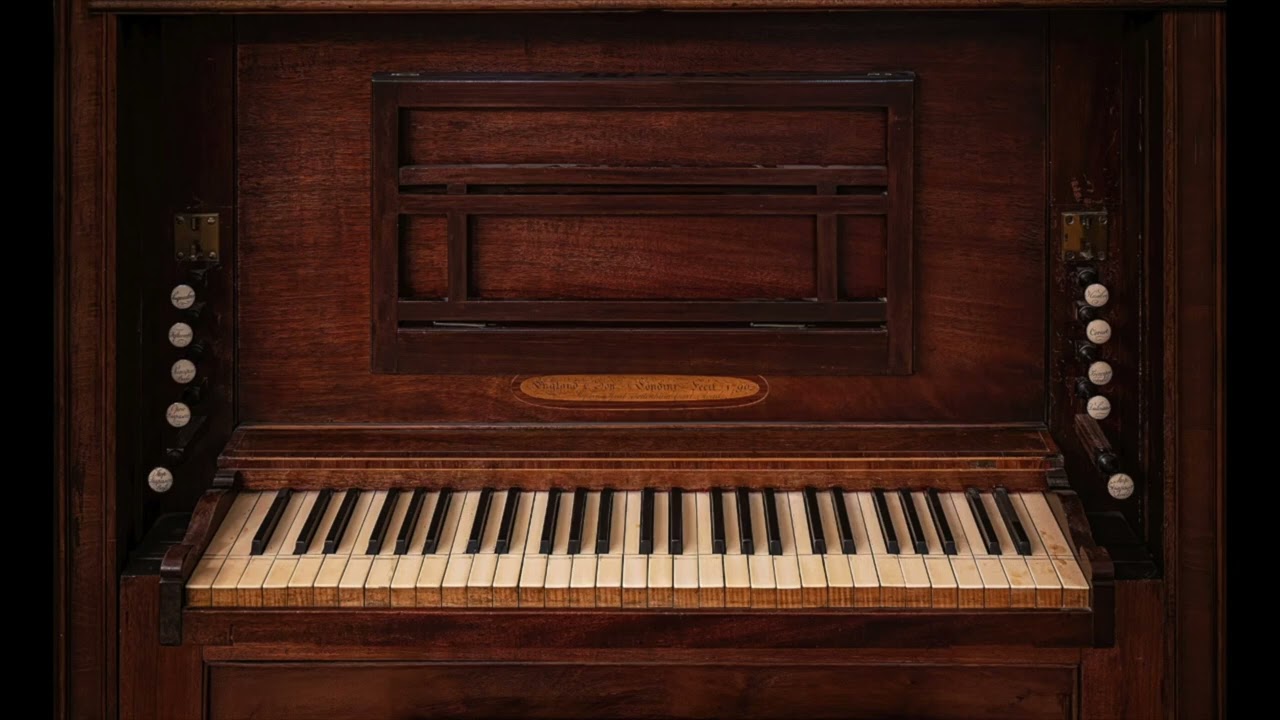
One keyboard, C/E - c'''
Pedal: C/E - A
Restored by Didericus Andreas Flentrop (1966-1967)
ABOUT THE ORGAN
In 1540 the Infante Cardinal Don Henrique, brother of King Don Juan III, took possession of the archbishopric of Evora. A great patron of the arts, he maintained the music chapel, which had been under the direction of Mateus de Aranda since 1528, and, among other things, he founded a College for choirboys structured as a boarding school with its own regulations and sufficient funds to guarantee its future.
Records show that in 1541 a Brother Paulo de Alcobaça was hired as organist to the cathedral, thereby verifying the existence of an instrument. From this date on the cathedral continued to maintain one or two organists who participated in the daily liturgical functions.
The first of January, 1544, an organ maker, Heitor Lobo, came into the service of the Infante Cardinal. This same maker had been hired from 1537 to 1540 to build and maintain the organs of the Oporto Cathedral.
At Easter of that year Heitor Lobo entered into the service of the cathedral of Evora, receiving an annual salary of thirteen thousand reis, while in Oporto he had been receiving just barely three thousand. During this period he was committed not only to repairing and tuning the organs, but also to doing the same for “the organs which have already been made or which are going to be made.” To insure the service which was asked of him, Don Henrique guaranteed a pension for life.
Heitor Lobo remained in Evora until 1553, a period of nine years. Probably because he considered his mission accomplished, he left Evora, and we find him next, in 1559, at the Monastery of Santa Cruz in Coimbra restoring the organs there. The competence with which he executed this task was highly praised by the Order’s chronicler.
Given the above facts, and having found no contradictory documents, we can safely affirm that Heitor Lobo was the constructor of the Evora organ.
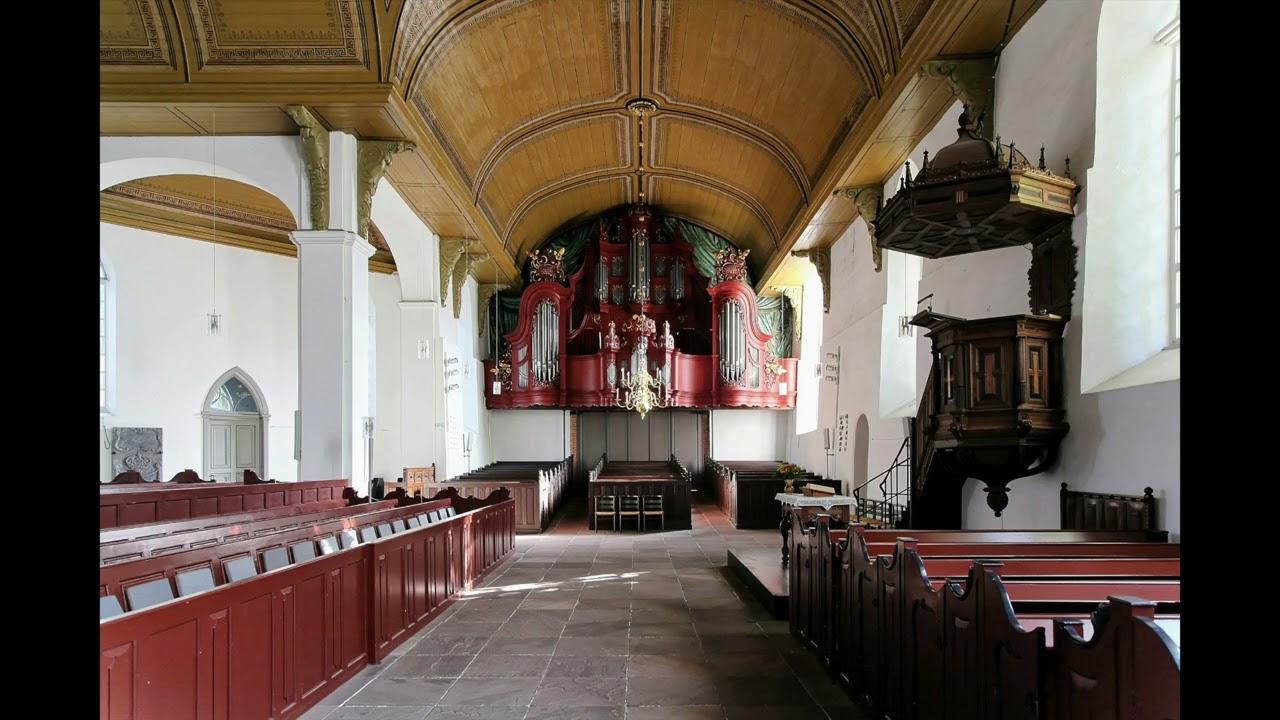
The date of 1562 is visible on the back of the instrument's case referring not to the organ itself but to its wooden casing. The year 1562 saw the completion, as is inscribed on the borders of a pilaster in the choir, of the construction of the monumental group of stalls in solid oak. Simultaneously, the case of the organ was incorporated into the remarkable work of the cabinet-makers and sculptors. Among the examples of this type of work preserved in Portugal, the choir and organ of Evora remain today rare vestiges of that era’s art and style.
According to the available documents, only two organ builders, Miguel Dias and Joaquim Maria Morte, restored the instrument, in 1670 and 1830 respectively, but without making any fundamental alterations.
Later, for practical reasons, preference was given to the 18th-century organ which was installed in the great chapel during the reign of Don Juan V, and the old organ of Heitor Lobo was reduced to silence. Thanks to the initiative of the department of music at the Calouste Gulbenkian Foundation in Lisbon, the organ was restored in 1968 by the Flentrop Workshop of Holland, bringing it back to life while maintaining a strict respect for the original materials whose secret is in the alloys used in the construction of the pipes.
— José Augusto Alegria (translation S. Brauchli)
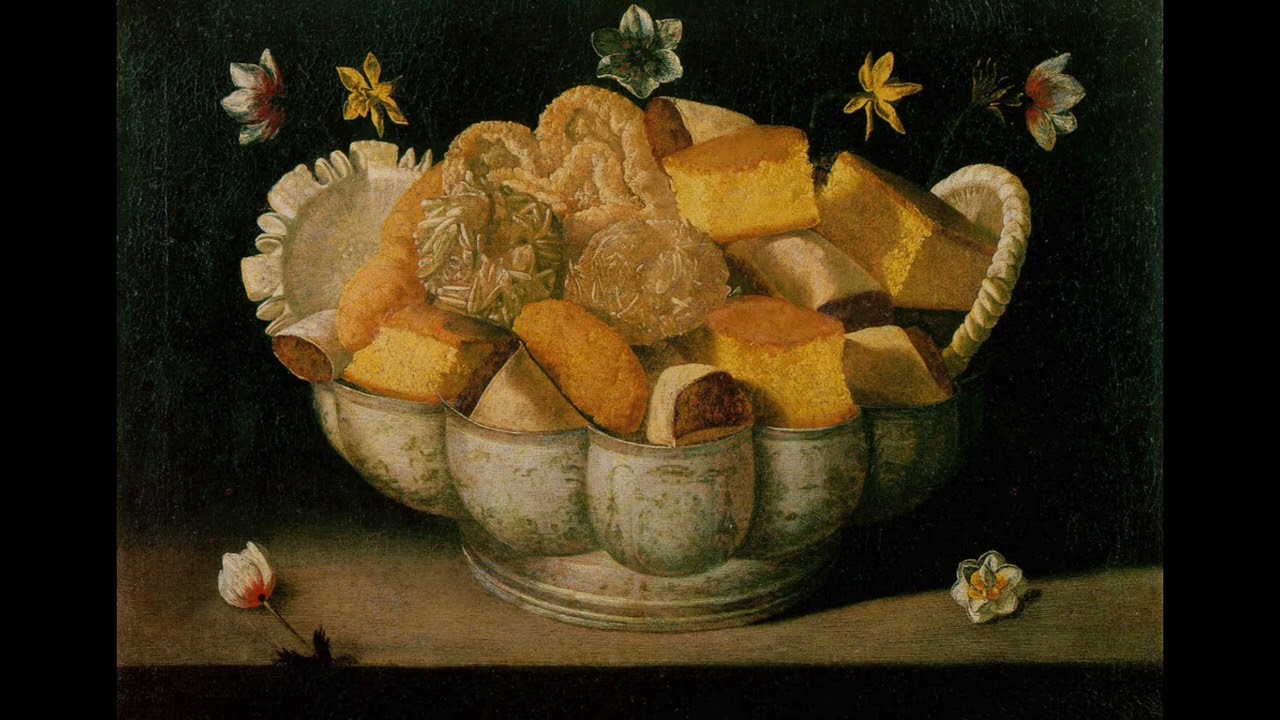
Josefa de Óbidos (1630–1684): Natureza morta com bolos (c. 1660-1670). National Museum Frei Manuel do Cenáculo, Évora, Portugal.











Информация по комментариям в разработке