The babirusas, also called deer-pigs (Indonesian: babi rusa[2]), are a genus, Babyrousa, in the swine family found in the Indonesian islands of Sulawesi, Togian, Sula and Buru.[3] All members of this genus were considered part of a single species until 2002, the babirusa, B. babyrussa, but following that was split into several species. This scientific name is restricted to the Buru babirusa from Buru and Sula, whereas the best-known species, the north Sulawesi babirusa, is named B. celebensis.[4] The remarkable "prehistoric" appearance of these mammals is largely due to the prominent upwards incurving canine tusks of the males, which pierce the flesh in the snout.
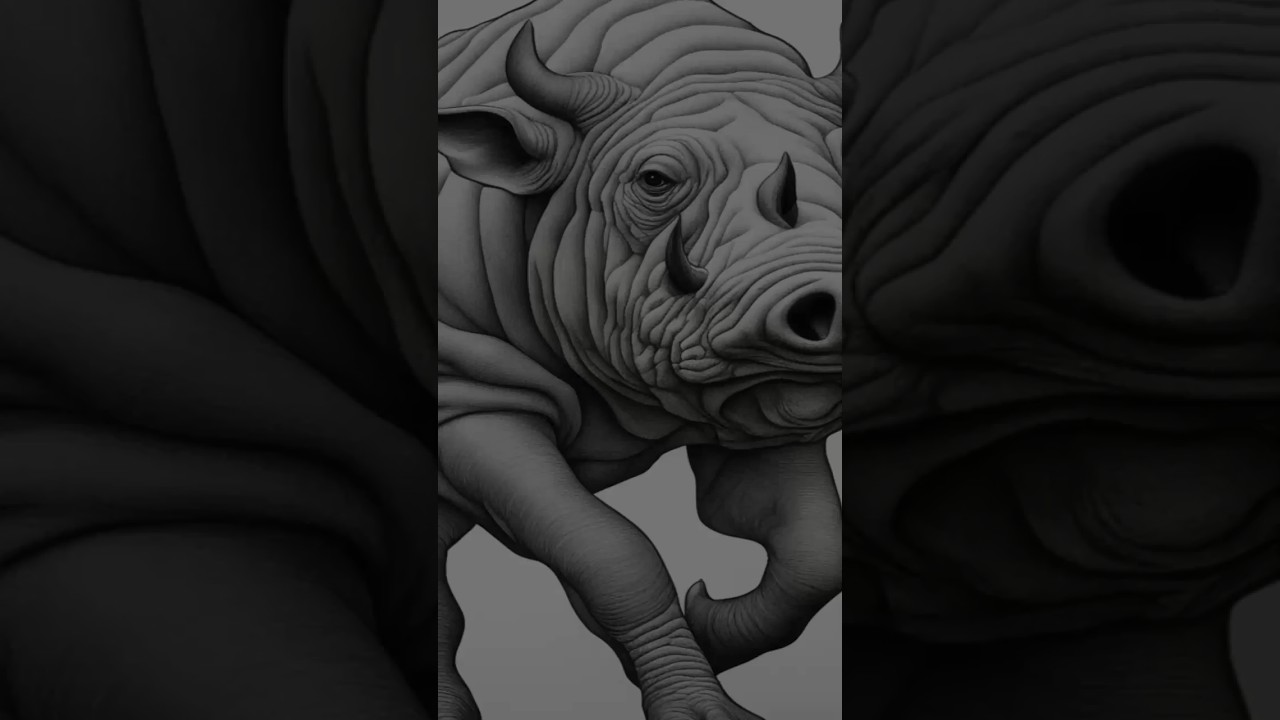
Babirusas are notable for the long upper canines in the males. The upper canines of males emerge vertically from the alveolar process, penetrating through the skin and curving backward over the front of the face and towards the forehead.[8][9] The lower canines also grow upwards. The canines of females are either reduced or absent.[8] The structure of the male's canines varies by species. In the golden babirusa, the upper canines are short and slender with the alveolar rotated forward to allow the lower canines to cross the lateral view.[8] The Togian babirusa also has the same characteristics and the upper canines always converge. The North Sulawesi babirusa has long and thick upper canines with a vertically implanted alveolar. This caused the upper canines to emerge vertically and not cross with the lower canines.
Babirusas also vary by species in other characteristics. The golden babirusa has a long, thick pelage that is white, creamy gold, black or gold overall, and black at the rump.[8] The pelage of the Togian babirusa is also long but not as that of the golden babirusa. The Togian babirusa has a tawny, brown, or black pelage that is darker on the upper parts than in the lower parts.[8] The North Sulawesi babirusa has very short hair and appears bald. The female babirusa has only one pair of teats.
Babirusas are native to Sulawesi, some of the Togian Islands, the Sula Islands, and Buru.[8] In Sulawesi, they range from the Minahasa Peninsula to the provinces of South Sulawesi and Southeast Sulawesi. Although they are present on both Sulawesi and Sula, they are not found on the large islands between the two, the Banggai Archipelago. It has been hypothesized that the unusual distribution may be due to their being transported by humans as gifts bestowed by native royalty.[12] The preferred habitat of babirusa is tropical rainforest along river banks.[8] It appears that they have been confined to the higher grounds in the interior despite occurring in lowland areas near coasts in the past.[8] They are active during the daytime. Like all pig species, babirusa has an omnivorous diet with an intestinal tract similar to that of the domestic pig.[13] The stomach diverticulum of a babirusa is enlarged which may indicate that it is a ruminant but evidence shows otherwise.[8] Because it does not have a rostral bone in the nose, a babirusa does not dig with its snout like other pigs do except in mud and swampy grounds. The diet of the babirusa includes leaves, roots, fruits and animal material. The strong jaws of a babirusa are capable of easily cracking hard nuts.[8]
Males tend to live solitarily while adult females can be found in groups with young.[14] Groups of females and young may number up to 84 individuals, most of which contain no adult males. Males rarely travel in pairs or trios. There are almost never more than three adult females in a group.The tusks of the adult males are used in intraspecific fighting. The upper tusks are for defense while the lower tusks are offensive weapons.If a male babirusa does not grind his tusks (achievable through regular activity), they can eventually keep growing rarely to penetrate the individual's skull.
Female babirusa cycle lengths are between 28 and 42 days and estrus last 2–3 days.[8] The litter size for a babirusa is usually one or two piglets.

Информация по комментариям в разработке