The Battle of the Bulge, December, 1944 - January 1945
https://amzn.to/4ne03pG
The Battle of the Bulge was Nazi Germany's final, desperate offensive on the Western Front—an audacious gamble launched through the Ardennes that tested Allied resolve, exposed logistical vulnerabilities, & ultimately hastened the Third Reich's collapse.
By December 1944, the Allies had liberated Paris & pushed Germany's army back to its own borders. Many were convinced that the war in Europe was nearing its end. Adolf Hitler, facing mounting pressure on both Eastern & Western fronts, decided to develop a bold counteroffensive. He envisioned a scenario in which German forces would split the Allied lines, recapture the port of Antwerp, and force a negotiated peace in the West, allowing Germany to concentrate on the Soviet advance in the East.
The chosen battlefield was the Ardennes—a densely forested region spanning Belgium, Luxembourg, and parts of Germany. Its rugged terrain & poor weather made it an unlikely site for a major attack, which is precisely why Hitler chose it. Allied forces had thinned their lines there, assuming it was a quiet sector. German planners moved over 200,000 troops, 1,000 tanks, and 1,900 artillery pieces into position under the cover of darkness.
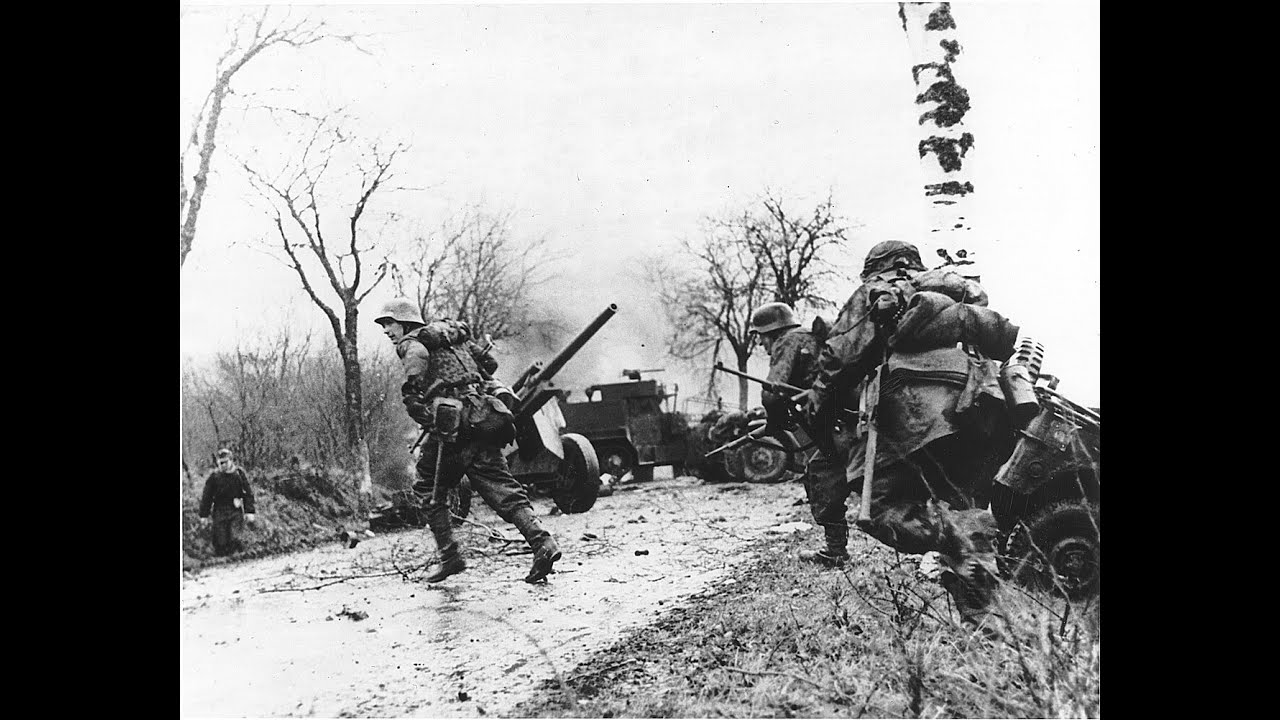
On December 16, at 5:30 a.m., German artillery began battering Allied positions throughout the Ardennes. Three German armies thrust forward, completely catching the Allies off guard.
The Germans achieved rapid gains, creating a pronounced "bulge" in the Allied front line—hence the battle's name. Their advance was spearheaded by elite Panzer divisions, including Kampfgruppe Peiper, notorious for its speed and ruthlessness. On December 17, Peiper's unit massacred over 80 American POWs near Malmedy, a war crime that galvanized Allied resistance.
One remarkable event that occurred during the Battle of the Bulge was the siege of Bastogne, a strategic town surrounded by the German army. The American 101st Airborne Division, along with elements of the 10th Armoured Division, held the city while under siege despite being outnumbered & undersupplied. When German commanders demanded surrender, Brig-Gen McAuliffe famously replied, "Nuts!"—a defiant gesture that became emblematic of American resolve.
The siege of Bastogne lasted until December 26, when General George S. Patton's Third Army broke through the German lines and relieved the defenders. Patton's rapid maneuvering—directing his army northward through the winter terrain. This was a logistical feat which helped shift the momentum of the battle.
Despite early gains, the German offensive began to falter. Fuel shortages crippled their mechanized units, & Allied air superiority resumed once the weather cleared. By early January, the Allies launched coordinated counterattacks from both north & south, gradually pinching off the bulge.
The terrain & weather remained brutal. Soldiers endured freezing temperatures, snowstorms, & limited visibility—casualties mounted on both sides. The U.S. Army suffered over 89,000 casualties, including 19,000 killed—its highest losses in any single battle of World War II.
German losses were similarly devastating. They expended irreplaceable reserves of men & materiel, including many of their last remaining tanks. The failure of the offensive marked the end of Germany's strategic initiative in the West.
By January 28, 1945, Allied forces managed to restore their lines & pushed the Germans back to their original starting point. The Battle of the Bulge lasted six weeks, involved over one million men, & significantly altered the war's trajectory. This battle caused the Allied advance into Germany to slow, but it did manage to accelerate the collapse of the Third Reich by depleting its last offensive capabilities.
Allied commanders had underestimated German capacity for surprise, & the initial lack of preparedness cost lives. Yet the resilience of American units—primarily in Bastogne and along the Elsenborn Ridge—demonstrated the importance of morale, improvisation, & decentralized leadership.
In postwar memory, the Battle of the Bulge became a symbol of grit and sacrifice. Veterans recalled the bitter cold, the chaos of forest fighting, and the camaraderie forged under fire. The battle has been depicted numerous times in a great many books, films, and documentaries, often focusing on its dramatic reversals and human cost.
The Battle of the Bulge was not just a military engagement—it was a psychological & symbolic turning point. Hitler's last gamble failed, & the Allies emerged bloodied but resolute. The battle's legacy endures as a testament to endurance, strategy, & the unpredictable nature of war.
Mesmerize by Kevin MacLeod is licensed under a Creative Commons Attribution 4.0 license. https://creativecommons.org/licenses/...
Source: http://incompetech.com/music/royalty-...
Artist: http://incompetech.com/

Информация по комментариям в разработке