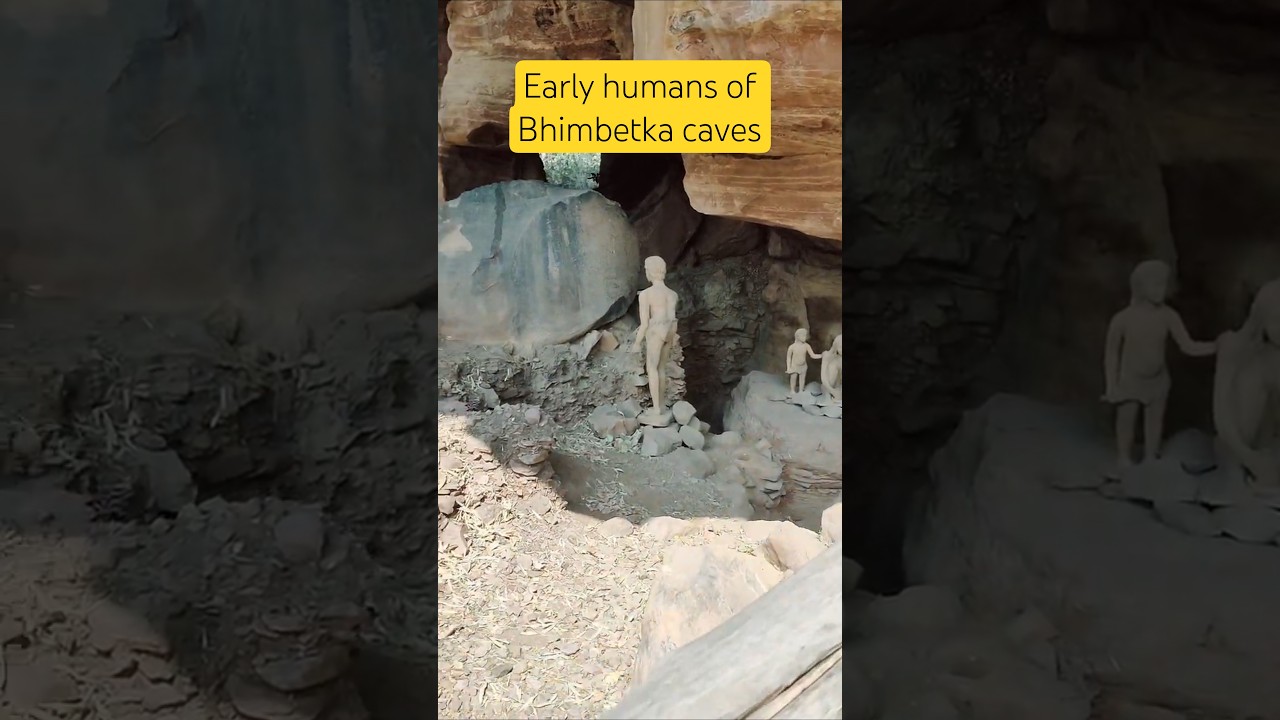
The Bhimbetka rock shelters, located in Madhya Pradesh, India, about 45 km southeast of Bhopal, are a UNESCO World Heritage Site renowned for their prehistoric rock paintings and archaeological significance. Discovered in 1957 by Dr. Vishnu Wakankar, these shelters date back to the Paleolithic and Mesolithic periods, with some evidence suggesting human activity as early as 100,000 years ago. The site comprises over 700 rock shelters spread across a 10 km area in the Vindhyan hills, of which around 400 contain paintings.
The rock art, primarily in red and white with occasional green and yellow, depicts scenes of daily life, hunting, dancing, rituals, and animals like bison, tigers, and elephants. These paintings span multiple periods, from the Upper Paleolithic (10,000–40,000 years ago) to the Medieval period, showing cultural evolution. For example, early paintings are linear and geometric, while later ones include narrative scenes and human figures with tools and weapons. The natural rock shelters, formed of sandstone, provided ideal surfaces for these artworks, preserved due to their sheltered locations.
Archaeological findings include stone tools, microliths, and evidence of habitation, indicating continuous human occupation for millennia. The shelters’ cultural sequence links prehistoric art to modern tribal traditions in the region. Bhimbetka is accessible to visitors, with 15 key shelters open to the public, offering a glimpse into India’s ancient past. The site remains a vital resource for studying human history and artistic expression.
Информация по комментариям в разработке