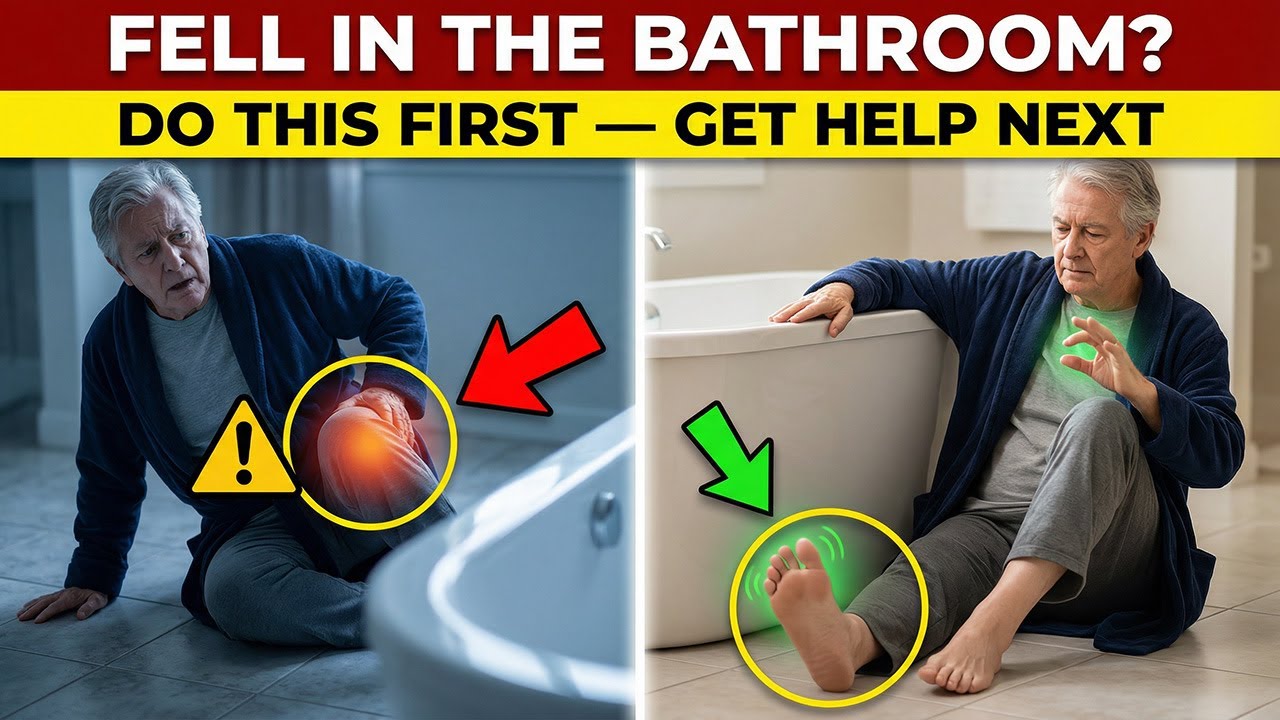
A bathroom fall can be life-threatening for anyone over 60, but what you do in the next few minutes can prevent serious injury, reduce complications, and save your life. In this video, you'll discover the exact step-by-step actions to take immediately after falling in the bathroom, how to safely get up, when to call 911, and critical warning signs you must never ignore.
Step 1: Stay Still and Assess (First 30-60 Seconds)
The absolute first action after falling is to remain completely still on the floor for at least 30-60 seconds while you breathe deeply and calm down. Do not try to get up immediately—rushing to stand can worsen hidden injuries like fractures, cause you to fall again if you're dizzy, or trigger a dangerous drop in blood pressure that leads to fainting. Take several slow, deep breaths to recover from the shock of the fall and allow your body and blood pressure to stabilize. Once you feel calmer, perform a mental head-to-toe check: wiggle your fingers and toes, bend your arms and legs slowly, turn your head side to side, and ask yourself if you feel pain anywhere. Look for visible injuries like bleeding, swelling, bruising, or bones that look deformed or out of place.
Step 2: Call for Help if You're Injured or Unsure
If you discover any of these warning signs during your assessment, do not attempt to move—call 911 immediately or press your personal emergency alert button if you have one. Call for emergency help if you experience severe pain in your head, neck, back, hip, or any limb; cannot move an arm or leg; see blood or open wounds; feel confused, dizzy, or disoriented; have difficulty speaking or breathing; lost consciousness even briefly; or if you simply feel that something is seriously wrong. Even if injuries seem minor, bathroom falls are especially dangerous because hard surfaces like tile, porcelain, and metal fixtures cause more severe head injuries and fractures than falls on carpet. If you're alone and can't reach a phone, try to drag yourself toward a phone, door, or window where you can call or signal for help.
Step 3: How to Safely Get Up (If Uninjured)
If you've assessed yourself and feel confident you're not seriously hurt, use this proven technique to get up safely without help. First, roll slowly onto your side—choose whichever side feels strongest and less painful, and rest in this position for a few moments to let your circulation adjust. Next, push yourself up onto your hands and knees using your arms for support, moving slowly and pausing if you feel dizzy or weak. Look around and crawl or scoot toward the sturdiest object you can reach—a heavy chair, the toilet, bathtub edge, or vanity cabinet. Once you reach the sturdy object, place both hands firmly on it for support and bring your strongest leg forward with your foot flat on the floor in a kneeling position. Slowly push up from the kneeling position using the object for leverage until you're standing, then immediately sit down on the toilet, bathtub edge, or a chair if someone can bring one. Rest in a seated position for several minutes before attempting to walk, as standing too quickly can cause orthostatic hypotension—a sudden drop in blood pressure that makes you dizzy and fall again.
Step 4: What to Do After Getting Up
Once you're safely seated and rested, take these critical next steps even if you feel fine. Call someone—a family member, neighbor, or friend—to let them know you fell and ask them to check on you or stay with you for a few hours in case delayed symptoms appear. Even minor-seeming falls require medical follow-up, so contact your primary care doctor within 24 hours to report the incident and schedule an evaluation—falls can cause internal injuries, concussions, or small fractures that aren't immediately obvious but worsen over hours or days.
Prevent Future Bathroom Falls
You'll discover essential bathroom modifications to prevent the next fall. Install grab bars near the toilet, inside and outside the shower or tub, using bars rated to support at least 250 pounds and mounted into wall studs, not just drywall. Place non-slip mats or adhesive strips on all wet surfaces including inside the tub, shower floor, and on the bathroom floor near the sink and toilet. Improve lighting by adding brighter bulbs, installing nightlights for safe nighttime bathroom visits, and using motion-sensor lights that turn on automatically. Remove tripping hazards like bath mats that slide, electrical cords, clutter, and raised thresholds.
Medical Disclaimer: This content is for educational purposes only. Always call 911 if you're seriously injured, can't get up, or feel uncertain about your condition after a fall. Even seemingly minor falls can cause life-threatening internal bleeding or fractures in older adults, especially if you take blood thinners. Seek immediate medical attention rather than waiting to see if symptoms improve.

Информация по комментариям в разработке