To listen to more of Raoul Coutard’s stories, go to the playlist: • Raoul Coutard - Family (1/179)
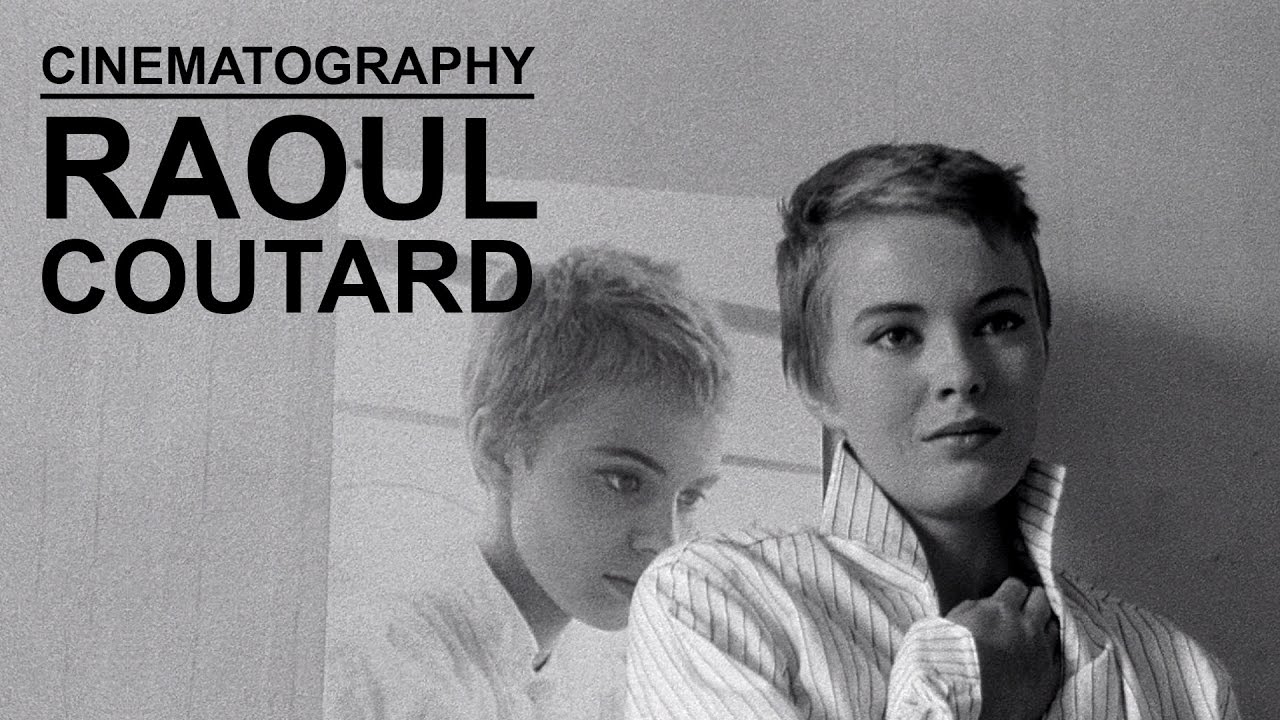
French cinematographer Raoul Coutard (1924-2016) was originally a war photographer. He made his debut as a director of photography in the film 'La Passe du Diable' and became a leading figure in French New Wave cinema. [Listener: Bernard Cohn; date recorded: 2004]
TRANSCRIPT: [BC] Is it true that some of the old school cinematographers of the old school didn't want to share their lighting tricks with anyone?
Lighting tricks I don't think so because lighting tricks anyone can... Well, there were secrets, if you like. And the secrets were... because we were working in black and white, so it's true that there's a secret that's... Because at the time there were no cells, but there was a system whereby the second assistant spent his life in the lab, developing the films, and he brought the different tests that we had done before filming the scene to the cinematographer, making sure that there were a lot of people around so that he could do his little number with the magnifying glass, saying, 'It's that one! That's the good one', etc. But no, since we were filming in black and white, there was indeed... At the time the cameras were most of the time either using a rackover device, like the Mitchell, meaning that there was parallax problem, or the cameramen did what is called a soft focus. Since there was no anti-halo on the black-and-white, we could see what was going on through the film very well, and in the same way as using a focusing screen when there's a vision filter, it enabled us to appreciate the shadows and the lights. But since we were filming in black-and-white; in black-and-white we use a lot of filters, because the filters are very interesting to use. Because after all, we need to remember that during this famous half century that preceded us, the cinema film, like the photography film, was sensitive to blue. It wasn't sensitive to red, so the sky obviously showed up in white, everything that was blue was light, and everything that was red was very dark. So the film manufacturers continued to do tests and afterwards they did what is called orthochromatic films, Ortho, which meant perfect, but actually it wasn't really perfect. Meaning that they had increased the sensitivity in the yellows and oranges, until later on when panchromatic films were created which are sensitive to everything, and particularly sensitive to red, which was missing.









Информация по комментариям в разработке