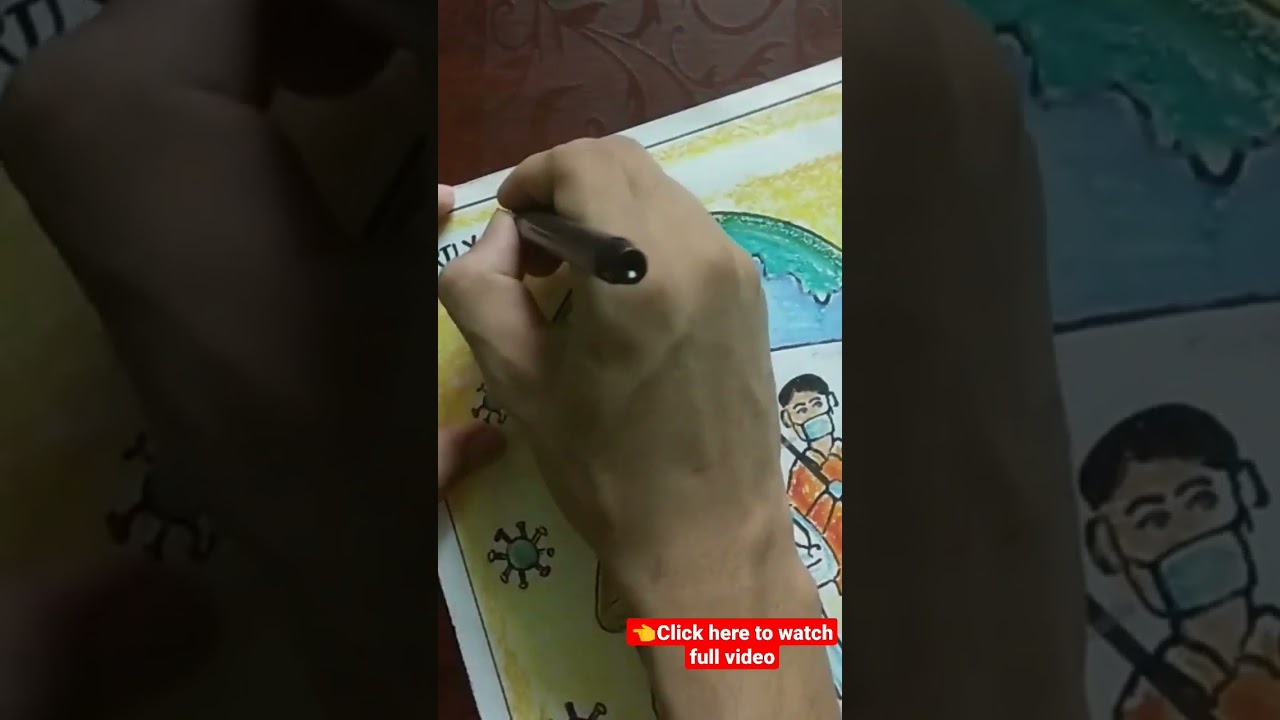
Coronavirus Poster Drawing with oil pastels | Heartly Thanks To CORONA Warriors | Creativity Drawing.
Hey Friends! Hope You All Are Doing Well.
This video is all about how to draw Coronavirus Poster Drawing with oil pastels.
Special Heartly THANKS to our Doctors, Police, Nurses, Ward boys, Cleaners 🙏 who are continuously fighting with the virus to keep us safe.
Material Used in this video :
1. Drawing Paper
2. Pencil
3. Sketch Pen
4. Oil Pastels
Hit the like button 👍, if you like my theme for Respecting Coronavirus Warriors.
Share among your friends and family.
Also Subscribe the Channel for more valuable contents. 😊
#coronavirusdrawing #COVID19 #stayhomestaysafedrawing
_________________________________________________
Information regarding Coronavirus :
The 2019–20 coronavirus pandemic is an ongoing pandemic of coronavirus disease 2019 (COVID‑19) caused by severe acute respiratory syndrome coronavirus 2 (SARS‑CoV‑2). The outbreak was identified in Wuhan, China, on November 17, 2019. The World Health Organization declared the outbreak a Public Health Emergency of International Concern on 30 January, and a pandemic on 11 March.As of 30 April 2020, more than 3.2 million cases of COVID-19 have been reported in 186 countries and territories, resulting in more than 228,000 deaths. More than 985,000 people have recovered.
The virus is primarily spread between people during close contact,often via small droplets produced by coughing, sneezing, or talking.The droplets usually fall to the ground or onto surfaces rather than remaining in the air over long distances.People may also become infected by touching a contaminated surface and then touching their face.Over time on surfaces, the amount of virus declines until it is insufficient to remain infectious, but it may be detected in a laboratory for hours or days. It is most contagious during the first three days after the onset of symptoms, although spread may be possible before symptoms appear and in later stages of the disease.
Common symptoms include fever, cough, fatigue, shortness of breath, and loss of smell.Complications may include pneumonia and acute respiratory distress syndrome. The time from exposure to onset of symptoms is typically around five days, but may range from two to fourteen days.There is no known vaccine or specific antiviral treatment.Primary treatment is symptomatic and supportive therapy.
Recommended preventive measures include hand washing, covering one's mouth when coughing, maintaining distance from other people, wearing a face mask in public settings, and monitoring and self-isolation for people who suspect they are infected.Authorities worldwide have responded by implementing travel restrictions, quarantines, curfews and stay-at-home orders, workplace hazard controls, and facility closures. Many places have also worked to increase testing capacity and trace contacts of infected persons.
The pandemic has caused severe global socioeconomic disruptions, including the largest global recession since the Great Depression.It has led to the postponement or cancellation of sporting, religious, political and cultural events,widespread supply shortages exacerbated by panic buying,and decreased emissions of pollutants and greenhouse games. Schools, universities and colleges have closed either on a nationwide or local basis in 194 countries, affecting approximately 98.5 per cent of the world's student population.Misinformation about the virus has spread online, and there have been incidents of xenophobia and discrimination against Chinese people and against those perceived as being Chinese, or as being from areas with high infection rates.
_________________________________________________
Coronavirus Precautions/Preventions:
Protect yourself and others around you by knowing the facts and taking appropriate precautions. Follow advice provided by your local public health agency.
To prevent the spread of COVID-19:
1. Clean your hands often. Use soap and water, or an alcohol-based hand rub.
2. Maintain a safe distance from anyone who is coughing or sneezing.
3. Don’t touch your eyes, nose or mouth.
4. Cover your nose and mouth with your bent elbow or a tissue when you cough or sneeze.
5. Stay home if you feel unwell.
6. If you have a fever, a cough, and difficulty breathing, seek medical attention. Call in advance.
7. Follow the directions of your local health authority.
8. Avoiding unneeded visits to medical facilities allows healthcare systems to operate more effectively, therefore protecting you and others.

Информация по комментариям в разработке