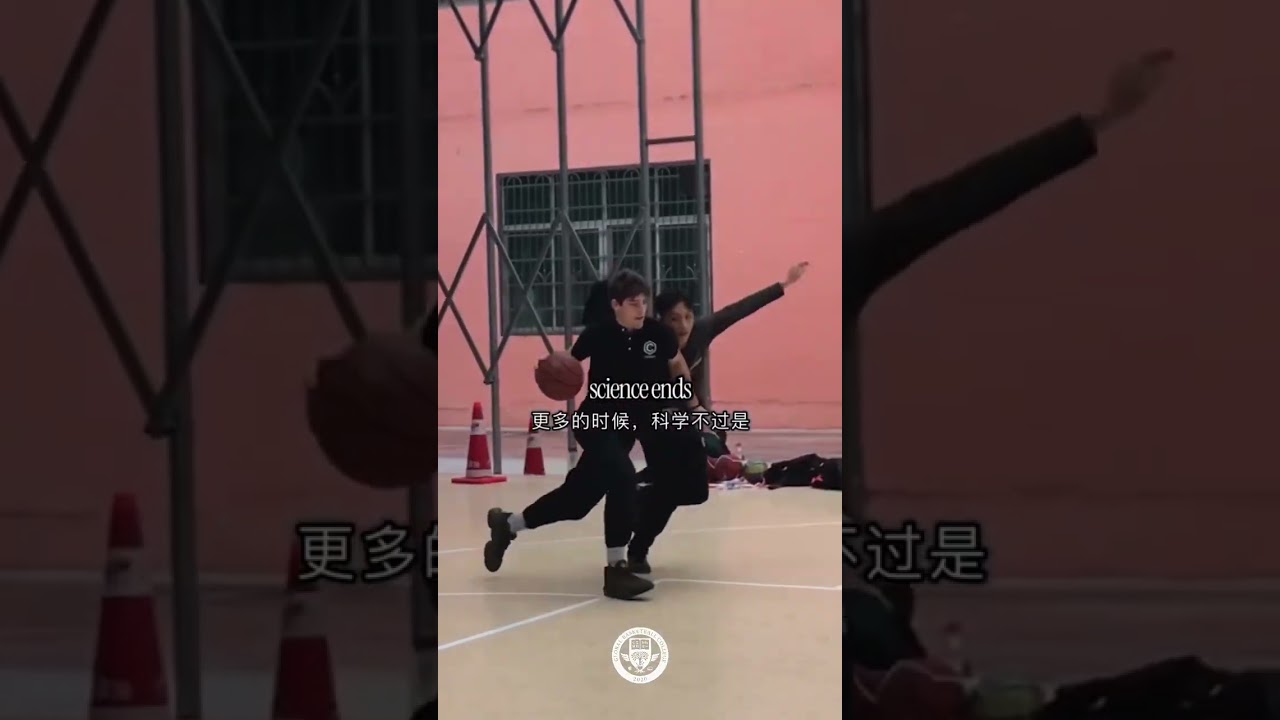
The Language of Skill, full video. Worth a watch!
The core idea of this video is that basketball is a language, and understanding that affords us guiding principles to use teaching, task design, and more.
I create the Cognitive-Linguistic Motor Theory (CLMT) to solve a problem. It supports a framework where Ecological Dynamics and Schema Theory both work.
The implications are huge. You can get all the benefits of CLA, without losing the purpose of technical teaching.
This is great because it removes a major divide between dominant training styles, and marries them together. For someone learning to train, it allows you to study everyone and offers a principle to put all the pieces together.
CLMT doesn’t reinvent the wheel, but it makes sense of the way basketball education is naturally developing.
Basketball is a language, and the goal is to become fluent.
What is so encouraging is knowing that we can master a language in the matter of a couple years, and already we’re finding more and more ways to cut down the time.
Also, it may just nudge you to finally make time to study that language you always wanted to learn. It will help you hoop better, and open up doors to more people you can do it with.
For a more detailed breakdown on the theory, go to my pinned posts on @globalbasketballcollege (Basketball is a LANGUAGE, pt. 1 & 2), and follow for more related content!
—
About the Cognitive-Linguistic Motor Theory:
CLMT conceives movement as the primary expression of an integrated cognitive–linguistic system, in which flexible motor schemas function like a language: they can be codified, learned, and transmitted, and adapted. Cognition and language support perception, decision-making, and execution, so that skilled action represents a dynamic alignment of intention, context, and correctness.
Components:
Cognitive = following a multi-level, embodied process of perceiving, valuing, imagining, and acting, guided by neural, bodily, and social systems.
Linguistic = following a structured, rule-governed process by which humans encode, manipulate, and communicate meaning through symbolic forms, integrating perception, memory, and motor systems, and enabling social coordination, prediction, and learning.
Motor = the dynamic organization and
execution of goal-directed movement, through the integrated activity of neural, muscular, and perceptual systems. It represents the embodied realization of cognitive and linguistic representations—the body’s capacity to encode, express, and adapt meaning through coordinated action within a specific environment.
Application:
The pedagogy of CLMT draws inspiration from the Suzuki Method, applying its principles to basketball training. It emphasizes designing learning environments that both challenge and facilitate skill acquisition—while also cultivating social and living spaces rich in what bell hooks calls the ingredients of love: care, affection, respect, recognition, commitment, trust, and honest communication.
The ultimate goal is to develop learners who can manage their own growth—both independently and collaboratively—spontaneously forming learning communities that transcend division and nurture the progress and growth of the individual and the collective alike.
—
Wisdom of the day:
Sports opens communication that transcends division; it should be completed with love.
Yao Ming 姚明:
“Sports is the best means of communication between people from different religions and countries.”
Confucius 孔子, Analects 論語 1:1:
「學而時習之,不亦說乎?有朋自遠方來,不亦樂乎?人不知而不慍,不亦君子乎?」(“To learn something and regularly practice it—is this not a pleasure? To have friends come from afar—is this not a joy? To not be upset when others do not recognize you—is this not the mark of a gentleman?”
Paul, 1 Corinthians 13:
“If I speak in the tongues of men or of angels, but do not have love, I am only a resounding gong or a clanging cymbal.”
MYBG ❤️ 愿你伟大

Информация по комментариям в разработке