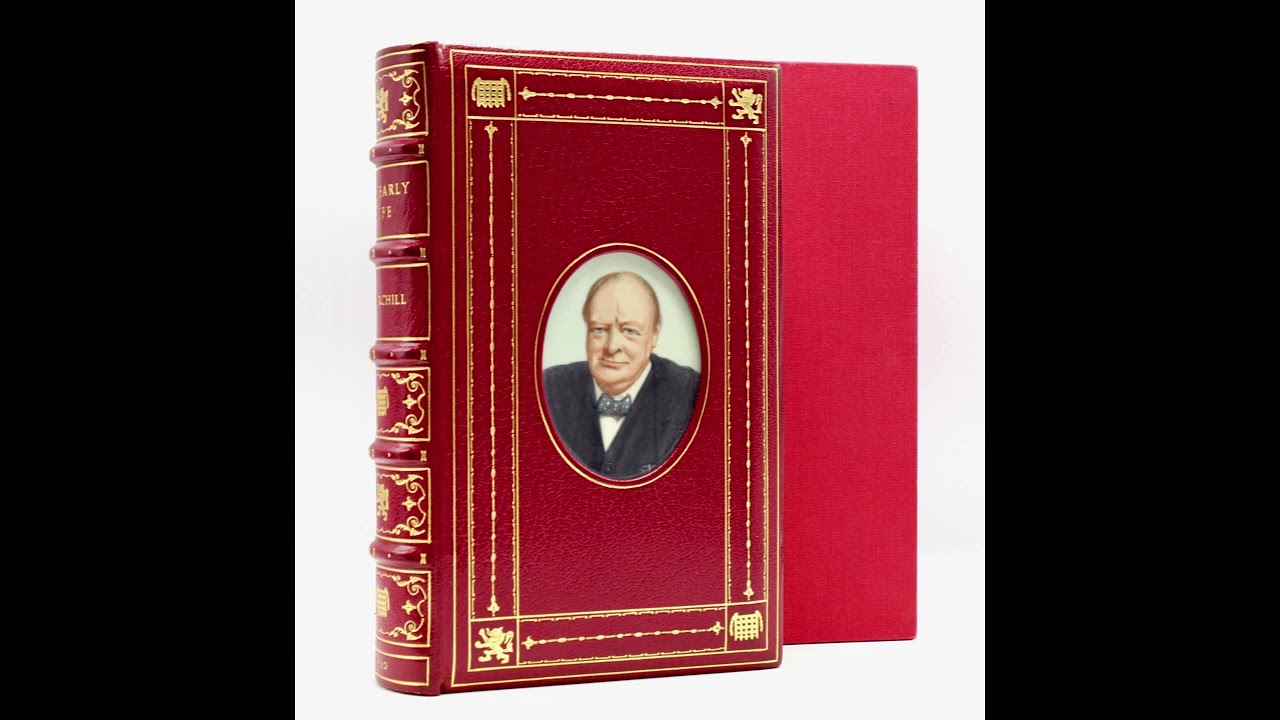
"My Early Life" by Winston S. Churchill is an autobiographical work that offers a glimpse into the formative years of one of the 20th century's most significant figures. The narrative spans from Churchill’s birth in 1874 to his early political career in the early 1900s. This period includes his education, military service, and initial forays into politics, providing insight into the development of his character, values, and ambitions.Churchill's writing style in "My Early Life" is characterized by wit, eloquence, and a vivid storytelling ability. His descriptions of events and people are often colorful and engaging, reflecting his sharp intellect and keen observational skills. The tone is generally light-hearted, even when recounting hardships and failures, which reveals Churchill's resilience and inherent optimism. This approach not only makes the book enjoyable to read but also underscores the indomitable spirit that defined his later life and career.The narrative begins with Churchill's childhood, where he describes the influence of his parents, Lord Randolph Churchill and Jennie Jerome, on his early development. Despite their social standing, Churchill’s relationship with his parents was distant, with much of his upbringing left to his nanny, Elizabeth Everest. This detachment from his parents, particularly his father, who had high expectations and a critical demeanor, profoundly impacted Churchill. The lack of close parental guidance, however, also fostered a sense of independence and self-reliance in the young Churchill.His education at Harrow and Sandhurst is recounted with a mix of humor and critical reflection. Churchill struggled academically at Harrow, especially with subjects like Latin and Greek, but excelled in English and history, which foreshadowed his future as a prolific writer and historian. His time at Sandhurst, where he trained to become an army officer, was marked by a newfound discipline and determination. These experiences laid the foundation for his military career, which began with his commission into the 4th Hussars.Churchill's military adventures, particularly in Cuba, India, Sudan, and South Africa, are some of the most captivating parts of "My Early Life." His service in these regions exposed him to the complexities of imperial warfare and colonial politics, broadening his understanding of global affairs. In Cuba, he observed guerrilla warfare, while in India, he participated in the Malakand Field Force. His involvement in the Battle of Omdurman in Sudan and his dramatic escape during the Boer War in South Africa are recounted with thrilling detail, highlighting his bravery and resourcefulness.These military experiences were not only pivotal in shaping Churchill's worldview but also provided him with material for his early writings. His dispatches from the front lines, published in various newspapers, helped establish his reputation as a gifted journalist and author. These writings also reflect his early political views, particularly his support for imperialism and his belief in the British Empire’s civilizing mission. However, they also reveal a more nuanced understanding of the challenges and moral dilemmas associated with colonial rule.Churchill's entry into politics is depicted as a natural progression from his military and journalistic endeavors. His initial attempts to win a parliamentary seat were fraught with challenges, but his determination and oratorical skills eventually led to his election as the Member of Parliament for Oldham in 1900. This marked the beginning of a long and illustrious political career. In "My Early Life," Churchill candidly discusses his early political ambitions, his ideological evolution, and the mentors who influenced his thinking.Throughout "My Early Life," Churchill’s reflections on his youthful experiences are imbued with a sense of adventure and a desire to make a significant impact on the world. The book not only provides a detailed account of his early years but also offers valuable insights into the development of his leadership qualities and his enduring commitment to public service. By tracing the origins of Churchill's character and ambitions, "My Early Life" helps readers understand the man who would later lead Britain through some of its darkest hours.

Информация по комментариям в разработке