Common Name
Brown planthopper
Scientific Name
Nilaparvata lugens
Distribution
South and Southeast Asia and Oceania. It is recorded from Australia, Fiji, Guam, Federated States of Micronesia, New Caledonia, Northern Mariana Islands, Palau, Papua New Guinea, and Solomon Islands.
Hosts
Rice and wild grasses.
Symptoms & Life Cycle
Symptoms depend on variety, number of planthoppers, and plant age: all these affect the number of tillers and panicles that develop, plant height, the amount of unfilled grains, and injury from feeding and egg laying, which allows entry by fungi and bacteria, as well as blackening of stems by sooty moulds (Photo 1). Severe infestations cause plants in the 'milk' or 'dough' stages to gradually yellow from the tip, brown, dry out and collapse - a wilt, known as 'hopperburn' (Photo 2). The most susceptible time is from tillering to flowering. Hopperburn is more common in paddy than dryland rice.
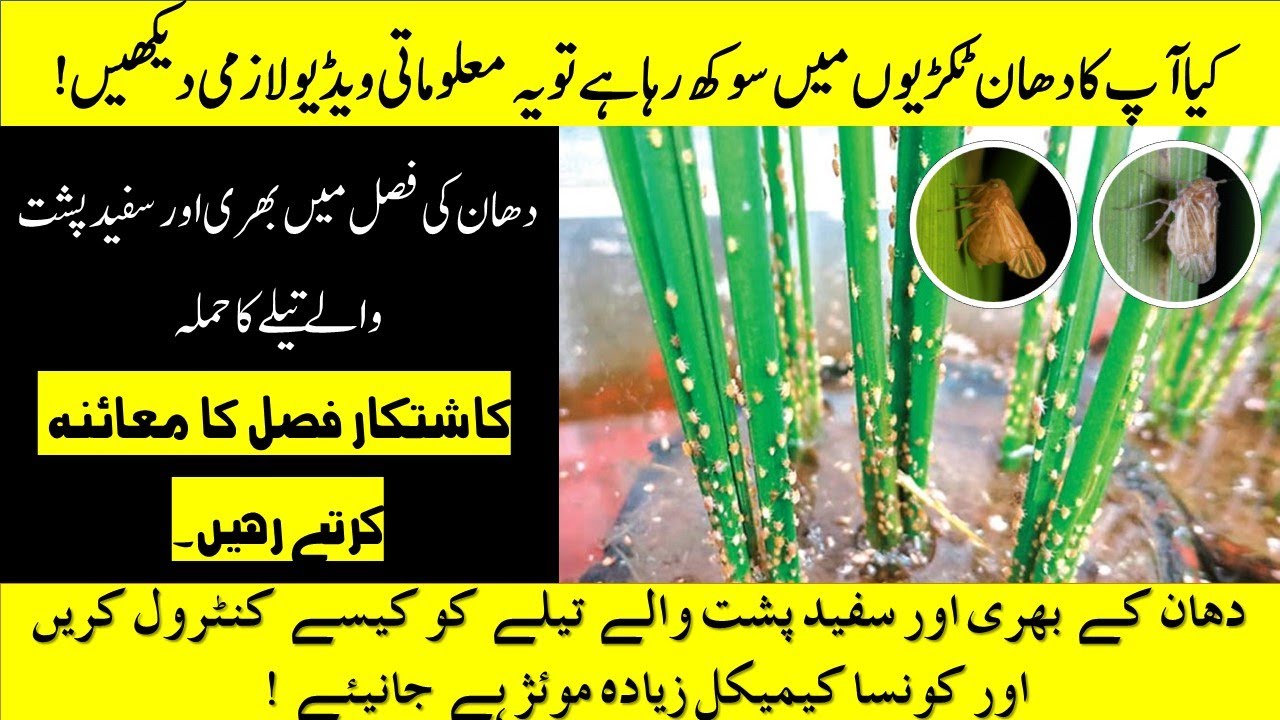
Eggs are laid in the midrib of the leaf blades, 4-10 in an egg mass; they are cylindrical, slightly curved, 1 mm long, white at first, darker when about to hatch, with two spots - the eyes of the nymph. The eggs hatch in 4-8 days. Nymphs are creamy white with a pale brown tinge, later becoming dark brown. There are four to five moults. The final nymphs are nearly 3 mm long, with a line from the top of the head to the middle of the body where it is widest. Adults are brownish black with a yellowish-brown body (Photo 3). There are two forms, long winged and short winged (Photo 4)
Impact
Both adults and nymphs do the damage. They have piercing mouthparts that they insert into the leaf blades and leaf sheaths of rice plants to suck the sap. Also, egg laying blocks the water and food channels inside the plant. Large numbers of planthoppers cause hopperburn.
IRRI estimates that farmers loose nearly 40% of their rice crops to pests, and brown plant hopper is one of the most serious.
Detection & inspection
Look at the base of the plants, where it is shady and humidity is high, for the nymphs, and winged and wingless adults. Look for the sooty mould fungi that often accompany large numbers of the insects (Photo 1). More than 3-5 insects per tiller is considered high, needing more intensive observation and possibly insecticide treatment.
Management
Overuse of insecticides is the main cause of outbreaks of brown planthopper. When insecticides are used, predators and parasites are killed, and brown planthopper populations 'resurge', i.e., the numbers after spraying are higher than before; this is because there are no natural enemies. Integrated Pest Management - IPM - programs stress the need to maintain biological control of natural enemies, and also include tolerant varieties. The routine use of broad-spectrum insecticides should always be avoided.
NATURAL ENEMIES
There are a number of natural predators of the brown planthopper: spiders eat the nymphs and adults, as do coccinellid beetles (ladybird beetles), dragonflies, damselflies, and mirid egg-sucking bugs. There are two species of egg-sucking bugs in the Pacific islands - Cyrtorhinus chinensis and Cyrtorhinus lividipennis - and there are likely to be wasp parasitoids that attack eggs, as well as fungal pathogens and mites.
CULTURAL CONTROL
Before planting:
Choose varieties that have tolerance to the brown plant hopper.
Avoid staggered planting, preventing planthoppers moving from older to younger crops in ever greater numbers. Plant at the same time as neighbours, within a period of 2-3 weeks.
Remove volunteer plants.
Rotate rice with other crops. Do not plant rice crops one after another so that large populations of the brown planthopper can migrate easily between them.
During growth:
Drain the paddies for 3-4 days during the early stage of infestation.
Apply split applications (three times) of nitrogen fertilizer, not all at one time.
Allow plants (weeds) on the bunds (and at the borders of dryland crops), and between fields, to flower in order to attract natural enemies.
After harvest:
Do not ratoon the crop, i.e., do not allow it to resprout and continue growing after harvest.
Plough the field after harvest, removing the stubble that would otherwise allow the brown planthoppers to continue to breed.
RESISTANT VARIETIES
Many varieties have been bred for resistance to brown planthoppers; unfortunately, there are many instances where changes occur in the planthoppers allowing them to overcome the resistance.
CHEMICAL CONTROL
Insecticides should only be used when planthopper populations are likely to reach an economic injury level; otherwise natural enemies will be destroyed and planthopper populations will return greater than before. The systemic insecticide, acephate (Orthene), has been used for many years against the brown planthopper in Solomon Islands. Check for current recommendations from government agriculture extension personnel, as well as the timing and method of application.

Информация по комментариям в разработке