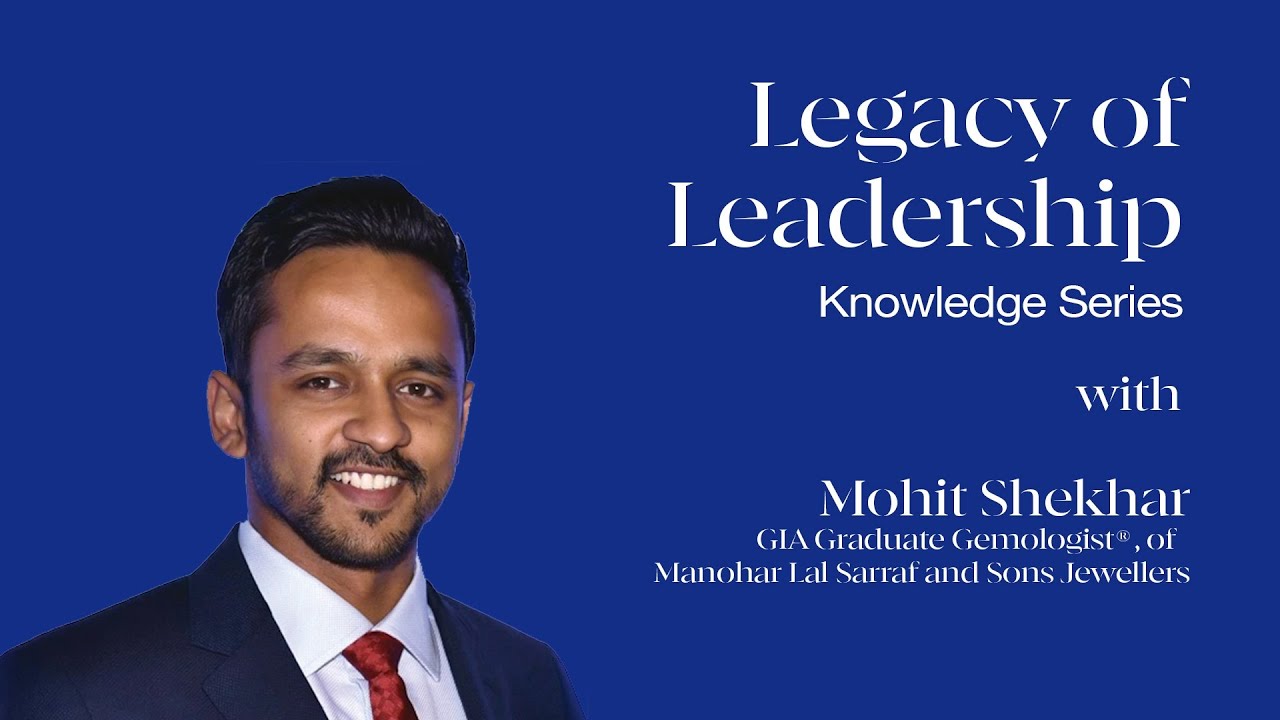
Join us for this interview with Mohit Shekhar of Manohar Lal Saraf & Sons Jewellers. A proud GIA Graduate Gemologist, Mohit talks us through the legacy of Manohar Lal Saraf & Sons Jewellers, a brand with over 90 years of heritage in fine jewelry. He fondly shares recollections of his studious days as a student and the impact that GIA (Gemological Institute of America) education has had on his personal and professional growth. He also reflects on how Manohar Lal Saraf & Sons invests in building and retaining a strong team with a customer-centric mindset- a strategy that has helped the company thrive through generations while maintaining a commitment to quality craftsmanship, customer trust, and timeless values.
One of the key aspects of their long-standing success, as Mohit notes, has been their early adoption of hallmarking and diamond grading reports. Even in the 1990s, they made a bold move to sell only hallmarked gold jewelry and diamonds graded by GIA, ensuring the highest standards of purity and authenticity.
Mohit highlights the importance of gemological education and how GIA education has played a crucial role in their business. With multiple family members —including himself, his father, mother, uncles, and aunts- completing GIA courses, the business has benefited from an in-depth knowledge of diamonds, colored stones, and jewelry design. He elaborates on how understanding the quality factors of gemstones—such as cut, clarity, color, and carat weight—helps them ensure the highest quality for their customers.
After completing his GIA education, Mohit realized the importance of passing down knowledge—not just within the family but also to employees. With eight stores across India, he believes that maintaining a consistent and high-quality customer experience is only possible when employees are empowered with the right skills and knowledge. With a team of over 250 professionals, Mohit mentioned that every salesperson at Manohar Lal Saraf & Sons Jewellers is well-equipped to educate customers —sharing the story behind each piece and informing them about hallmarked gold, diamonds, and rare gemstones.
Mohit highlights one of the biggest challenges today: the changing buying patterns of millennials. Many prefer to spend on experiences like travel rather than invest in traditional jewelry. Some young buyers (25-30 years old) still prefer 2 to 5-carat rings as a symbol of status and tradition. Others prioritize experiences over assets, choosing vacations over luxury jewelry.
He also acknowledges the struggles of establishing an online presence, despite the growing demand. Jewelry e-commerce requires a dedicated team to keep the website dynamic, updated, and engaging. Citing examples, Mohit notes that brands like CaratLane use 3D renders instead of physical inventory, cutting costs but requiring a strong digital strategy. Reflecting on his GIA experience, Mohit shares how continuous learning about grading, pricing, and retail trends has helped him grow his business. Learn from a legacy brand about what it takes to preserve heritage while embracing modernity.
Discover the fascinating world of gems and jewelry with GIA India. Subscribe to our YouTube channel for expert insights, educational content, and a deeper understanding of gemology. Be a part of our growing community and fuel your passion for the art and science of gemstones!
Visit GIA India's YouTube Channel and enrich your gemology journey today!
Visit our Official Website https://www.giaindia.in/
Visit our Social Media Pages: / gia.india and / giaindia
#giaindia #legacyofleadership #knowledgeseries #giaindiaeducation #giaeducation #diamondgraduateprogram #giacertifieddiamonds #coloredstones #graduategemologist #graduatediamonds #jewelryindustry #jewelrybusiness #diamondgraduate #jewelrytrade #laboratorygrowndiamonds

Информация по комментариям в разработке