Instagram id : https://www.instagram.com/krusshal?ig...
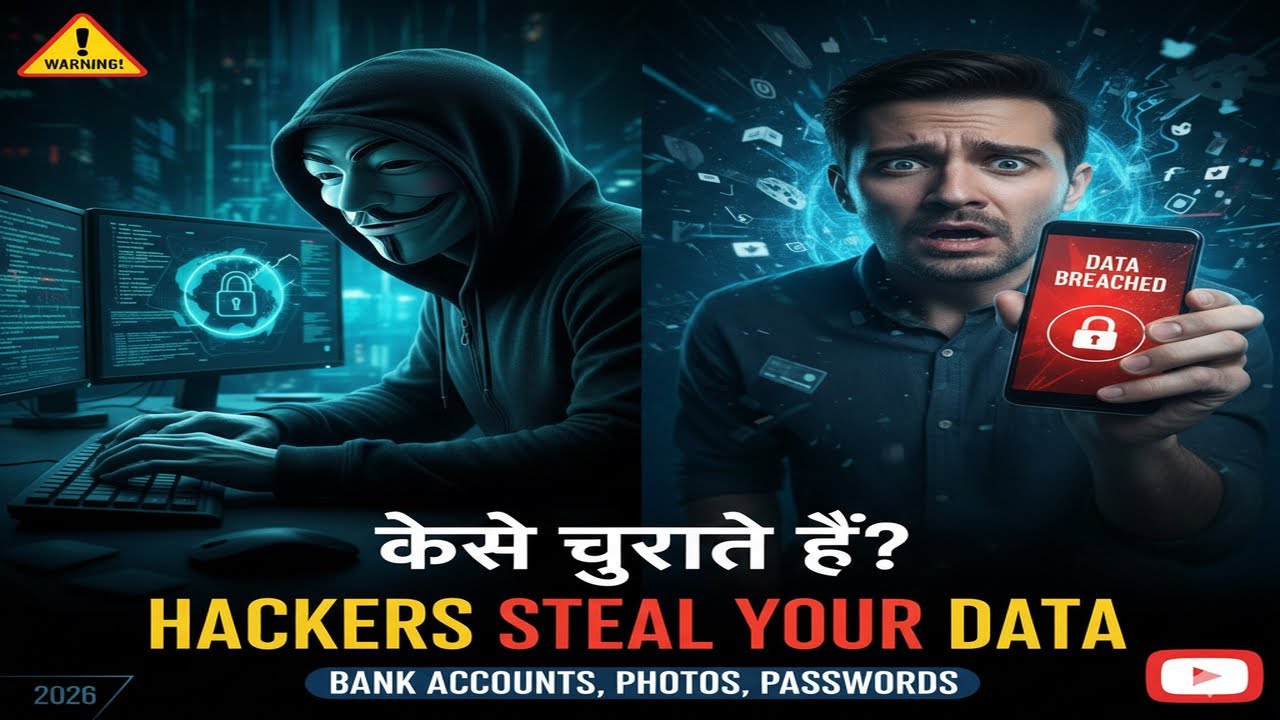
Most people think hackers are some super-genius sitting in a dark room typing fast and magically breaking bank servers. That’s not how your bank photos and personal data actually get leaked. In reality, you are the weakest link, not the bank.
In this video, we break down how hackers steal bank account photos, documents, and personal data, and why most leaks happen without any “real hacking” at all.
First method: Phishing. This is the most common and most successful attack. Hackers send fake SMS, emails, or WhatsApp messages that look like they’re from your bank, courier service, KYC department, or government portal. The moment you click the link and upload your bank photo, PAN card, Aadhaar, or OTP, you’ve handed your data over voluntarily. No system was hacked — you were tricked.
Second method: Fake apps and mod apps. Many people download cracked apps, loan apps, photo editors, or screen recorders from random websites or Telegram channels. These apps secretly ask for storage, gallery, SMS, and camera permissions. Once you allow that, the app can quietly upload your bank screenshots, passbook photos, cheques, and documents to a remote server. Again, this is not hacking — it’s careless permission abuse.
Third method: Cloud leaks and weak passwords. If your Google Drive, iCloud, or email account has a weak or reused password, hackers don’t need your phone. They log into your cloud backup and download everything — bank photos, documents, IDs, even deleted files. Many data leaks happen years later because people never change passwords.
Fourth method: Public Wi-Fi and fake hotspots. Free Wi-Fi at cafes, railway stations, malls, or airports can be dangerous. Attackers can create fake Wi-Fi networks that look legitimate. Once connected, your traffic can be monitored, sessions hijacked, and login data captured — especially if you access email, cloud storage, or banking-related services.
Fifth method: Social engineering and oversharing. People themselves upload sensitive photos on WhatsApp, Instagram DMs, Telegram, or send documents to “customer care” numbers found on Google. Hackers collect this data, organize it, and sell it on dark web forums. Data leaks are a business, not a one-time crime.
The truth is simple: Most data leaks happen because of ignorance, urgency, greed, or fear, not because hackers are smarter than you. Banks spend crores on security. You spend zero minutes thinking before clicking a link.
In this video, you’ll learn:
• Real techniques hackers use
• Common mistakes normal people make
• How bank photos actually get leaked
• Practical steps to protect your data
If you think “this won’t happen to me,” you’re already the target.
Watch till the end — awareness is your first line of defense.






![Lp. Мастерская [47] • #51 ПОСЛЕДНИЙ ВЫБОР [Свобода или Правда] • Майнкрафт](https://i.ytimg.com/vi/1t0a1o3-vTY/maxresdefault.jpg)





Информация по комментариям в разработке