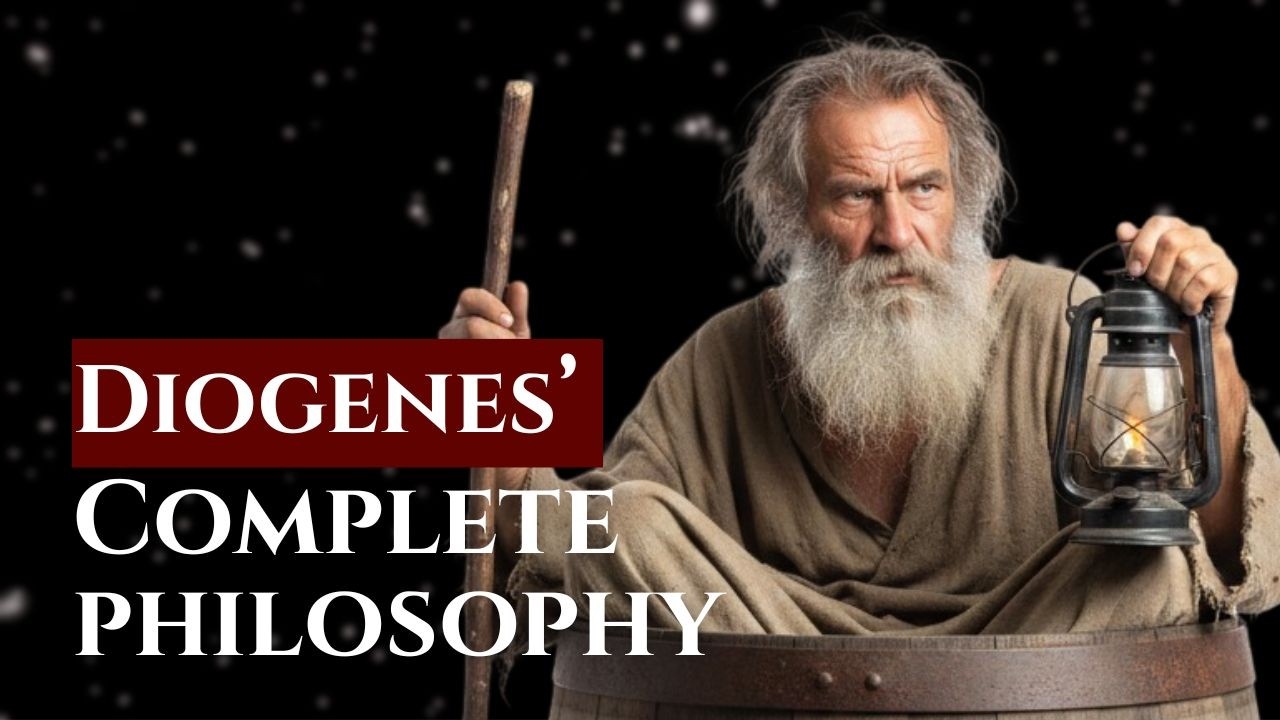
What can a man living in a tub teach us about freedom, truth, and how we live under watchful eyes in a modern, busy world? In this video we explore Diogenes of Sinope, the audacious founder of Cynicism, whose life in the open square and in a humble tub was a continual critique of wealth, status, and social pretenses. Diogenes chose to live as plainly as possible, to reveal how quickly riches and reputation can obscure virtue, and to insist that virtue is the only true good. The tub, a stark symbol, served both as shelter and as stage for his unflinching refusals of conventional comfort. Throughout this exploration, we trace how his provocative questions shaped a movement that would challenge later philosophers and still echo in our everyday intuitions about authenticity and independence. The story is not merely antiquarian; it is a living invitation to reflect on what we value when we reach for credit cards, likes, or social approval.
The Cynics traced their critique to ancient Greek philosophy and the idea that the good life depends not on external goods but on living in accordance with nature and reason. Diogenes popularized ascetic practices and sharp, public demonstrations to mock social norms. He is said to have wandered Athens with a lamp in daylight searching for an honest man, and he famously discarded his cup when he saw a poor man drinking from his hands. The stories, whether anecdotal or legendary, are meant to illuminate a method: critique through example. The term 'Cynic' itself evokes the image of a 'dog-like' fidelity to truth, an insistence that virtue is not a product of status but of integrity. Credit: Based on in-depth philosophical analysis. The lineage links to later Stoics and to a broader tradition of questioning customary desires, a thread that runs through Western thought to today. He is also associated with such anecdotes as telling Alexander the Great to "Stand out of my sun," or carrying on conversations with people in public spaces to expose hypocrisy.
Advocates of Cynicism argued that virtue is sufficient for happiness and that most social customs merely cultivate dependency on wealth, status, or convention. Critics, from Aristotle to later philosophers, noted that such asceticism can be impractical and exclusionary, risking cruelty or social alienation. Yet Diogenes’ insistence on honesty, self-sufficiency, and disdain for empty appearances continues to spark useful questions: Do we confuse comfort with virtue? Do online personas misrepresent who we are? Can prodigal self-sufficiency coexist with communal life? Diogenes challenges us to distinguish between what is socially useful and what is truly good. In modern life, his questions feed into conversations about minimalist living, authenticity, environmental sustainability, and the search for meaning beyond consumer culture. This is not a call to renounce society entirely, but an invitation to examine how much of what we chase is truly essential. The tub becomes a recurring motif, reminding us that outward signals rarely determine inner worth and that the examined life remains a compass in noisy times.
The tub invites us to question our attachments and to test whether our daily practices align with our deepest values. When we pare back possessions, simplify routines, and cultivate honesty, we practice a form of freedom that resists the temptations of spectacle. On Snooze Philosophy we invite a calm, reflective approach: observe your impulses, name your values, and choose actions that reduce harm while increasing authenticity. The conversation connects to the broader tradition of the examined life, urging us to balance personal integrity with social responsibility. This reflective stance does not require renouncing society, but it does encourage a more intentional relationship with status, consumption, and reputation.
Diogenes reminds us that honesty and simplicity can provoke discomfort, yet the aim is clarity, not cruelty. By looking at his tub, we encounter enduring questions about freedom, responsibility, and what it means to live well with less. If this deep dive sparked curiosity, please subscribe for more calm, thoughtful explorations of philosophy, like if you found the discussion meaningful, and share your own reflections in the comments to extend the dialogue.
Credit: Based on in-depth philosophical analysis.
#Philosophy #DiogenesInATub #SnoozePhilosophy.
This video is for educational purposes only and encourages reflective thinking. Always consult primary sources for deeper study.








Информация по комментариям в разработке