Jullien’s American Quadrille (ca. 1853) by Louis Antoine Jullien (1812-60)
arranged by Jari Villanueva
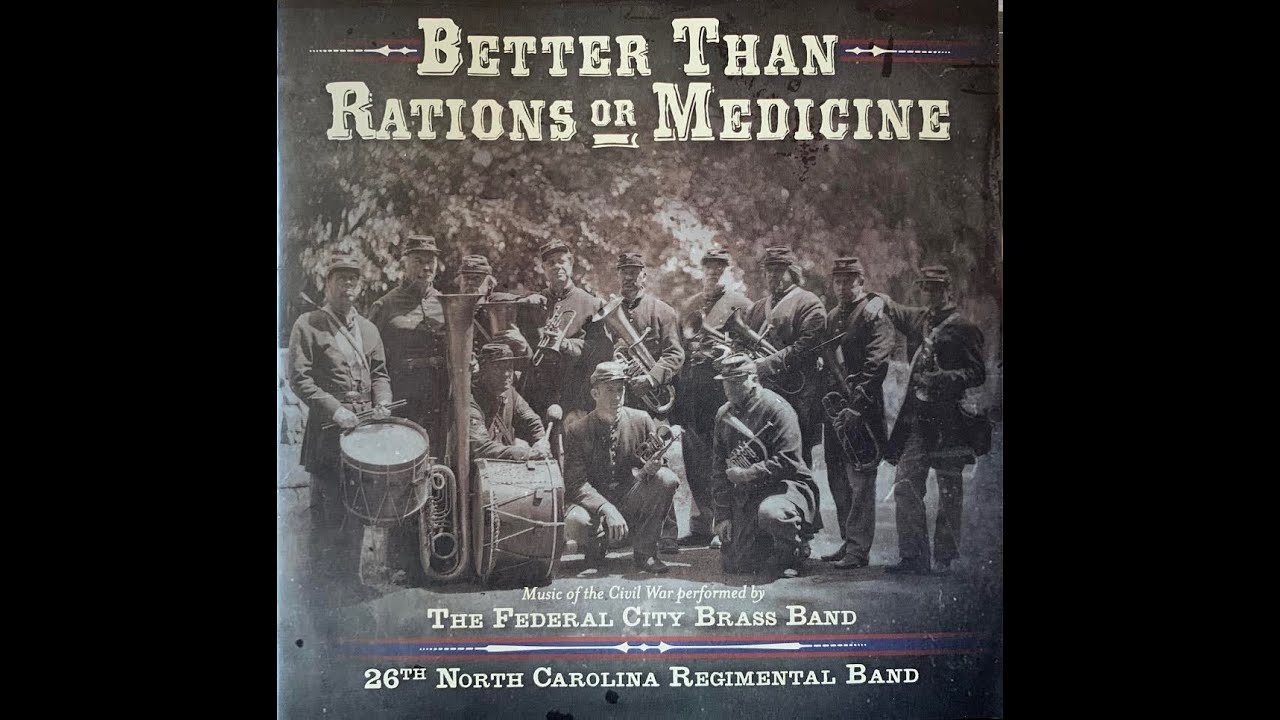
From the CD Better Than Rations or Medicine
https://www.jvmusic.net/store-2/#!/Be...
Louis Antoine Jullien (1812-1860), musical conductor, was born at Sisteron, Basses Alpes, France, on the 23rd of April 1812. He entered the Paris Conservatoire but left before completing his studies. In 1838 he fled his creditors in France and spent most of the next 21 years in London, actively composing, arranging, and conducting light concert and dance music. He formed a good orchestra and established promenade concerts. In 1849 he organized three “super concerts,” using an orchestra of 400 musicians, three choruses, and three military bands. He brought out an opera, Pietro ii Grande, at Covent Garden (1852) on a scale of magnificence that ruined him, for the piece was a complete failure. By that time, however, Jullien’s fame had spread to America and in 1853 he was engaged by P.T. Barnum to present a series of concerts in the United States. Described by contemporaries as “a P.T. Barnum set to music,” for many years he was a familiar figure in the world of popular music in England, and his portly form with its gorgeous waistcoats appears often in the early volumes of “Punch.” Despite his flamboyance, Jullien was universally respected for his uncommonly fine musicianship. He returned to London in 1854; ultimately he went back to Paris, where, in 1859, he was arrested for debt and put into prison. He lost his reason soon afterwards, and died on the 14th of March 1860. In his last year, Jullien toyed with the notion of setting The Lord's Prayer to music. The composer's inspiration? The prospect of seeing a title page reading: "THE LORD'S PRAYER. Words by Jesus Christ. Music by Jullien."
Based on the quadrille dance form of the mid-19th century, Jullien’s American Quadrille utilizes several popular and patriotic American tunes of the period just prior to the Civil War. While some of these tunes such as Yankee Doodle, Old Folks at Home, and Hail to the Chief are well known today, others like Our Flag is There and Land of Washington, which date to the War of 1812 era, are virtually unknown to modern audiences. The piece is dramatic and musically descriptive, and is in fact very reminiscent of the type of music which so lent itself to the silent movies of the very late 19th and early 20th centuries. Or it may perhaps remind you somewhat of Tchaikovsky’s 1812 Overture (1880). In true Jullien fashion, the American Quadrille features a tremendous battle scene based on variations of Yankee Doodle, complete with bugle calls and booming cannons, and culminating in a grand finale depicting the American army victorious, followed by three cheers. This arrangement is based on the one originally done for the US Marine Band in the early 1850s, which was very likely performed at the White House on more than one occasion.

Информация по комментариям в разработке