Macaque
Genus of Old World monkeys
"Macaca" redirects here. For a racial slur for dark-skinned people, see Macaca (term).
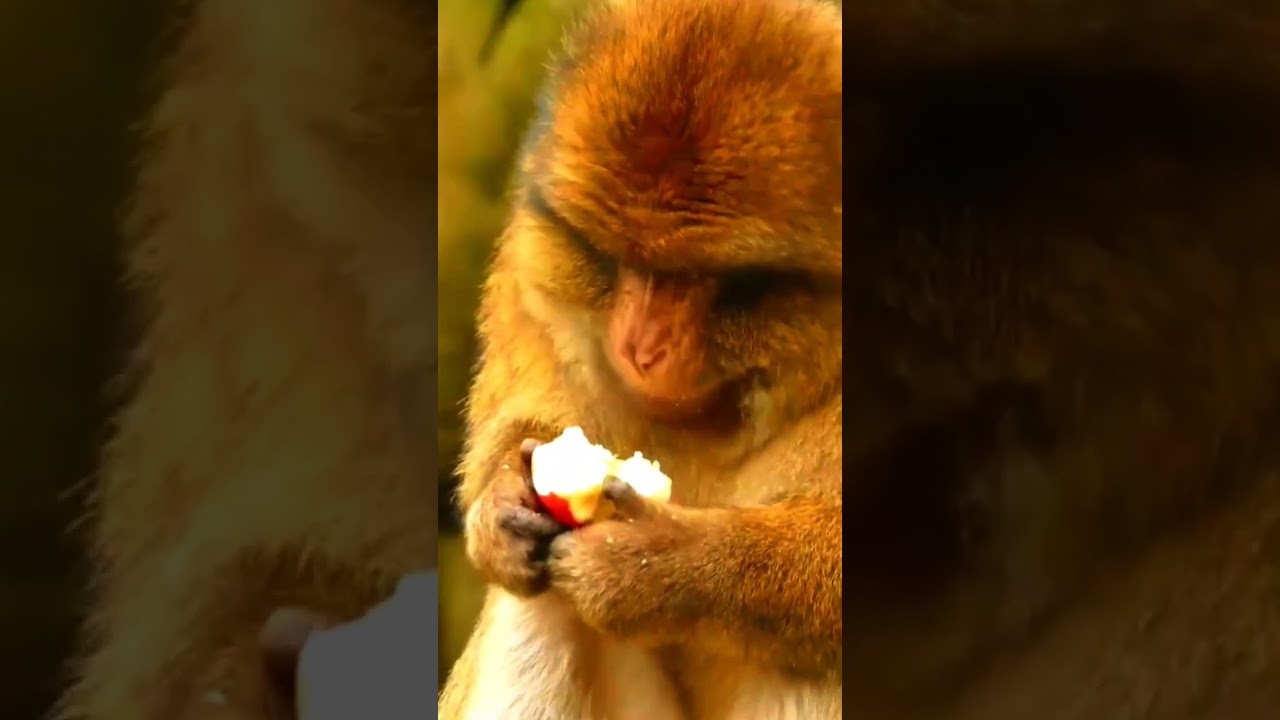
The macaques (/məˈkɑːk, -ˈkæk/) constitute a genus (Macaca) of gregarious Old World monkeys of the subfamily Cercopithecinae. The 23 species of macaques inhabit ranges throughout Asia, North Africa, and (in Gibraltar) Europe. Macaques are principally frugivorous (preferring fruit), although their diet also includes seeds, leaves, flowers, and tree bark. Some species, such as the crab-eating macaque, subsist on a diet of invertebrates and occasionally small vertebrates. On average, southern pig-tailed macaques in Malaysia eat about 70 large rats each per year. All macaque social groups are matriarchal, arranged around dominant females.
Quick Facts Macaques, Scientific classification ...
Macaques are found in a variety of habitats throughout the Asian continent and are highly adaptable. Certain species have learned to live with humans and have become invasive in some human-settled environments, such as the island of Mauritius and Silver Springs State Park in Florida. Macaques can be a threat to wildlife conservation as well as to human well-being via carrying transmittable and fatal diseases. Currently, invasive species of macaques are handled with several control methods.
Description
Aside from humans (genus Homo), the macaques are the most widespread primate genus, ranging from Japan to the Indian subcontinent, and in the case of the Barbary macaque (Macaca sylvanus), to North Africa and Southern Europe. Twenty-three macaque species are currently recognized. Macaques are robust primates whose arms and legs are about the same in length. The fur of these animals is typically varying shades of brown or black and their muzzles are rounded in profile with nostrils on the upper surface. The tail varies among each species, which can be long, moderate, short or totally absent. Although several species lack tails, and their common names refer to them as apes, these are true monkeys, with no greater relationship to the true apes than any other Old World monkeys. Instead, this comes from an earlier definition of 'ape' that included primates generally.
In some species, skin folds join the second through fifth toes, almost reaching the first metatarsal joint. The monkey's size differs depending on sex and species. Males from all species can range from 41 to 70 cm (16 to 28 inches) in head and body length, and in weight from 5.5 to 18 kg (12.13 to 39.7 lb). Females can range from a weight of 2.4 to 13 kg (5.3 to 28.7 lb). These primates live in troops that vary in size, where males dominate, however the rank order of dominance frequently shifts. Female ranking lasts longer and depends upon their genealogical position. Macaques are able to swim and spend most of their time on the ground, along with some time in trees. They have large pouches in their cheeks where they carry extra food. They are considered highly intelligent and are often used in the medical field for experimentation. Adults also are notorious for tending to be bad tempered.
Distribution and habitat
Macaques are highly adaptable to different habitats and climates and can tolerate a wide fluctuation of temperatures and live in varying landscape settings. They easily adapt to human-built environments and can survive well in urban settings if they are able to steal food. They can also survive in completely natural settings absent of humans.
The ecological and geographic ranges of the macaque are the widest of any non-human primate. Their habitats include the tropical rainforests of Southeast Asia, Sri Lanka, India, arid mountains of Pakistan and Afghanistan, and temperate mountains in Algeria, Japan, China, Morocco, and Nepal. Some species also inhabit villages and towns in cities in Asia.
Ecology and behavior
Diet
Macaques are mainly vegetarian, although some species have been observed feeding on insects. In natural habitats, they have been observed to consume certain parts of over one hundred species of plants including the buds, fruit, young leaves, bark, roots, and flowers. When macaques live amongst people, they raid agricultural crops such as wheat, rice, or sugarcane; and garden crops like tomatoes, bananas, melons, mangos, or papayas. In human settings, they also rely heavily on direct handouts from people. This includes peanuts, rice, legumes, or even prepared food.
Group structure
Macaques live in established social groups that can range from a few individuals to several hundred, as they are social animals. A typical social group possess between 20 and 50 individuals of all ages and of both sexes. The typical composition consists of 15% adult males, 35% adult females, 20% infants, and 30% juveniles, though there exists variation in structure and size of groups across populations.[citation needed

Информация по комментариям в разработке