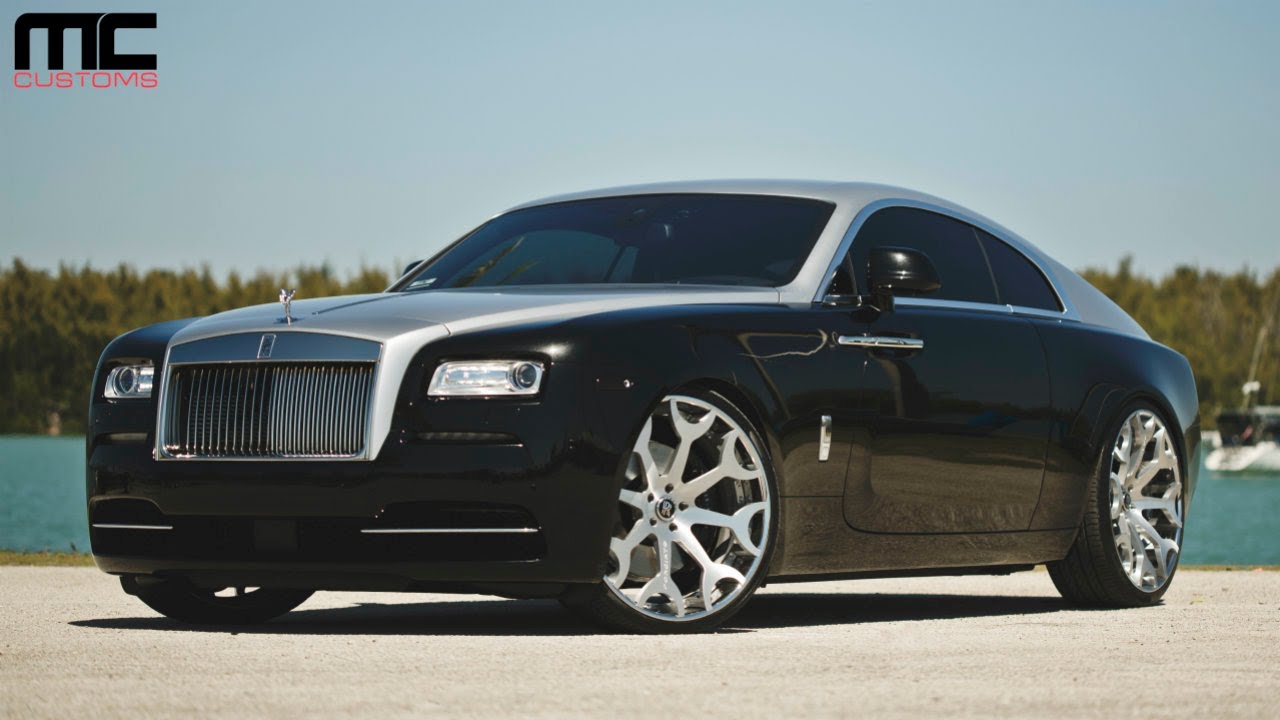
Rolls-Royce was a British luxury car and later an aero-engine manufacturing business established in 1904 by the partnership of Charles Rolls and Henry Royce. Building on Royce's reputation established with his cranes they quickly developed a reputation for superior engineering by manufacturing the "best car in the world". The First World War brought them into manufacturing aero-engines. Joint development of jet engines began in 1940 and they entered production.
Rolls-Royce has built an enduring reputation for development and manufacture of engines for defence and civil aircraft.
In the late 1960s, Rolls-Royce became hopelessly crippled by the mismanaged development of its advanced RB211 jet engine and the consequent cost over-runs, though it ultimately proved a great success. In 1971, the owners were obliged to liquidate their business. The useful portions were bought by a new government-owned company named Rolls-Royce (1971) Limited which continued the core business but sold the holdings in British Aircraft Corporation (BAC) almost immediately and transferred ownership of the profitable but now financially insignificant car division to Rolls-Royce Motors Holdings Limited. This it sold to Vickers in 1980. Rolls-Royce obtained consent to drop 1971 from its name in 1977.
The Rolls-Royce business remained nationalised until 1987 when, after renaming the owner Rolls-Royce plc, the government sold it to the public. Rolls-Royce plc still owns and operates Rolls-Royce's principal business though since 2003 it is technically a subsidiary of listed holding company Rolls-Royce Holdings plc.
A marketing survey in 1987 showed that only Coca-Cola was a more widely known brand than Rolls-Royce.[1]
Henry Royce started an electrical and mechanical business in 1884. He made his first car, a two-cylinder Royce 10, in his Manchester factory in 1904. Henry Royce was introduced to Charles Rolls at the Midland Hotel, Manchester on 4 May of that year. Rolls was proprietor of an early motor car dealership, C.S. Rolls & Co. in Fulham.[2]
Pages from a very early brochure
In spite of his preference for three- or four-cylinder cars, Rolls was impressed with the Royce 10, and in a subsequent agreement on 23 December 1904 agreed to take all the cars Royce could make. There would be four models:
a 10 hp (7.5 kW), two-cylinder model selling at £395 (£40,000 in 2014),[3]
a 15 hp (11 kW) three-cylinder at £500 (£50,000 in 2014),[3]
a 20 hp (15 kW) four-cylinder at £650 (£60,000 in 2014),[3]
a 30 hp (22 kW) six-cylinder model priced at £890 (£90,000 in 2014),[3]
All would be badged as Rolls-Royces, and be sold exclusively by Rolls. The first Rolls-Royce car, the Rolls-Royce 10 hp, was unveiled at the Paris Salon in December 1904.
Rolls-Royce Limited was formed on 15 March 1906, by which time it was apparent that new premises were required for production of cars. After considering sites in Manchester, Coventry, Bradford and Leicester, it was an offer from Derby's council of cheap electricity that resulted in the decision to acquire a 12.7 acres (51,000 m2) site on the southern edge of that city. The new factory was largely designed by Royce, and production began in early 1908, with a formal opening on 9 July 1908 by Sir John Montagu. The investment in the new company required further capital to be raised, and on 6 December 1906 £100,000 of new shares were offered to the public. In 1907, Rolls-Royce bought out C.S. Rolls & Co.[4] (The non-motor car interests of Royce Ltd. continued to operate separately).











Информация по комментариям в разработке