Logo video2dn
  • Сохранить видео с ютуба
  • Категории
    • Музыка
    • Кино и Анимация
    • Автомобили
    • Животные
    • Спорт
    • Путешествия
    • Игры
    • Люди и Блоги
    • Юмор
    • Развлечения
    • Новости и Политика
    • Howto и Стиль
    • Diy своими руками
    • Образование
    • Наука и Технологии
    • Некоммерческие Организации
  • О сайте

Скачать или смотреть Patched a cross-fader using Lapsus Os and 4x channels on a VCA

  • Christian
  • 2023-02-17
  • 191
Patched a cross-fader using Lapsus Os and 4x channels on a VCA
euroracksynthesizermodular synthesizercross-faderplaitsshakmat dual daggererica synths dualfxdualfxdual daggermimetic digitalisintellijel steppysteppylapsus osochdmusicdemo
  • ok logo

Скачать Patched a cross-fader using Lapsus Os and 4x channels on a VCA бесплатно в качестве 4к (2к / 1080p)

У нас вы можете скачать бесплатно Patched a cross-fader using Lapsus Os and 4x channels on a VCA или посмотреть видео с ютуба в максимальном доступном качестве.

Для скачивания выберите вариант из формы ниже:

  • Информация по загрузке:

Cкачать музыку Patched a cross-fader using Lapsus Os and 4x channels on a VCA бесплатно в формате MP3:

Если иконки загрузки не отобразились, ПОЖАЛУЙСТА, НАЖМИТЕ ЗДЕСЬ или обновите страницу
Если у вас возникли трудности с загрузкой, пожалуйста, свяжитесь с нами по контактам, указанным в нижней части страницы.
Спасибо за использование сервиса video2dn.com

Описание к видео Patched a cross-fader using Lapsus Os and 4x channels on a VCA

Modules used:
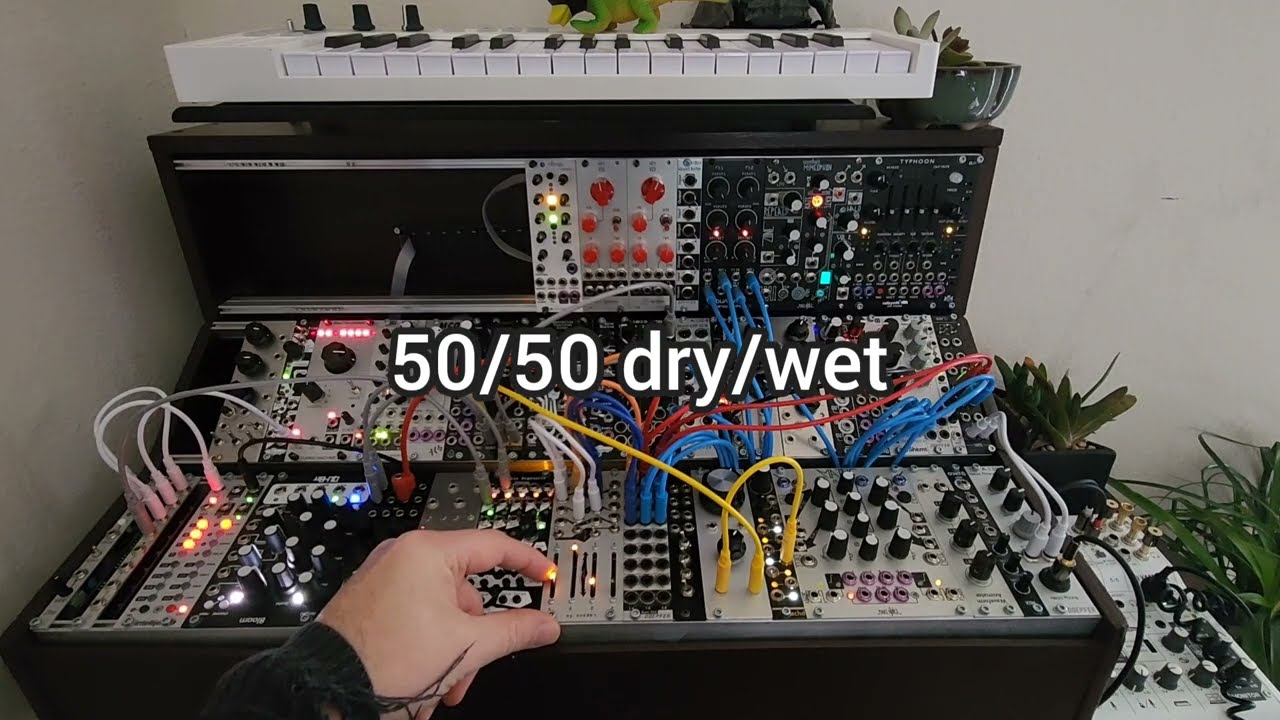
2HP Clock (clock). Intellijel Steppy (gates into an envelope into my filter). Recovery Devices ADSR (envelope). Shakmat Dual Dagger (filter). AfterLater Audio Beehive (MI Plaits clone). Mimetic Digitalis (pitch CV sequencer, clocked by 2HP Clock). Doepfer A-130-8 VCA. Noise Engineering Lapsus Os (4 channel voltage source, offset, attenuator/attenuverter, voltage adder). Erica Synths DualFX. Clank SUM (mixer for 6 stereo pairs). Ochd (LFO). Custom DIY attenuator (the big knob) top attenuate Ochd. AI Synthesis passive mult. Dopefer A-139-2 output to my external mixer to connect to my phone for filming. Ornament and Crime running Benispheres firmware is pitch quantizer.

Cable Colors:
1. Audio: L and R out from Plaits are gray cables, into a mult. Red out from the mult goes into the VCA (VCA1 and VCA2) and then to my mixer. Light-Blue out from the mult goes into my filter, then out to the VCA (VCA3 and VCA4), then out into DualFX, then out to my mixer. Blue is "wet."
2. Modulation: The other gray cables are boring stuff: clock, pitch from Mimetic into O_C then into v/oct on Plaits. Black carries gates from Steppy into my envelope, and the envelope into the LPF cutoff input on my filter. Yellow connects LFO into my attenuator into Plaits to mildly modulate the Timber of the voice.
3. VCA control: Orange goes from Lapsus Os channel 2 into the VCA for the dry (Red) audio. Dark-Blue goes from Lapsus Os channel 3 to the VCA for the wet (Blue) audio. White goes from Lapsus Os channel 1 into inputs on Lapsus Os channels 2 & 3.

Basic VCA config:
I run L and R "dry" signal into VCA1 and VCA2 inputs. I run L and R "wet" (in this case, filtered, with an envelope on cutoff) into VCA3 and VCA4 inputs. I run VCA1 and VCA2 outputs to L and R channels on my mixer, and VCA3 and VCA4 to L and R on the mixer as well.

Setting up Lapsus Os (LO):
1. I take 3 outputs from LO and set them all to attenuverting mode (on LO this means the slider ranges from -5v to +5v. with 0v in the middle). LO1 will be the one slider to control cross-fading, and I don't patch the outputs yet.
2. I take both 2 outputs from LO2 (if your attenuverter doesn't have 2x outputs per channel, use a mult or multing cable) and patch those to CV-in on VCA1 and VCA2 (L and R dry signal). I set LO2 slider to the top (+5v). This holds VCA1 and VCA2 open until/unless I send negative voltage to LO2's "+" input (we'll get to this later).
3. I take both outputs from LO3 and patch those to CV-in on VCA3 and VCA4, and set LO3's slider all the way down (to -5v). This holds VCA3 and VCA4 closed unless I send negative voltage to LO3's "x" input.
4. Now I send the two outputs from LO1 into (1) LO2 "+" input (this means I add LO2's currently +5v to LO21s output, basically an "adder"), and (2) LO3's "x" input (this means LO3 is now "attenuating/attenuverting" LO1's voltage value, a true "attenuverter").

Using the setup:
1. With LO1 slider in the middle (0v): LO2 (remember, slider is up) outputs +5v and VCA1 and VCA2 (dry L and R) are open. LO2 (remember slider is down) outputs -5V and VCA3 and VCA4 (wet L and R) are closed. This is the full-dry portion of the range.
2. With LO1 slider up (+5v): LO2 (slider is up) continues outputting +5v (LO's max) and LO3 (slider down) now outputs 0v. NO change on the VCA. This makes the top half of LO1's range useless
3. With LO1 slider all the way down: LO1 is outputting -5v. LO2 now outputs 0v (-5 plus +5 = 0) and VCA1 and VCA2 (dry L and R) closes. LO3 now outputs +5v (-5V fully inverted by the incoming -5 signal on the "x" input) and VCA3 and VCA4 (L and R wet) opens. This is the full-wet portion of the range.
4. With LO1 slider halfway-down (halfway between the middle and bottom): LO1 is outputting -2.5v. LO2 is outputting 2.5v (-2.5 plus +5) and VCA1 and VCA2 are both somewhat open. LO3 is outputting 2.5v (-2.5 (or negative 50%) multiplied by -5v) and VCA3 and VCA4 are both somewhat open. This is the 50/50 dry/wet portion of the range.

Комментарии

Информация по комментариям в разработке

Похожие видео

  • О нас
  • Контакты
  • Отказ от ответственности - Disclaimer
  • Условия использования сайта - TOS
  • Политика конфиденциальности

video2dn Copyright © 2023 - 2025

Контакты для правообладателей [email protected]