நீங்களும் Social Media-ல Success ஆக, எங்களோட 'How to Become Successful in Social Media Course” வாங்க இந்த link ah கிளிக் பண்ணுங்க: https://bit.ly/4elcCLe
Follow Streetlight Social Media Handles:
Youtube: / @streetlightscience
Instagram: / streetlightscience
Facebook: / streetlightscience
Twitter: https://x.com/StreetLight_Sci
Whatsapp Channel:
For Brand Collaborations:
Phone: 95660 67565
This video is about:
The idea of humans controlling a river sounds impossible, yet the United States has done exactly that—twice. First by forcing a major river to flow in the opposite direction, and later by introducing electricity directly into river systems. These decisions were not driven by ambition or experimentation, but by emergencies that threatened millions of lives, critical ecosystems, and the stability of entire cities.
In the late 1800s, Chicago was growing faster than its infrastructure could handle. The city’s sewage flowed straight into Lake Michigan, which also served as its primary drinking water source. This deadly overlap caused repeated outbreaks of cholera, typhoid, and dysentery, killing thousands. Engineers realized that filtering water alone would not solve the problem; the waste itself had to be moved away from the lake. Their solution was unprecedented: physically reverse the flow of the Chicago River so that sewage would be carried away from Lake Michigan and redirected toward the Mississippi River basin. This required cutting through solid land, lowering canal beds, and permanently altering the region’s hydrology.
The completion of the Chicago Sanitary and Ship Canal in 1900 achieved what was once considered impossible. Gravity itself was re-engineered. Water that had flowed east into the lake now flowed west, protecting Chicago’s drinking water supply and effectively ending large-scale waterborne disease outbreaks in the city. This project became a turning point in urban engineering history, proving that rivers—if forced carefully enough—could be controlled for public health survival.
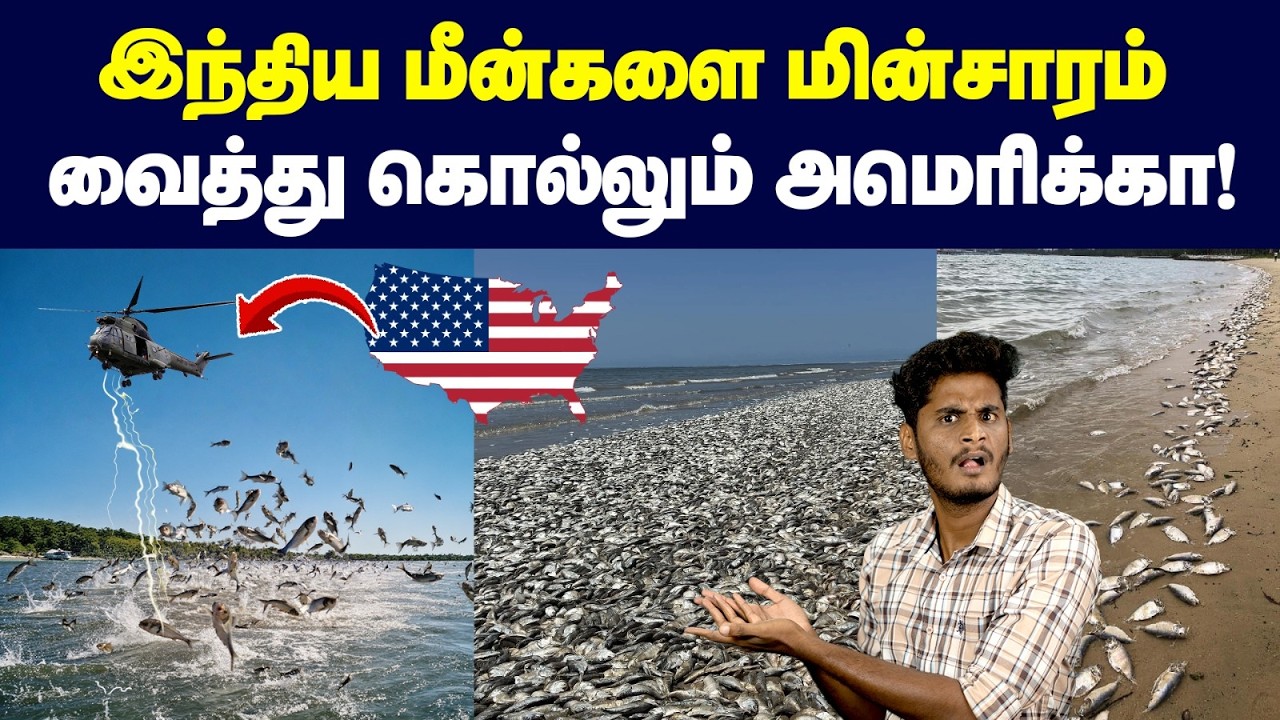
More than a century later, the United States faced a different kind of threat, this time ecological rather than medical. Invasive Asian carp, originally introduced to control algae in southern fish farms, escaped into major river systems and began migrating north. These fish reproduce rapidly, outcompete native species, and consume massive amounts of plankton, threatening to collapse the food web of the Great Lakes—which contain nearly 20% of the world’s surface freshwater.
To stop this invasion, physical barriers were not enough. Blocking rivers would disrupt shipping, commerce, and natural water flow. Instead, engineers deployed electric fish barriers in key waterways. These systems create carefully controlled electric fields underwater that repel fish without killing them, while allowing boats and barges to pass safely. The rivers are not “electrified” in a lethal sense, but turned into invisible force fields designed to control biological movement.
Together, the Chicago River reversal and the electrification of U.S. waterways represent a rare moment in human history where nature was not adapted to—but redesigned. These projects reveal how extreme crises can push societies to override natural systems in order to survive, protect ecosystems, and maintain modern civilization. America’s rivers tell a story not just of water and flow, but of how far engineering will go when the cost of doing nothing becomes too high.
✅ Subscribe To Our Other YouTube Channels:
Theneer Idaivelai: / @theneeridaivelai
Naattu Nadappu: / @naattunadappu
Skiddy: / @skiddytamil
Lets Dance: / @letsdance3608
Welcome to Streetlight! With a community of 2.1 million subscribers, our channel dives deep into all branches of science—from biology and chemistry to astrophysics and engineering. We explore fascinating topics, bust myths, and uncover the science behind everyday phenomena. Whether you're curious about the mysteries of space, the mechanics of machines, or the wonders of the natural world, Streetlight is here to light the way with engaging, informative, and thought-provoking content. Join us in exploring the universe and beyond, one video at a time!

Информация по комментариям в разработке