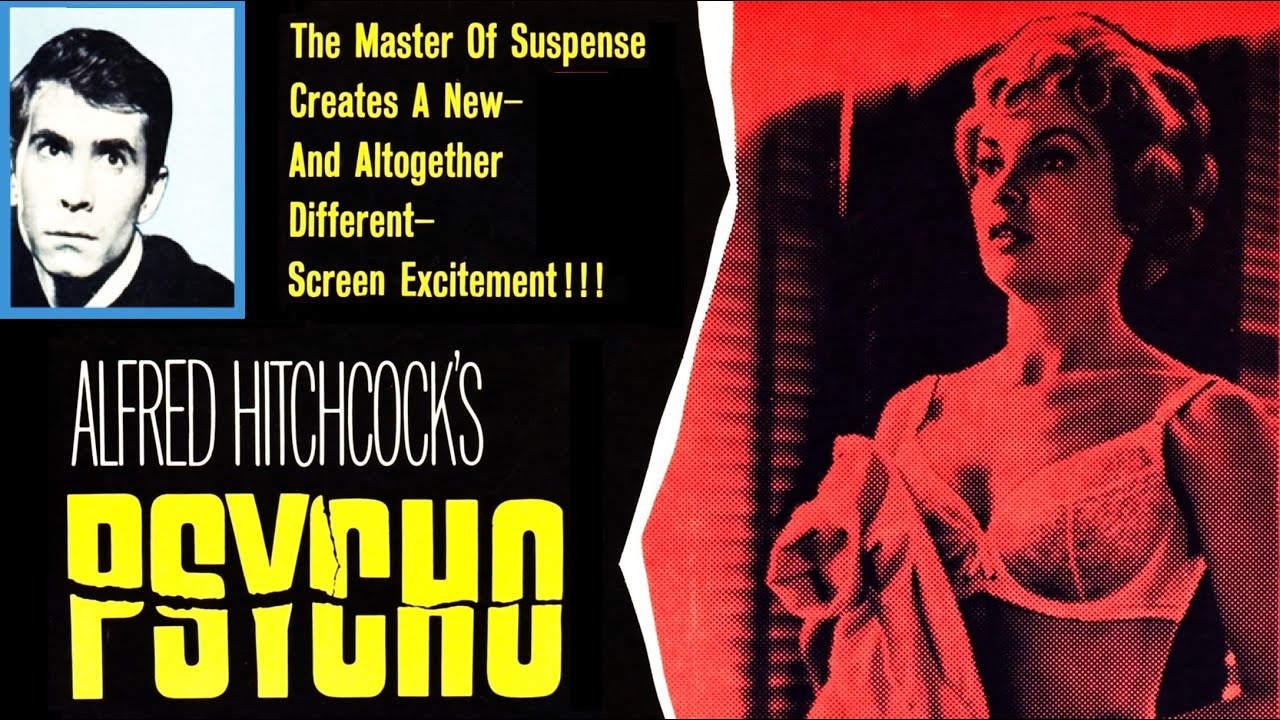
Psycho (1960)
TCSM Classification: Culture-Infused
MPAA Rating: R (re-rating for 1984 re-release; originally unrated)
Genre: Thriller, Horror, Psychological
Director: Alfred Hitchcock
Writer: Joseph Stefano
Principal Cast: Anthony Perkins, Janet Leigh, Vera Miles, John Gavin, Martin Balsam
SYNOPSIS
Marion Crane, desperate to start a new life with her lover, impulsively steals $40,000 from her employer and flees Phoenix. Her journey leads her to the remote Bates Motel, where she encounters the shy proprietor Norman Bates, a young man with a complex relationship with his unseen mother. What follows transforms a simple theft narrative into a shocking psychological thriller that forever changed cinema.
Content Warning:
Violence: The famous shower murder scene, though restrained by modern standards, depicts a brutal stabbing. Additional violent scenes include a murder on a staircase.
Nudity/Sexual Content: Brief partial nudity during the shower scene. The opening shows Marion and Sam in a hotel room after a lunch-hour rendezvous.
Disturbing Psychological Content: Severe mental illness portrayed through Norman Bates' character, including dissociative identity disorder and psychosis.
Voyeurism: Norman spies on Marion through a peephole before the shower scene.
Language: Mild for contemporary standards.
Thematic Elements: Theft, deception, and psychological trauma make this unsuitable for younger viewers.
About The Content and Story Matrix Classifications:
Foundation-Based: This classification applies to creative works that primarily exist to preserve, teach, or document foundational truths, such as historical religious traditions, doctrines, cultural practices, or documented events and figures.
Culture-Infused: This category includes works where cultural, religious, or subcultural elements are organically essential to the narrative's meaning, shaping character motivations, development, and resolution naturally.
Entertainment-Driven: Works in this classification focus on universal human experiences, emotions, or storytelling elements like adventure, romance, or conflict, where cultural, religious, or foundational aspects serve primarily as atmospheric backdrops or decorative enhancements.
World-Centric: This quadrant encompasses creative works that deliberately challenge or systematically critique traditional cultural, religious, or foundational elements, often questioning accepted social structures, or proposing alternative viewpoints.
Информация по комментариям в разработке