(1 Feb 2024)
FOR CLEAN VERSION SEE STORY NUMBER: 4476028
++MUSIC CLEARED FOR EDITORIAL USE++
ASSOCIATED PRESS
ARCHIVE: Los Angeles, California – 16 January 2007
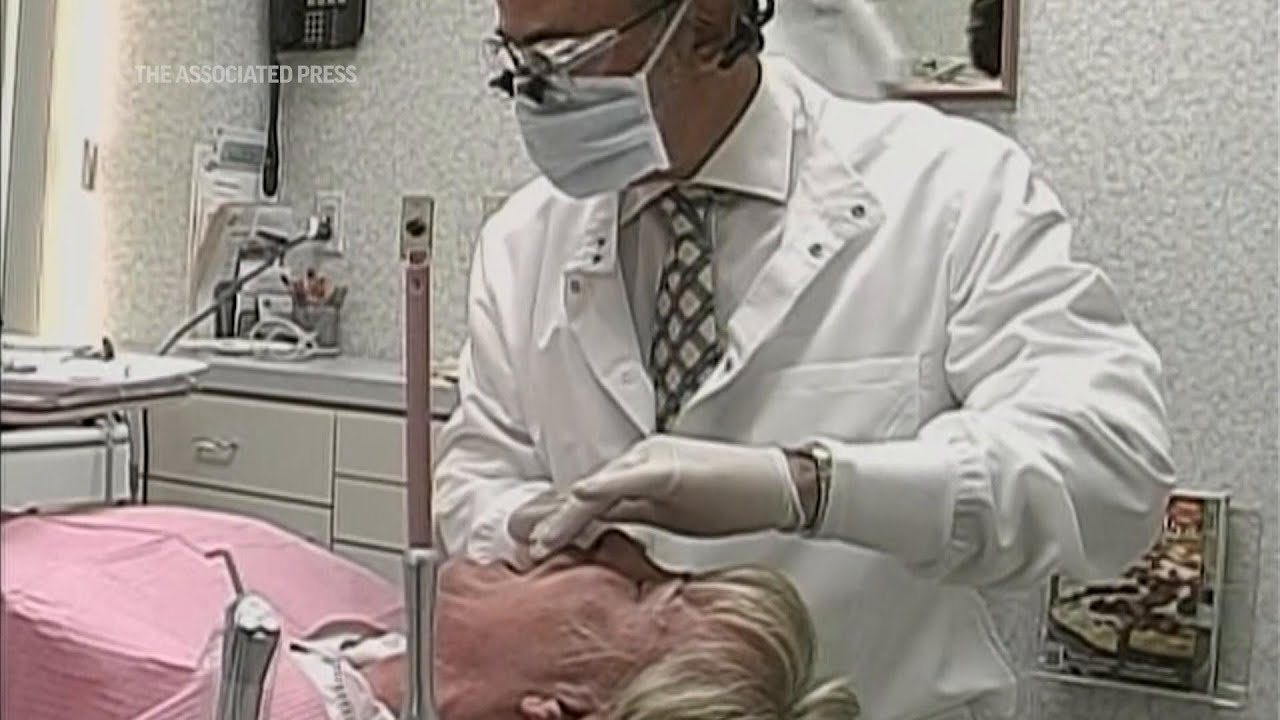
1. Wide of dentist working on patient
HEADLINE: Lead aprons no longer needed for dental X-rays
2. X-rays of teeth
ANNOTATION: The American Dental Association released new recommendations that lead aprons are not required to protect patients from radiation exposure.
++PARTIALLY COVERED++
ASSOCIATED PRESS
Los Angeles, California – 1 February 2024
3. SOUNDBITE (English) Sanjay Mallya, UCLA Dentistry:
"The use of lead aprons in X-rays has been a very long standing tradition. And what these recommendations that will come out from the Ada and also have come out for many other organizations, indicate that we don't need to use these lead aprons anymore."
ASSOCIATED PRESS
ARCHIVE: Los Angeles, California – 16 January 2007
4. Various of dental procedure
++COVERED++
ASSOCIATED PRESS
Los Angeles, California – 1 February 2024
5. SOUNDBITE (English) Sanjay Mallya, UCLA Dentistry:
"These practices were put into place in the 1950s when there was concern that there might be some hereditary effects of radiation. But since then, the data and science has shown that really there is no risk of any hereditary effects of radiation in humans."
ASSOCIATED PRESS
ARCHIVE: Los Angeles, California – 16 January 2007
6. Closeup of hands working on teeth
7. Closeup of teeth
++COVERED++
ASSOCIATED PRESS
Los Angeles, California – 1 February 2024
8. SOUNDBITE (English) Sanjay Mallya, UCLA Dentistry:
"Dental X-rays contribute less than 2% of the overall exposure to medical, radiation."
ASSOCIATED PRESS
ARCHIVE: St. Johnsbury, Vermont – 1 February 2007
9. IMAGE: Dr. Kathy Silloway looks at an X-ray at her office.
STORYLINE:
Those heavy lead aprons may be on their way out at the dentist office, depending on where you live.
The nation's largest dental association said Thursday it will no longer recommend the use of lead aprons and thyroid collars on patients who are getting dental X-rays.
There are two main reasons for the change. X-ray beams are now more focused, so there is less concern about radiation hitting other parts of the body. Also, the aprons and collars can sometimes block dentists from getting the images they need.
The best thing to lower radiation exposure is to make sure the patient needs the X-ray and to do it right the first time, said Dr. Purnima Kumar, who chairs the American Dental Association Council on Scientific Affairs, which released the recommendation.
Dental X-rays use a relatively small amount of radiation to begin with, she said.
“It’s like taking a flight from, let’s say, from Michigan to San Francisco, it gives you the equivalent of one dental X-ray,” Kumar said.
The association's recommendation is just that. True change depends on state dental boards, dentists and patients, Kumar said. For example, California state rules require dentists to use the aprons.
Sanjay Mallya, a radiologist and professor at the University of California, Los Angeles, said there is “no hard science,” that the aprons are needed.
“Yet at the same time, we do have the letter of the law that requires that,” said Mallya, who helped write the American Academy of Oral and Maxillofacial Radiology's recommendation in the fall against the use of lead aprons and thyroid collars. Kumar noted it was that group's recommendation that spurred the American Dental Association to look at the topic.
The most recent guidance is also backed by medical physicists with the U.S. Food and Drug Administration.
Find out more about AP Archive: http://www.aparchive.com/HowWeWork
Twitter: / ap_archive
Facebook: / aparchives
Instagram: / apnews
You can license this story through AP Archive: http://www.aparchive.com/metadata/you...

Информация по комментариям в разработке