The Indo-Pacific has recorded some of the most severe climate-related health challenges in recent years. The World Health Organization (WHO) estimates that globally, between 2030 and 2050, climate change could cause approximately 250,000 additional deaths annually from malnutrition, vector-borne diseases, and heat stress. With rising sea levelscontaminating freshwater supplies and increasing salinity in coastal areas, waterborne diseases are on the rise. Rising temperatures have already led to a 46 percent increase in heat-related mortality in the Indo-Pacific over the past two decades. Moreover, climate-induced disasters have directly impacted healthcare systems, as seen in the Pacific islands,where severe cyclones have destroyed medical infrastructure and limited access to essential services. Vulnerable populations including coastal communities, indigenous, and women, are disproportionately affected, with limited adaptation measures in place.
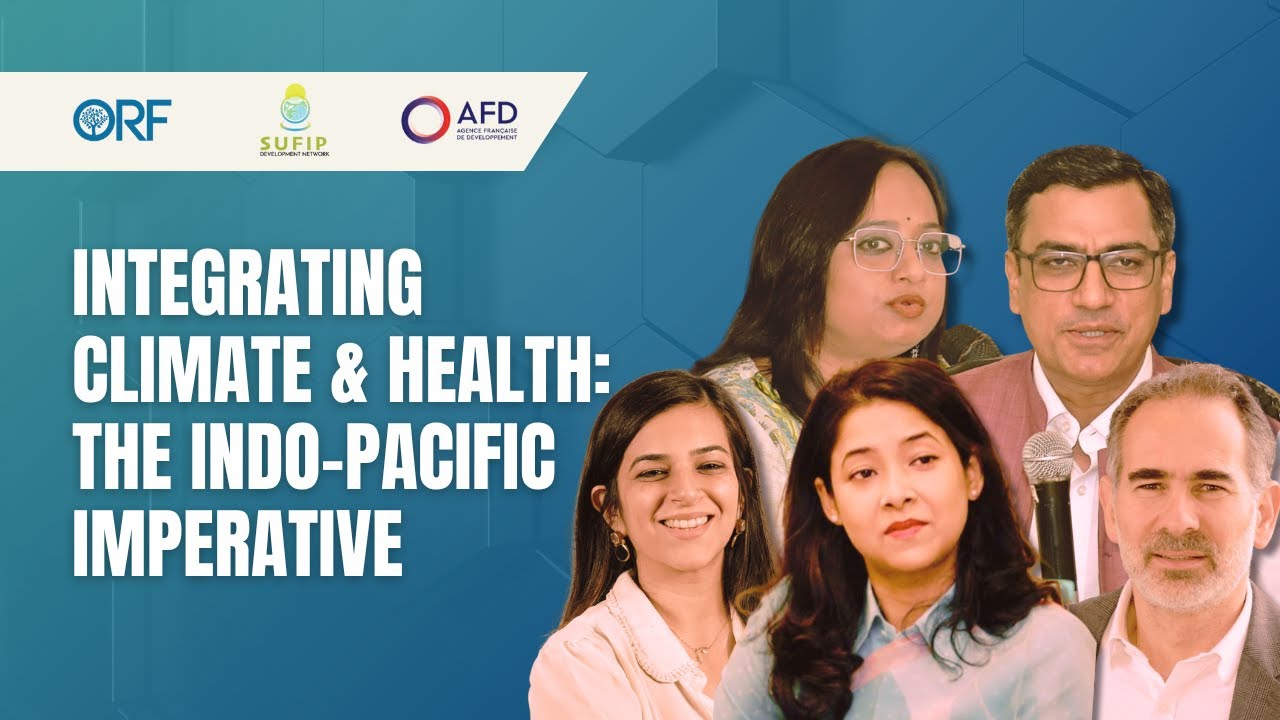
Despite increasing recognition of climate-health risks, policies remain fragmented due to institutional silos, inadequate funding for climate-resilient healthcare, and limitedcoordination between public health, environmental, and agricultural sectors. This panel will identify policy recommendations for financing mechanisms and technological solutions to strengthen health resilience, utilizing the lens of One Health. This approach recognizes that climate change is not only exacerbating direct human health risks but also disrupting ecosystems, altering disease transmission patterns, and increasing the risk of zoonotic spillovers. Addressing these interrelated threats requires an integrated response across human, animal, and environmental health sectors
Driving Questions:
How can climate resilience strategies be effectively mainstreamed into healthcaresystems to address climate-induced health challenges? What role does the One Health approach play in mitigating the health impacts of climate change, and how can it be effectively integrated into public health policies? What role do international collaborations and development cooperation play in strengthening climate-health resilience in the region? What targeted strategies are needed to address the specific evolving health needs of vulnerable communities, including women, the elderly and indigenous peoples?
Speakers:
Prabhat Kumar, Social Policy Specialist & PME Focal, UNICEF Office for West Bengal
Ritika Kapoor, Climate Change and Health Specialist, Natural Resources Defence Council (virtual)
Upasona Ghosh, Associate Professor, Public Health Foundation of India
Thomas Gonnet, Regional Task Manager - Health and Social Protection, Agence Française de Développement (AFD) (Virtual)
Moderator:
Aparna Roy, Fellow & Lead Climate Change and Energy, Observer Research Foundation

Информация по комментариям в разработке