Hey friends...
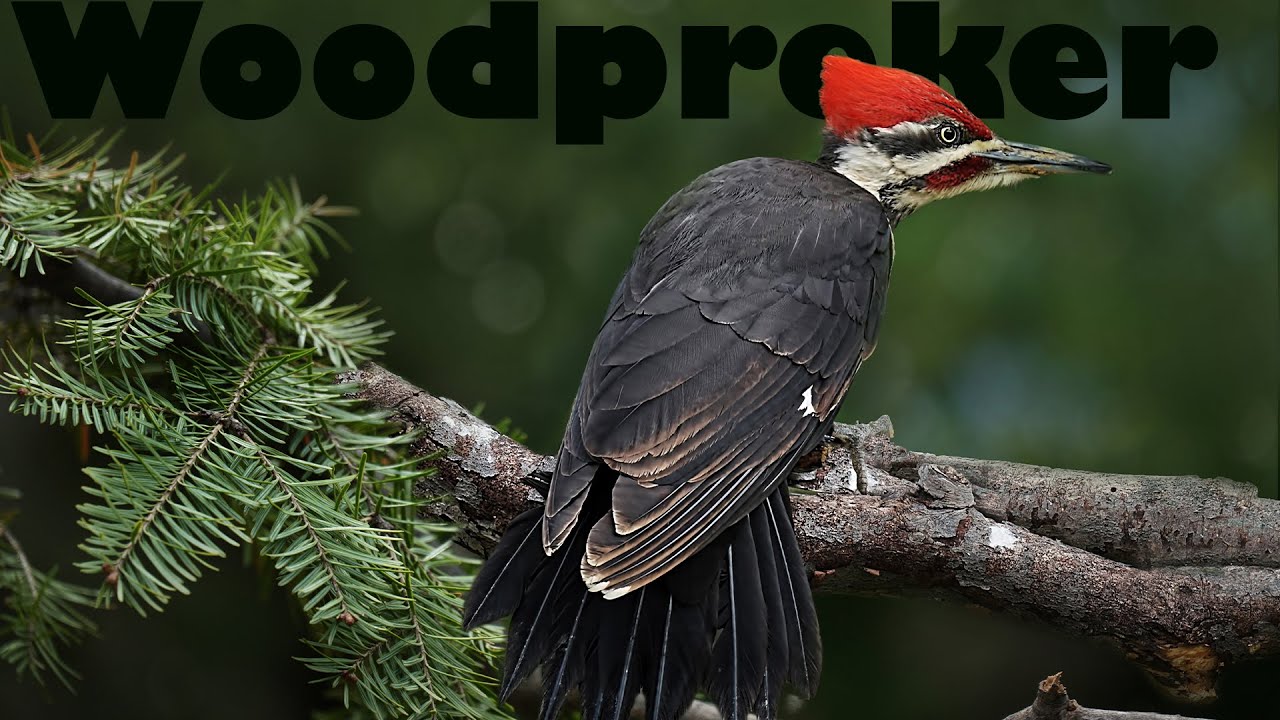
This video about is Most beautiful woodpecker in the world
Woodpecker bird Details
Piculets, wrynecks, and sapsuckers are all members of the Picidae family, which also contains woodpeckers. Except for Australia, New Guinea, New Zealand, Madagascar, and the extreme polar areas, members of this family can be found all over the world. The majority of species dwell in woods or woodland settings, however a few species have been identified that survive in treeless places such as steep hillsides and deserts, and the Gila woodpecker is known to prey on cacti.
The members of this family are well recognized for their peculiar behavior. They mostly forage for insect prey on tree trunks and branches, and they frequently communicate by drumming their beaks, which produces a reverberatory sound that may be heard from a long distance. Fruits, birds' eggs, tiny animals, tree sap, human trash, and carrion are among the foods consumed by some species. They usually nest and roost in holes they dig in tree trunks, and their abandoned holes are valuable to cavity-nesting birds. They occasionally cause conflict with humans by causing holes in buildings or feeding on fruit crops, but they provide a valuable service by removing insect pests from trees.
The Picidae are one of nine surviving families in the order Piciformes, with the barbets (three families), toucans, toucan-barbets, and honeyguides making up the clade Pici (together with woodpeckers), and jacamars and puffbirds making up the clade Galbuli. The sisterhood of these two groups has been proven through DNA sequencing. Picidae is a family with roughly 240 species divided into 35 genera. Almost 20 species are threatened with extinction as a result of habitat loss or fragmentation, with one species, the Bermuda flicker, now extinct and two more potentially so.
The bar-breasted piculet, with a length of 7.5 cm (3.0 in) and a weight of 8.9 g, appears to be the smallest of the woodpeckers (0.31 oz).Some of the largest woodpeckers can reach a length of more than 50 cm (20 in). The great slaty woodpecker is the largest surviving species, weighing 430 g (15 oz) on average and up to 563 g (19.9 oz) and measuring 45 to 55 cm (18 to 22 in). However, the extinct imperial woodpecker, measuring 55 to 61 cm (22 to 24 in), and ivory-billed woodpecker, measuring 48 to 53 cm (19 to 21 in) and weighing 516 g (18.2 oz), were likely both.
Woodpeckers are arboreal birds that live in wooded areas. Tropical rainforests have the highest diversity, although they can be found in practically every suitable habitat, including woods, savannahs, scrublands, and bamboo forests. Various species have colonized grasslands and deserts as well. Where there are few trees or, in the case of desert species like the Gila woodpecker, tall cactus for nests, these habitats are more easily filled. Some are specialized, linked with coniferous or deciduous forests, or even individual tree genera, such as the acorn woodpecker (oaks in this case). Other species, which are generalists, can adapt to forest clearance by taking advantage of secondary growth, plantations, orchards, and parks. Forest-dwelling species, in general, require rotting or dead wood to feed on.
Most woodpeckers live alone, although their behavior varies greatly, from very antisocial species that attack their own kind to those that live in communities. Solitary species protect feeding resources such as a termite colony or a fruit-laden tree by driving away conspecifics and returning again until the resource is depleted. Bill pointing and jabbing, head shaking, wing flicking, chasing, drumming, and vocalizations are all aggressive behaviors. Ritual actions seldom result in contact, and birds may "pause" for a period of time before resuming their fight. The colored patches may be disregarded, and these aggressive behaviors can resemble courtship rituals in some cases.
Picidae family members all build their nests in cavities, almost always in the trunks and branches of trees, far from the foliage. A decaying wood section bordered by sound wood is employed whenever possible. The golden flicker and ladder-backed woodpecker drill holes in cacti, while the Andean flicker and ground woodpecker dig holes in soil banks when trees are scarce. The campo flicker uses termite mounds on occasion, the rufous woodpecker loves ant nests in trees, and the bamboo woodpecker prefers bamboos. Woodpeckers also dig holes in residential and commercial structures, as well as wooden utility poles, to build their nests.
My other video
• Most popular Dove video in the world | Ani... -dove video
• Most popular Flamingos birds in the world ... - flamingos video
• Most beautiful Ant video in the world | An... - Ant video
• Most beautiful spider video in the world |... - spider video
• Most beautiful wolf in the world | wolf pa... - wolf video
Connect me : [email protected]
Facebook page : https://bit.ly/3ufL6v5
If you like my channel
Like
Comment
Share
Subscribe my channel
#Birds #Amazing #woodpecker

Информация по комментариям в разработке