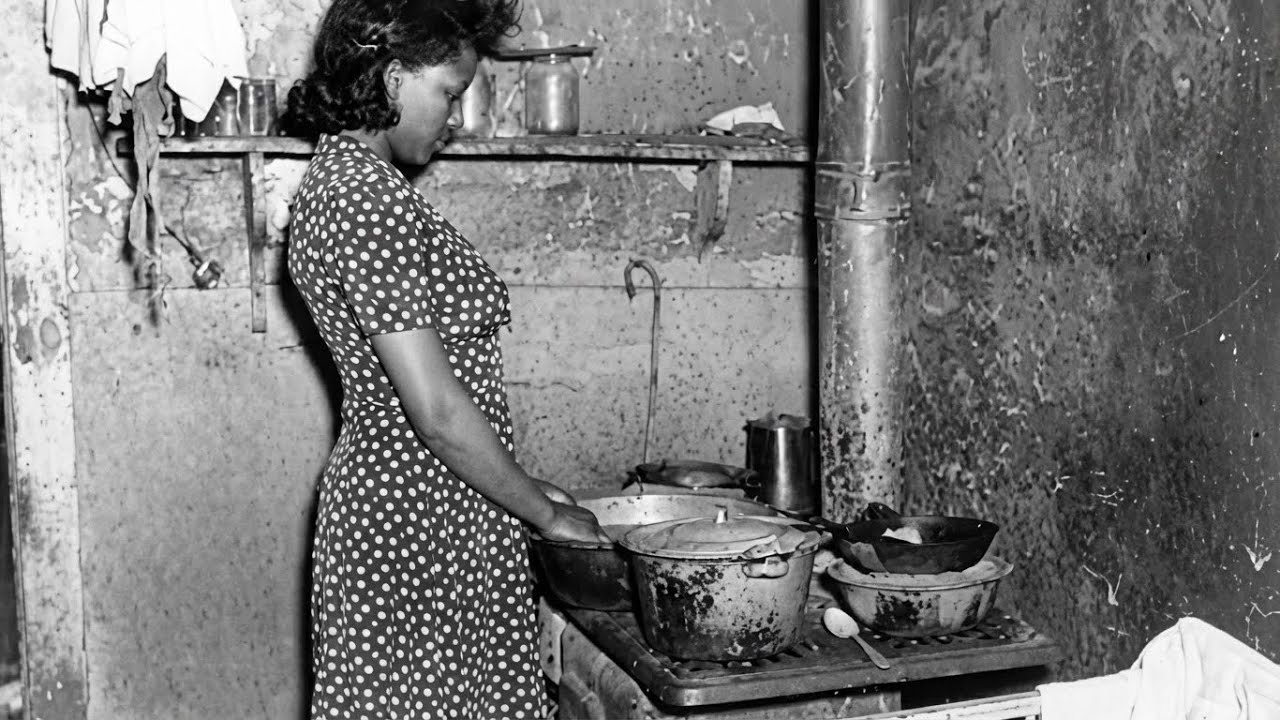
It’s a kitchen ritual that sparks arguments across dinner tables, family reunions, and every corner of social media: Black people washing meat before cooking, and white people—generally—don’t. Behind that divide sits a long, complicated history. For Black families, washing meat didn’t begin as a preference. It began as protection. Enslaved Africans were given leftover scraps, off-cuts, organs, and spoiled pieces that required intense cleaning to make safe and edible. That practice continued through Jim Crow segregation, the Great Depression’s relief lines, and the 1965 Watts uprising, where Black residents complained about local markets repeatedly selling spoiled, overpriced meat in their neighborhoods. That survival knowledge passed through generations—Black grandmothers teaching daughters, nieces, and grandchildren to rinse, soak, scrub, and never trust a package on sight.
Meanwhile, white households moved through history differently. As refrigeration, federal meat inspection, and supermarket expansion took hold, white communities tended to gain access to fresher, higher-quality cuts earlier and more consistently. Trust in those institutions became normalized. Public health messaging now discourages washing raw meat, arguing it spreads bacteria instead of removing it, and that proper cooking ensures safety. But habit isn’t just science—it’s memory. For many Black families, rinsing meat is an act of care rooted in real history: a way to protect the family when the system didn’t. For many white households, skipping that step reflects a belief that the system worked for them and still does. Two habits, two histories, one kitchen sink.
Scope News tells the truth—here are the facts
This report draws from documented accounts of enslaved Africans receiving off-cuts and scraps that required intensive cleaning, oral histories from the Great Depression describing Black families being handed spoiled meat in relief lines, and civil rights–era reporting connected to the Watts uprising detailing residents’ protests over markets selling spoiled meat in Black neighborhoods. Contemporary research on food apartheid and redlining confirms that predominantly Black neighborhoods have historically faced reduced access to fresh food and higher exposure to expired meat and low-quality goods. Modern public health guidance advises against washing raw meat, explaining that bacteria are eliminated by proper cooking rather than rinsing. Surveys show racial differences in food-handling practices, with Black households significantly more likely to wash poultry than white households, reflecting cultural memory and historically justified distrust in food systems.
LEGAL DISCLAIMER
This Scope News report is for educational, informational, and entertainment purposes only. It is not medical, nutritional, or legal advice. While based on documented history, oral testimony, and scholarly research, this report cannot represent every perspective or verify all individual accounts. Viewer discretion is advised, especially given references to slavery, segregation, and systemic neglect. Scope News aims to reflect history accurately within the limits of available records; however, readers should consult qualified professionals for specific food safety guidance.
#WhyBlackPeopleWashMeat #ScopeNews #BlackKitchenHistory #FoodSafety #CulturalMemory #BlackFoodways #WhyWeWashMeat #SoulFoodHistory #BlackFoodStories #KitchenTruths #TapWaterSeries #BathroomSeries #FoodApartheid

Информация по комментариям в разработке