How the 2,000-year-old Roman Colosseum was built — a detailed historical documentary revealing the engineering, materials, and political motives behind one of the greatest structures ever constructed.
This video explains how the 2,000-year-old Roman Colosseum was built without modern machinery, using techniques that allowed it to survive for two millennia.
How the 2,000-year-old Roman Colosseum was built is a story of engineering brilliance, political power, and human ambition. Rising from the heart of ancient Rome, the Colosseum was not just an arena for entertainment — it was a symbol of imperial authority and technical mastery unmatched in the ancient world.
The decision to build the Colosseum came after the Great Fire of Rome in 64 AD. Emperor Nero had claimed vast areas of land to construct his private palace, the Domus Aurea, fueling public resentment. When Vespasian came to power, he made a radical choice: return that land to the people by constructing a massive public amphitheater. This decision shaped how the 2,000-year-old Roman Colosseum was built — both politically and physically.
The site chosen was once an artificial lake. Roman engineers first had to drain it and stabilize the ground. They created a donut-shaped concrete foundation using Roman concrete made with pozzolana volcanic ash, a material that grows stronger over time. This foundation distributed weight evenly and allowed the Colosseum to withstand earthquakes and centuries of stress.
Understanding how the 2,000-year-old Roman Colosseum was built requires looking at its materials. Travertine limestone formed the outer walls, tuff stone filled the interior, and brick-faced concrete created structural cores. Iron clamps held massive blocks together, while a modular arch system allowed rapid construction and extraordinary strength.
Construction began under Vespasian and continued under Titus and Domitian. Remarkably, the Colosseum was completed in just eight years — an achievement made possible by standardized components, skilled labor, and an empire-wide supply chain.
Inside, the Colosseum was a marvel of crowd control. With 80 entrances and a system of corridors known as vomitoria, tens of thousands of spectators could enter or exit within minutes. Seating was strictly organized by social class, reflecting Roman hierarchy in stone.
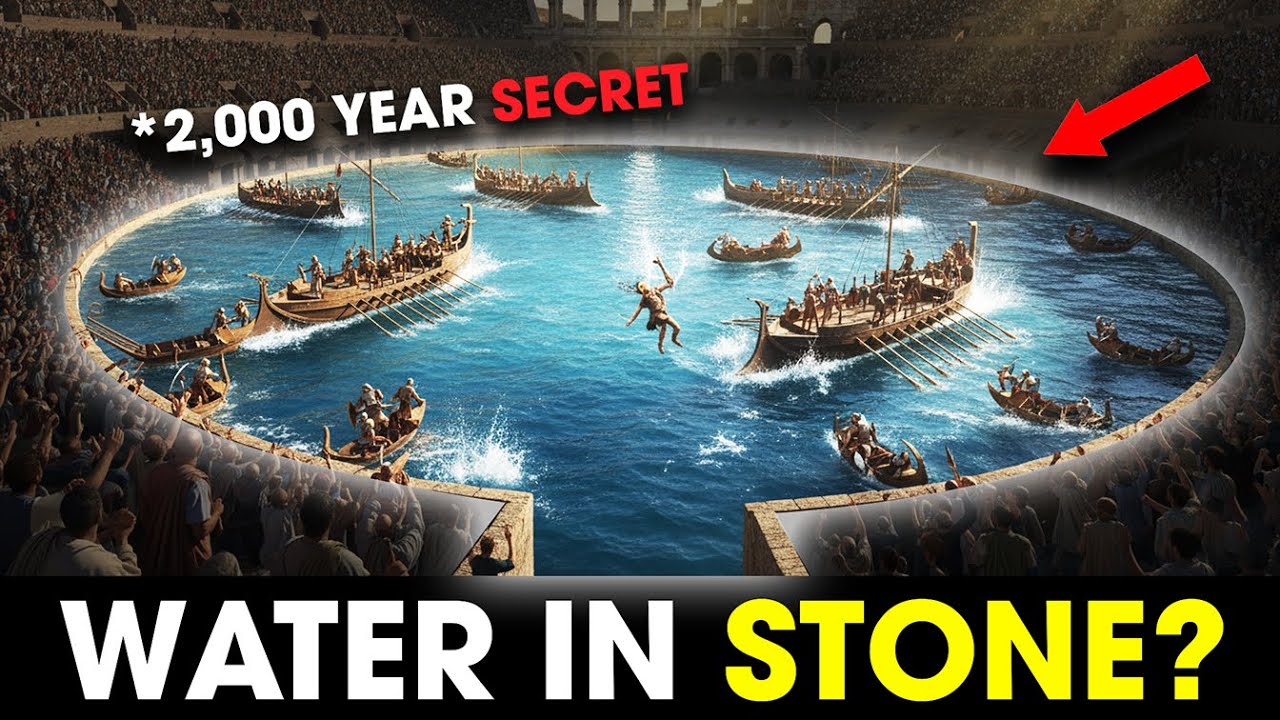
Beneath the arena floor lay the hypogeum — a complex underground network of tunnels, cages, elevators, and trapdoors. This mechanical system allowed animals, gladiators, and scenery to appear instantly, creating spectacles unlike anything the ancient world had seen. At times, the arena could even be flooded for staged naval battles.
The Colosseum was also equipped with the velarium, a massive retractable awning operated by sailors. It shaded spectators from the sun, demonstrating how deeply Roman engineering considered human comfort.
Over centuries, the Colosseum endured earthquakes, neglect, and stone removal. Yet its core structure survived. Roman concrete, intelligent load distribution, and the arch-based design explain why the Colosseum still stands after 2,000 years.
This documentary does not glorify violence. It explores how the Colosseum represents both the genius and cruelty of empire — a monument built through innovation, but fueled by power.
This video is shared for educational and historical purposes only. It explains how the 2,000-year-old Roman Colosseum was built and why its engineering legacy continues to influence modern architecture.
If you have ever wondered how ancient builders achieved such lasting greatness, this story will change how you see the ancient world.
🔔 SUBSCRIBE FOR MORE HISTORY & ENGINEERING DOCUMENTARIES
👉 / @americanlifetales19
00:00 How the 2,000-Year-Old Roman Colosseum Was Built
01:30 Why Rome Decided to Build the Colosseum
03:40 Draining the Lake and Preparing the Ground
05:50 Roman Concrete and Foundation Engineering
08:10 Materials, Arches, and Structural Design
10:30 How the Colosseum Was Built So Fast
12:40 Crowd Control and Seating by Social Class
14:30 The Hypogeum and Underground Machinery
16:10 Why the Colosseum Still Stands Today
#RomanColosseum
#AncientEngineering
#RomanEmpire
#HistoryDocumentary
#ArchitectureHistory
#AncientRome
#EngineeringMarvel

Информация по комментариям в разработке