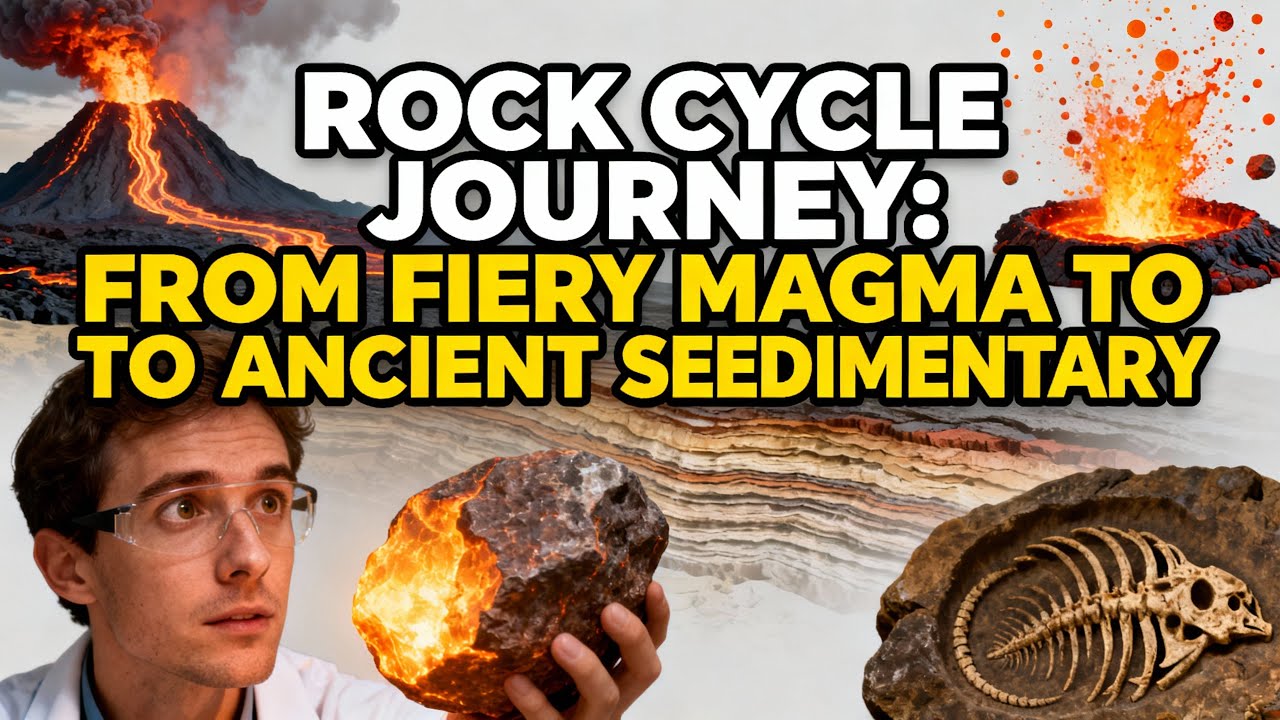
From fiery magma deep underground to the layered cliffs we see on the surface, Earth’s rocks are constantly on the move. This video explores the fascinating science behind the rock cycle and reveals how even the hardest stone is always changing.
Beneath Earth’s crust, glowing magma churns like a hidden ocean of melted rock. As this molten material rises and cools, it forms igneous rocks: towering mountains, jagged peaks, and crystalline shapes that mark the first visible stage of the rock cycle.
At the surface, these once‑solid rocks begin to break down. Wind, rain, temperature changes, and ice all work together to crack and crumble the stone. Over time, weathering turns solid rock into tiny grains and sediments. Rivers pick up these particles and carry them across the landscape, tumbling them through valleys and toward distant seas.
In calm floodplains and shallow marine environments, the sediments begin to settle. The heaviest grains fall first, then finer dust, forming colorful layers that stack gradually over millions of years. Each layer is like a page in Earth’s deep memory, preserving signs of past environments, ancient shorelines, and long‑vanished ecosystems.
As more and more layers build up on top, the weight and pressure increase. Water is squeezed out, and grains are pressed tightly together. Chemical reactions deep underground act like natural cement, binding the sediments into solid sedimentary rock with visible, wavy stripes. Fossils, ripple marks, and other delicate features may be locked inside, recording snapshots of Earth’s history.
Tectonic forces slowly reshape these rocks again. Sedimentary layers are lifted, folded, and tilted into new mountain ranges. Over vast stretches of geologic time, some rocks are buried even deeper, exposed to intense heat that may eventually melt them back into magma.
This continuous process—from magma to solid rock, to sediment, to layered stone, and back again—is known as the rock cycle. It is a powerful scientific reminder that our planet is dynamic, active, and always evolving, even when it appears still and unchanged.
In this video, you will learn:
• How magma forms and cools into igneous rock
• How weathering and erosion break rock into sediments
• How layers of sediment transform into sedimentary rock
• How tectonic forces bend, lift, and recycle Earth’s crust
• Why the rock cycle is one of the most fascinating processes in Earth science
Discover how the rock cycle shapes mountains, valleys, cliffs, and ocean floors—and what these transformations reveal about the hidden history of our planet.

Информация по комментариям в разработке