Scindapsus pictus (Araceae), commonly known as Satin Pothos or Silver Pothos, is a tropical evergreen climber native to Southeast Asia, including parts of Indonesia, Malaysia, Thailand, and the Philippines. Despite its common name, it is not a true Pothos (Epipremnum aureum) but belongs to a closely related genus within the tribe Monstereae, distinguished by its velvety leaf texture and distinctive silver variegation.
This species exhibits a shingling hemiepiphytic habit in the wild, initially growing along the forest floor before climbing trees via adventitious aerial roots that attach to bark and other surfaces. In cultivation, it is appreciated for its vining growth, ability to tolerate low light, and ornamental foliage.
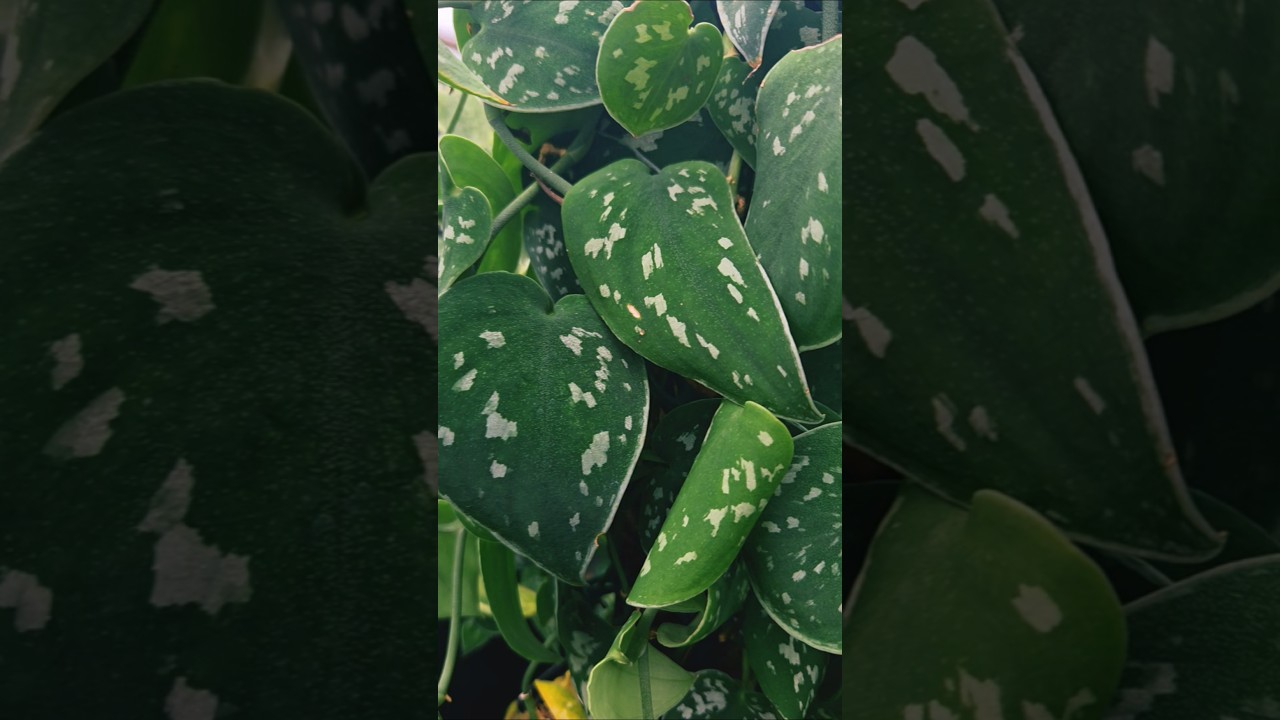
The leaves are simple, alternate, and broadly ovate to lanceolate in shape, typically 5–10 cm long in potted specimens but capable of much larger dimensions when allowed to climb vertically in humid conditions. The lamina is deep green to bluish-green with a matt, velvety surface covered in silvery-grey speckles or blotches, caused by localized air spaces (aerenchyma) beneath the epidermis reflecting light—a trait known as iridescence or blush variegation.
Scindapsus pictus grows via sympodial branching and produces long internodes, particularly in low-light conditions. Under brighter, indirect light, internodal spacing tightens, and leaf size and variegation intensity improve. The plant employs C3 photosynthesis but shows adaptation to shaded understory habitats via chloroplast stacking and thin leaf cuticles.
It is rarely seen in flower in indoor cultivation. In its natural habitat, it produces a typical aroid inflorescence consisting of a spadix and a greenish spathe. Flowering requires a mature, well-established plant and specific environmental cues such as photoperiod and humidity.
Vegetative propagation is straightforward and typically done via node cuttings in water or moist substrate. The presence of aerial roots at each node facilitates rooting, making it suitable for propagation in semi-hydroponic systems or LECA.
The species thrives in loose, well-aerated, and well-draining media—typically a mix of peat or coco coir, perlite, orchid bark, and compost. Overwatering is the most common cultivation issue, often leading to root rot via opportunistic fungal pathogens (Pythium, Phytophthora). Moderate to high humidity (50–70%) and stable temperatures (18–29°C) are optimal for sustained growth.
Toxicologically, Scindapsus pictus contains calcium oxalate crystals in the form of raphides, which can cause oral and gastrointestinal irritation if ingested and mild dermatitis on contact for sensitive individuals. It is considered toxic to pets and should be placed out of reach of cats, dogs, and small children.
This species is notable for its contribution to indoor air purification. While less studied than some other aroids, it has been shown to aid in the reduction of airborne pollutants, particularly when cultivated in large quantities with good air circulation.
Numerous cultivars of S. pictus exist in the ornamental trade, including:
‘Argyraeus’ – smaller leaves with delicate silver speckling and defined margins.
‘Exotica’ – larger leaves with heavier silver blotching.
‘Silvery Ann’ – irregular, sometimes nearly full silver coverage.
In summary, Scindapsus pictus is a highly ornamental and ecologically versatile aroid, prized for its foliage aesthetics, adaptability, and ease of care. Its tolerance to lower light and robust growth make it a popular choice for both novice plant keepers and botanical collectors.

Информация по комментариям в разработке