HOW TO Removal of air pollutants By trees and plants in India!!
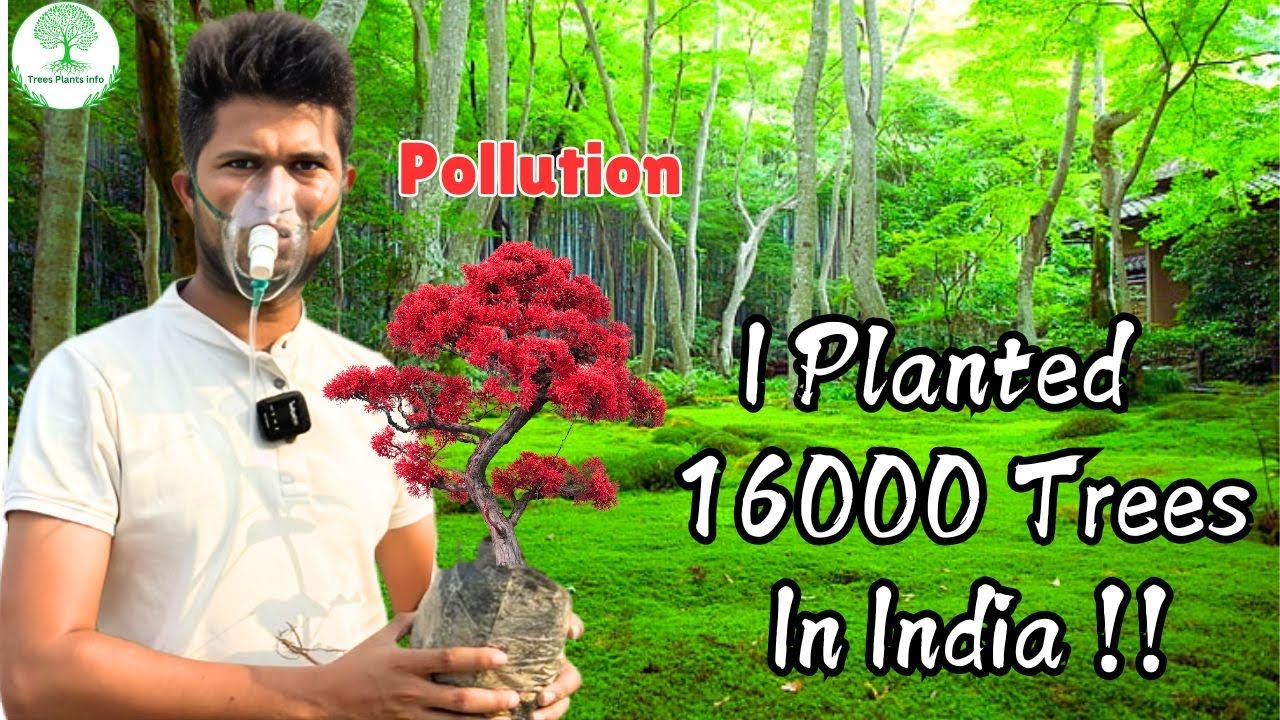
I Planted 16000 🌳Trees In India! || Removal of air pollutants By trees and plants in India!!
''
''
The removal of air pollutants by trees and plants in India is crucial for improving air quality, especially in urban areas. Here’s how trees and plants help in this process and how they’re being utilized across India:
1. Mechanisms of Pollutant Removal by Trees and Plants
Absorption of Pollutants: Trees and plants absorb gases like carbon dioxide (CO₂), sulfur dioxide (SO₂), nitrogen oxides (NOₓ), and ozone (O₃) through their leaves and stems.
Particulate Matter (PM) Filtration: Leaves and needles can trap particulate matter (PM10 and PM2.5) on their surfaces, reducing airborne particles that contribute to respiratory issues.
Cooling and Shade: Trees reduce temperatures through shade and evapotranspiration, which indirectly lowers the formation of ground-level ozone and associated pollutants.
Improved Oxygen Levels: By photosynthesis, trees release oxygen, which dilutes the concentration of other harmful gases in the atmosphere.
2. Key Tree and Plant Species for Pollution Control in India
Neem (Azadirachta indica): Highly effective in removing sulfur dioxide, nitrogen oxides, and PM due to its dense foliage.
Peepal (Ficus religiosa): Known for high oxygen release and effective absorption of gaseous pollutants.
Arjuna (Terminalia arjuna): Thrives in urban areas and effectively absorbs particulate matter.
Tulsi (Ocimum sanctum): Often planted near homes and temples; absorbs toxic gases and improves surrounding air quality.
Banyan (Ficus benghalensis): Its large canopy is excellent for trapping PM and absorbing carbon dioxide.
3. Urban Forestry Initiatives in India
Green Belts: Many Indian cities are developing green belts around industrial areas and highways to act as pollution barriers.
Roadside Plantation Programs: Government initiatives encourage planting along roadsides and highways. These plantings aim to trap dust and pollutants from vehicle emissions.
Urban Gardens and Parks: Urban spaces are increasingly being developed with green cover to absorb pollutants. Programs like the Delhi government’s Greener Delhi and Miyawaki forests aim to increase green cover and reduce pollution.
4. Policy and Community Initiatives
National Clean Air Programme (NCAP): Launched by the Ministry of Environment, Forest and Climate Change (MoEF&CC), NCAP aims to increase green cover in polluted cities and promote large-scale afforestation programs.
Tree Planting Drives: Many state governments, NGOs, and local communities regularly organize planting drives in polluted areas.
Corporate Green Initiatives: Private companies contribute by funding afforestation projects as part of their CSR activities, adding to green cover.
5. Considerations for Maximizing Impact
Species Selection: Choosing native, pollution-tolerant species ensures higher survival rates and pollutant absorption efficiency.
Maintenance and Protection: Regular maintenance, including watering and protection from pests, is essential to ensure trees reach maturity, where their pollutant absorption is most effective.
Community Involvement: Educating the community and involving locals in green initiatives creates awareness and long-term support.
Implementing these strategies on a larger scale, especially in high-pollution zones, can significantly impact air quality, making cities more sustainable and healthier.
reduction of air pollutants,
how to reduce indoor air pollution,
reasons for air pollution,
remedies of air pollution,
air pollution prevention model,
air pollutants,
analysis of air pollutants,
air pollution and air pollutants,
air pollution what causes air pollution,
air pollution prevention project,
5 causes of air pollution,
the cause of air pollution,
effects of air pollutants,
air pollution full topic,
particulates in air pollution,
factory emissions air pollution,
gaseous air pollutants,
carbon monoxide as air pollutant,
where does air pollution come from,
air pollution environmental law,
Air Pollution Control Act 1981,
air pollution primary and secondary pollutants,
primary and secondary air pollutants,
what are air pollutants,
what are primary air pollutants,
how can air pollution be controlled
''
''
#treelovers #treeplantation #treeplanting #nature #treeplantationdrive #naturelovers #greenindia #treesplantsinfo

Информация по комментариям в разработке