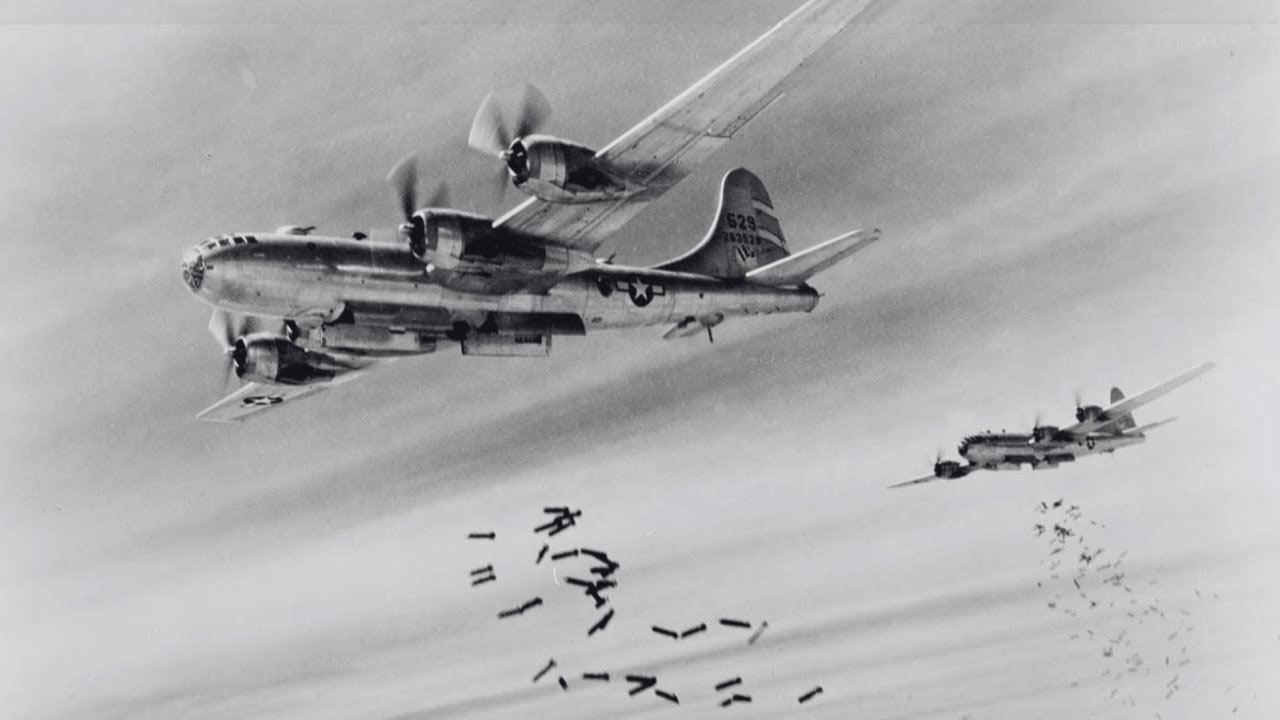
B-29 SuperFortress attack from heights beyond the reach of Japanese pilots. In 1944, the Boeing B-29 Superfortress entered combat—a bomber so advanced it rendered Japan’s air defenses obsolete. With pressurized cabins, turbo-supercharged engines, and remote-controlled gun turrets guided by analog computers, it could fly higher, faster, and farther than any enemy fighter could reach.
From the runways of Saipan, Tinian, and Guam, fleets of B-29s struck directly at Japan’s home islands. At altitudes above 30,000 feet, Japanese interceptors overheated, stalled, or ran out of fuel before they could even fire a shot. In a single year, the Superfortress flew 31,387 combat sorties, destroyed 914 enemy aircraft, and lost only 72 to fighters—proof that technology had outpaced courage.
Under General Curtis LeMay, tactics shifted. Instead of high-altitude precision raids, the B-29s swept in low at night, unleashing incendiary firestorms that burned Tokyo and other cities to the ground. On March 9, 1945, more than 100,000 people died in a single night as 334 bombers turned the capital into an inferno.
And in August, the B-29 sealed its place in history. Enola Gay over Hiroshima. Bockscar over Nagasaki. Two missions that ended the war—and changed the world forever.
Behind each mission was an industrial miracle: nearly 4,000 aircraft built across America, each requiring 13 tons of aluminum, half a ton of copper, and miles of wiring and tubing. It was the ultimate demonstration that mass production and technological integration could determine the outcome of wars.
This is the story of the Boeing B-29 Superfortress—the bomber that dominated the skies, broke an empire’s will, and wrote the future of warfare in contrails across the stratosphere.
👉 If you love deep WWII history and aviation technology stories, like, subscribe, and comment: Could any fighter today stop a plane like the B-29 in 1945?
#B29SuperFortress #ww2aviation #ww2history
Информация по комментариям в разработке