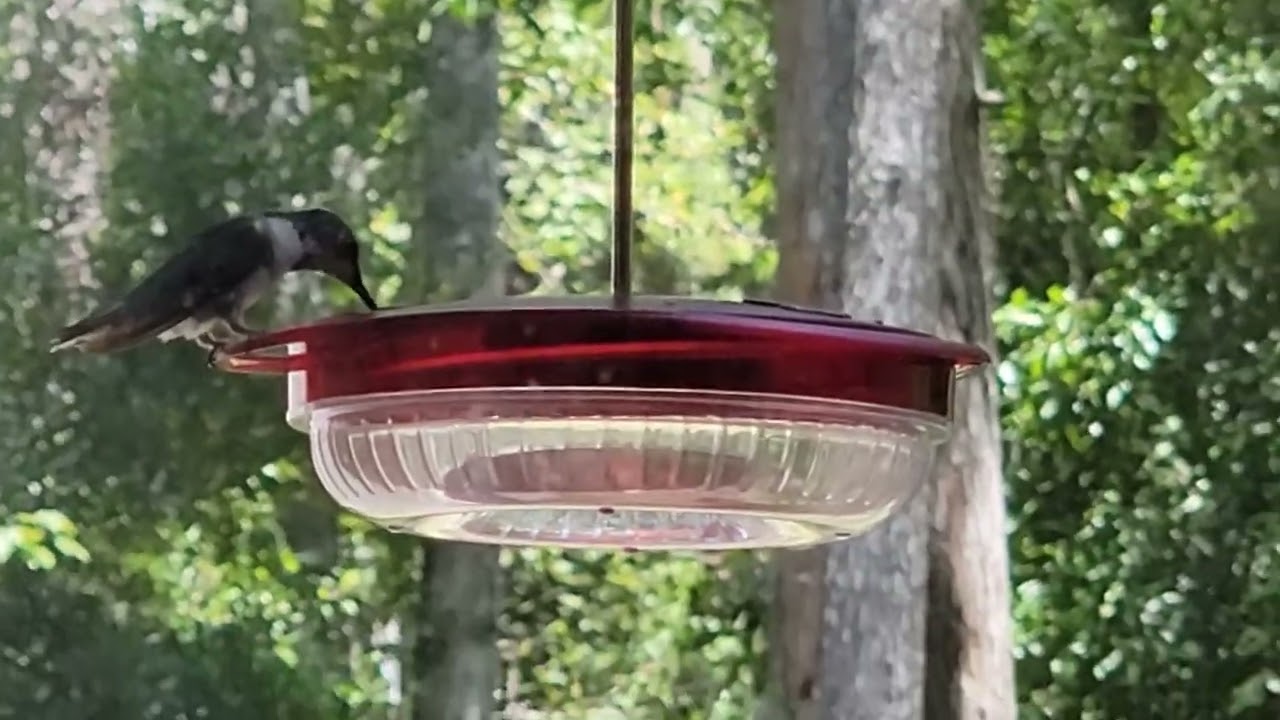
RUBY THROATED HUMMINGBIRD AT FEEDER I FILMED FROM MY OFFICE WINDOW I FLORIDA NATURE #hummingbird
To view more of the Bird series, click here: • Birds
The ruby-throated hummingbird is the most common hummingbird found in Florida and throughout eastern North America. They are known for their vibrant ruby-red throats on males, emerald green backs, and ability to hover and fly backward. In Florida, they are typically seen during migration from March to October, though some may overwinter in South Florida.
Key characteristics and facts about ruby-throated hummingbirds:
Appearance: Males have a brilliant iridescent red throat (ruby-red), while females and juveniles have white throats. Both have green backs and white underparts.
Size: They are small, measuring about 3 inches long, and weigh less than a penny.
Flight: They are renowned for their incredible flight abilities, including hovering, flying backward, and even upside down. Their wings beat about 53 times per second.
Migration: Ruby-throated hummingbirds are long-distance migrants, with many flying across the Gulf of Mexico during migration.
Habitat: They are found in open woodlands, meadows, forest edges, and gardens.
Attracting them: You can attract them to your yard by planting tubular flowers like honeysuckle, planting red cardinal flowers, or hanging hummingbird feeders with sugar water.
Florida presence: While some overwinter in South Florida, they are most commonly seen during spring and fall migrations.
Nesting: They build small nests, about the size of a thimble, out of spider silk and plant down on tree branches, often 10 to 40 feet above the ground.
Here's how to create a hummingbird haven:
1. Plant native, nectar-rich flowers
Hummingbirds primarily feed on the nectar of flowers, especially those with red or orange tubular blooms.
Florida native plants are a great choice because they are well-adapted to the local climate and soil conditions.
Red Cardinal Flower: A tall-stemmed perennial blooming from late summer to early winter, perfect for damp areas.
Coral Honeysuckle: A beautiful vine with red or pink blooms that flower profusely in spring and sporadically through summer.
Firebush: A fast-growing shrub with prolific blooms, also attractive to butterflies, bees, and other pollinators.
Coralbean: A shrub with striking red flowers.
Trumpet Creeper: A vibrant vine with large, showy blooms.
Butterfly Weed: An orange-flowered perennial blooming in summer, requiring sun and well-drained soil.
Bee Balm: A herbaceous perennial with small flowers blooming from late spring through fall.
Cross Vine: A vine that can create a cascade of blooms when grown on a trellis.
Tropical Sage: A beautiful wildflower.
Consider bloom time: Choose a variety of plants that bloom at different times of the year to ensure a continuous nectar source from March to September, when hummingbirds are most active in Florida.
Create groupings: Arrange flowers in multiple groupings, allowing several hummingbirds to feed simultaneously without territorial conflicts.
2. Encourage insect populations
Hummingbirds also consume small insects and spiders for essential protein and other nutrients, especially when feeding their young or during their annual feather molt.
Avoid pesticides: Refrain from using pesticides in your yard, as these chemicals can harm both the insects hummingbirds eat and the birds themselves.
Embrace natural processes: Let some areas of your yard remain a bit wild, allowing for the growth of diverse vegetation and the presence of insects and spiders.
3. Supplement with feeders (with caution)
While feeders shouldn't be the primary food source, they can supplement the nectar provided by flowers, especially during nesting season.
Use the correct solution: Mix one part plain white table sugar with four parts water. Heat the water to dissolve the sugar, then allow it to cool before filling the feeder.
NEVER use honey, artificial sweeteners, or food coloring, as these can be harmful or even fatal to hummingbirds.
Clean feeders regularly: Change the sugar water solution and clean the feeder every 3-5 days in warm weather or once a week in cooler weather to prevent mold and bacteria growth. I use 1 part regular sugar, plus 3 parts water and boil.
Placement matters: Place feeders in areas where cats or other predators cannot easily access them. Avoid placing feeders too close to windows to prevent collisions.
Consider placing multiple feeders at least 10 feet apart to reduce territorial conflicts among hummingbirds.
*
#reflectionsofnature #bird #birds #birdwatching #florida #floridawildlife #wildlife #wetlands #swamp #nature #naturelover #hummingbird #rubythroatedhummingbird #hummers

Информация по комментариям в разработке