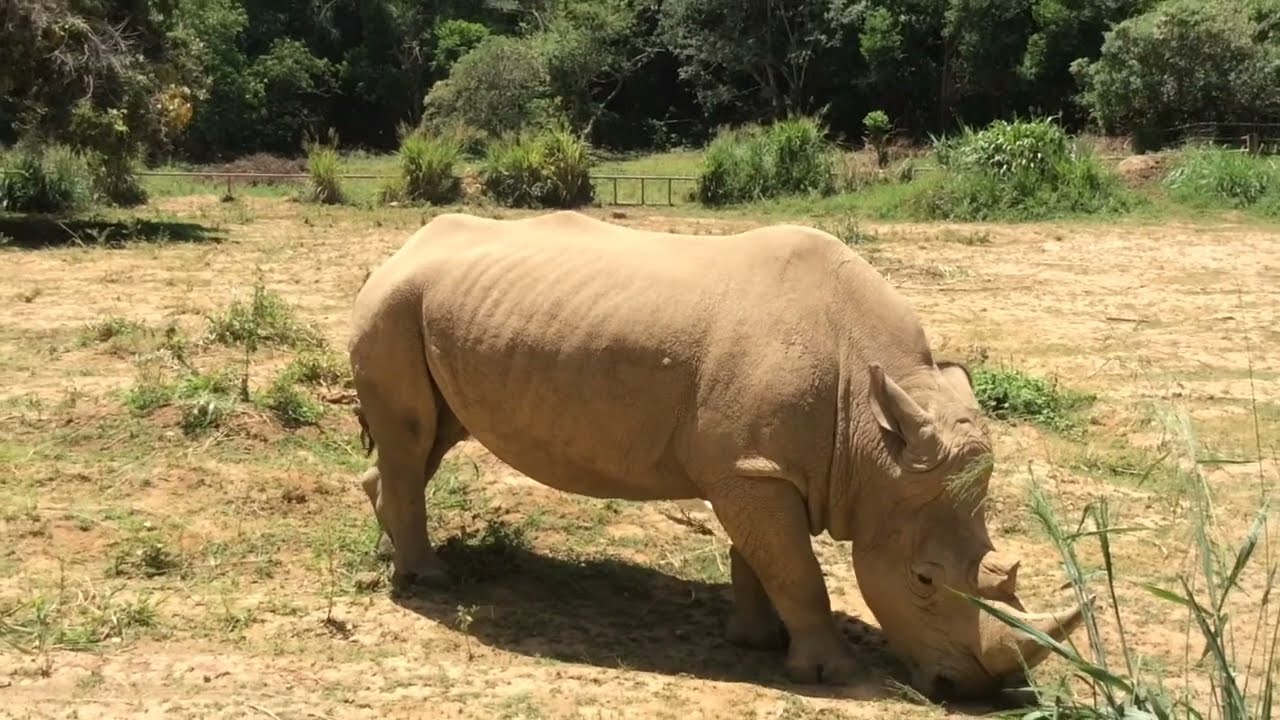
#rhino #rhinocerous #rhinos #grass #grazing #uganda #zoo #wildlife #animal
Rhinoceroses, commonly called rhinos, are large, thick-skinned, herbivorous mammals, native to Africa and Asia, characterized by one or two horns on their snouts and a thick, protective skin.
Here's a more detailed look at rhinoceroses:
Key Characteristics:
Appearance:
Rhinos are large, stocky animals with thick, almost hairless skin, and three toes on each foot.
Horns:
They are known for their horns, which are made of keratin, the same material as human hair and fingernails.
Diet:
Rhinos are herbivores, primarily grazing on grasses and leafy plants, and some species are browsers, feeding on leaves and twigs.
Size and Weight:
Rhinos are among the largest land mammals, with some species weighing up to 3-5 tons.
Habitat:
Rhinos live in various habitats, including grasslands, savannas, forests, and even dense rainforests.
Species:
There are five living species of rhinoceros: the white rhinoceros, black rhinoceros, Indian rhinoceros, Sumatran rhinoceros, and Javan rhinoceros.
Conservation Status:
Many rhinoceros species are endangered due to poaching for their horns, which are sought after in traditional medicine and other markets.
Specific Species:
White Rhinoceros:
Also known as the square-lipped rhinoceros, it has a broad, straight mouth used for grazing.
Black Rhinoceros:
Known for its hooked upper lip, which it uses to browse on leaves and twigs.
Indian Rhinoceros:
Also known as the greater one-horned rhinoceros, it is found in swampy jungles and forests.
Sumatran Rhinoceros:
The smallest and most distinctive of the rhinoceroses, it has a light coat of coarse hair.
Javan Rhinoceros:
A critically endangered species, it is found in a small area of Indonesia.
Video link; • Rhinocerous eating grass | Big Rhino grazing
Информация по комментариям в разработке