TeleAlarm Carephone Infopage: www.telealarm.com/en/project/ta74/
Hotline: 0044 (0) 7414 697295
| E-Mail: [email protected]
With our assistive technology devices and environmental sensors, users are reassured that the appropriate response for each type of alarm can be summoned.
What is a Home Emergency Call System?
A home emergency call system is a specialized system that allows for quick and uncomplicated reporting of emergencies to an emergency call center. Upon receiving such a notification, the center contacts the customer (usually through the speakerphone in the home emergency call system) and assesses the circumstances of the emergency. Depending on the situation, medical assistance may be requested, or, as agreed upon, family members, neighbors, or home care services may be notified.
In addition, a home emergency call device often includes a passive alarm. Customers must activate this alarm at agreed-upon intervals (e.g., every 24 hours) to confirm that everything is fine. If the alarm is not activated, the home emergency call provider attempts to make contact independently. If this contact fails, agreed-upon measures are initiated: authorized individuals can access the apartment with a previously provided key to check on the customer's well-being. This function can be deactivated as needed (e.g., during a vacation or hospital stay).
In addition to these systems, there are also mobile home emergency call systems, which are particularly useful for active individuals. The emergency call system is paired with a special transmitter or the individual's own mobile phone. In case of an emergency while shopping or on outings, the person in need can request assistance with the press of a button and, if this option is enabled, be located via GPS for prompt assistance.
Who Benefits from a Home Emergency Call Device?
A home emergency call system is beneficial for anyone who desires security in case of emergencies and relies on external assistance in specific situations.
Seniors: Aging independently in one's own home is achievable. Since seniors statistically fall into the most vulnerable category for household accidents, a home emergency call system can provide not only seniors themselves but also their family members with the reassuring knowledge that rapid help is guaranteed in emergencies.
People with Disabilities: Individuals with physical or cognitive disabilities also greatly benefit from the security provided by a home emergency call system. The ability to easily request help in emergencies enables them to lead more independent lives.
Temporarily Restricted Individuals: After surgery, strokes, heart attacks, or similar situations, recovering individuals receive intensive but typically not 24/7 care from general practitioners and home care services. Many home emergency call providers offer systems that allow individuals to request help during their recovery phase at home.
What Should Be Considered When Installing a Home Emergency Call System?
A home emergency call system typically consists of two devices:
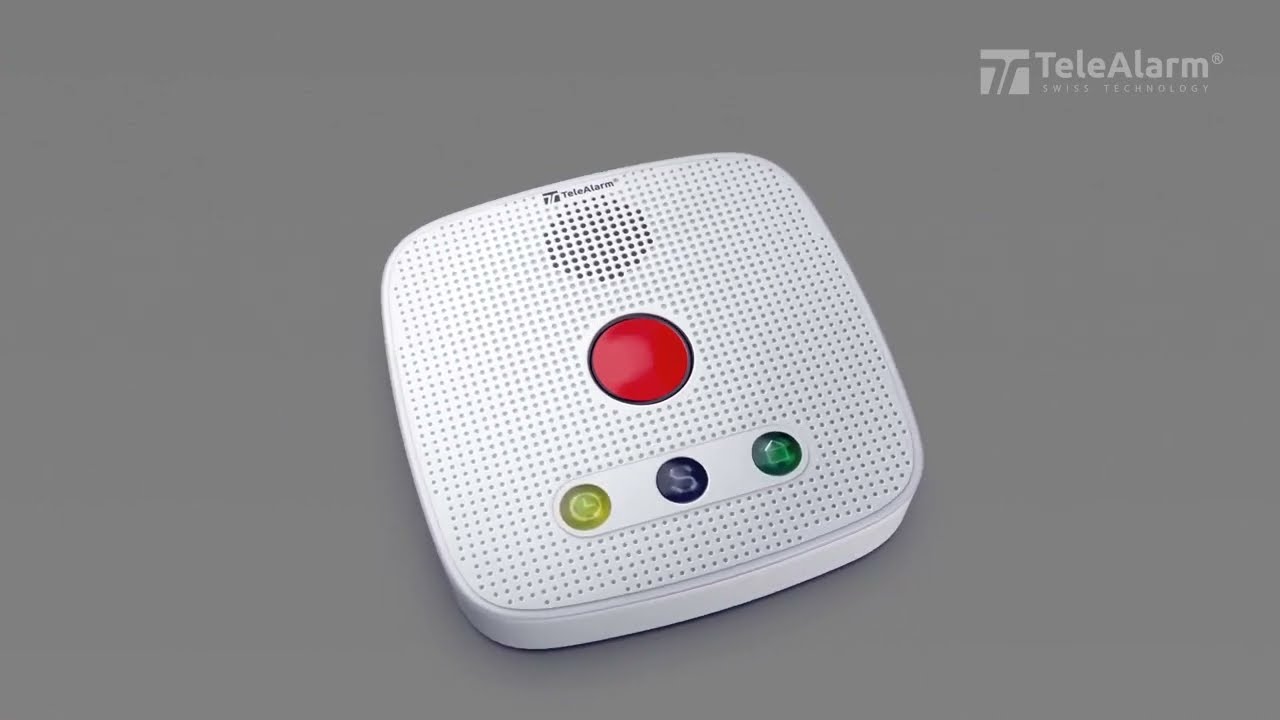
Base Unit: The base station is a small box installed in the home. It includes a speaker and microphone for hands-free communication, as well as, depending on the model, easily accessible buttons for emergency calls, the passive alarm function, an activation and deactivation button, and a device status button.
Transmitter: The actual home emergency call device is a small transmitter that can be worn as a bracelet or necklace, depending on the model. Pressing the button connects you to the predefined emergency call center.
The installation and setup of the system should ideally be done by an experienced home emergency call provider.
Connection to the Landline Telephone Network: If the household to be secured has a landline telephone connection, the home emergency call system can be installed there. The base unit is connected to the telephone socket and a power source.
Connection to Mobile Networks & VoIP: If there is no landline connection in the household, the home emergency call system can be connected via mobile networks (GSM, UMTS) or VoIP.
Placement of the Base Unit: To ensure reliable operation of the home emergency call system, the base unit should be positioned strategically. It should be accessible from anywhere in the house (typically within a range of about 30-50 meters), depending on the building's structure.
For the home emergency call to be fully functional, it must be set up correctly. The easiest way to do this is via the cloud, as offered by TeleAlarm. Your device can be programmed and updated remotely over the internet. The intuitive and user-friendly interface makes it easy for you as a home emergency call provider to create programming templates and conduct mass programming – feel free to contact us for more information.

Информация по комментариям в разработке