Link to the store for shirts, mugs and hats!
https://backroads.myspreadshop.com
Join this channel to get access to perks:
/ @backroads1
Support the channel through Paypal:
[email protected]
Support through Patreon!
/ backroads1
The Second Channel
Back Roads Golf
/ @backroadsbeyond1
Youtube Channels to check out!!
Big Daddy's Mississippi
/ @bigdaddysmississippi
First church of the Masochist
/ firstchurchofthemasochisthikes
Michigander man
/ michiganderman
Grave Tales
• Grave of Oliver "The Ghost" Marcelle
What's the Deal with Danny
/ @whatsthedealwithdanny3913
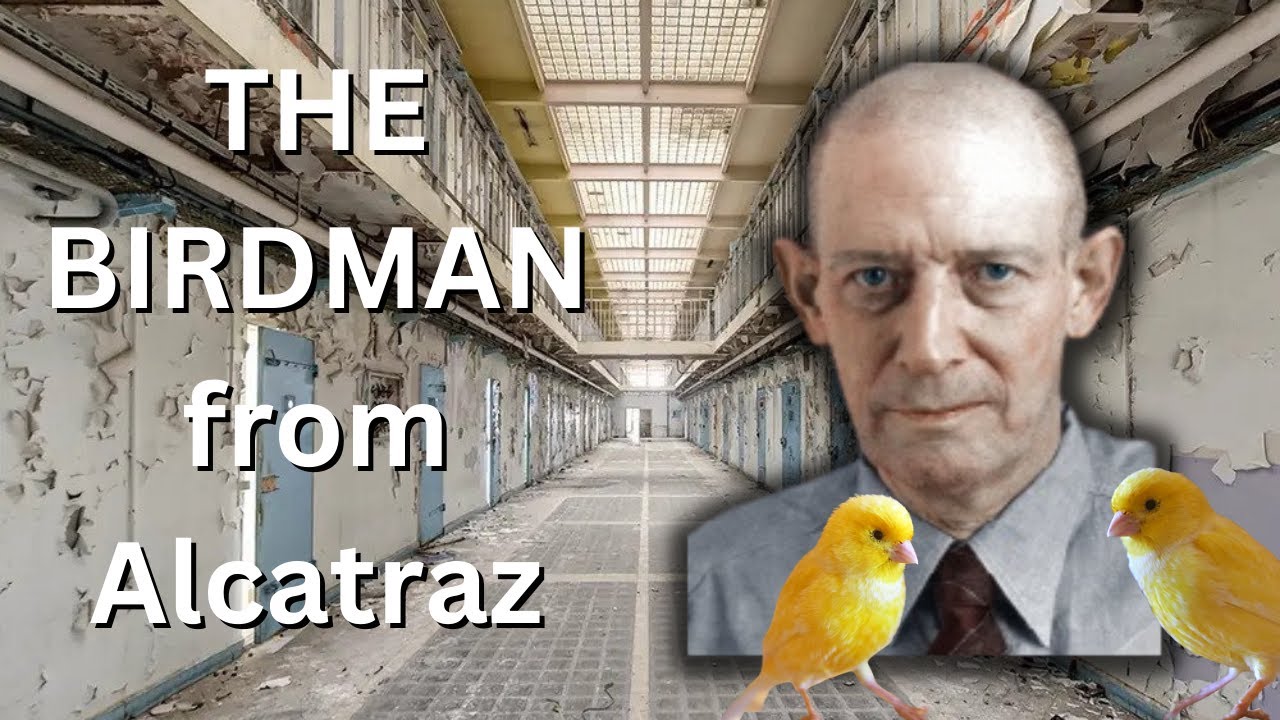
In this video, we tour the gravesite of the Birdman, also known as Ronald Stanley. The Birdman was one of the most notorious inmates on Alcatraz, and his story is one of the most tragic and intriguing in American history.
If you're interested in history, then definitely check out the Birdman of Alcatraz gravesite! This grave is a fascinating look into the life of one of America's most infamous criminals. And if you're a fan of suspenseful crime dramas, then you'll love learning about the Birdman of Alcatraz!
By the time he was 18, Stroud had made his way to Cordova, Alaska, where he met 36-year-old Kitty O'Brien, a prostitute and dance-hall entertainer, for whom he pimped in Juneau. On January 18, 1909, while he was away at work, an acquaintance, barman F. K. "Charlie" von Dahmer, allegedly failed to pay O'Brien for her services and beat her, tearing a locket from her neck that contained a picture of her daughter.
Upon discovering the incident, Stroud confronted von Dahmer, and a struggle resulted in the latter's death from a gunshot wound. Stroud went to the police station, and surrendered himself and the gun. According to police reports, Stroud knocked von Dahmer unconscious and then shot him at point-blank range.
Known as Prisoner #1853, Stroud was one of the most violent prisoners at McNeil Island, frequently feuding with fellow inmates and staff, and was also prone to many different physical ailments. Stroud reportedly stabbed a fellow prisoner who reported him for stealing food from the kitchen.
Stroud was convicted of first-degree murder for the stabbing and sentenced to death by hanging by the judge, a sentence that was overturned by the court of appeals. He was convicted in a second trial on May 28, 1917, but after receiving a life sentence, the Solicitor General John W. Davis voluntarily submitted a "confessed error" because he wanted Stroud to receive the death penalty. Stroud was tried a third time in May 1918, and on June 28, he was again sentenced to death by hanging.
While at Leavenworth in 1920, Stroud found a nest with three injured sparrows in the prison yard, and raised them to adulthood.
Prisoners were sometimes allowed to buy canaries, and Stroud had started to add to his collection. He occupied his time raising and caring for his birds, which he could sell for supplies and to help support his mother. According to Stroud, he used a "razor blade and nail for tools" and made his first bird cage out of wooden crates.
Over the years, he raised nearly 300 canaries in his cells. He also wrote two books, the 60,000-word treatise Diseases of Canaries (1933), which was smuggled out of Leavenworth, and a later edition, Stroud's Digest on the Diseases of Birds (1943), with updated, specific information. He made several important contributions to avian pathology, most notably a cure for the hemorrhagic septicemia family of diseases. He gained respect and also some level of sympathy in the bird-loving field.
On December 16, 1942, Stroud was transferred to Alcatraz Federal Penitentiary, and became inmate No. 594. He reportedly was not informed in advance that he was to leave Leavenworth and his beloved birds, and was given just 10 minutes' notice of his departure. His birds and equipment were sent to his brother as Alcatraz's strict policies meant that he was unable to continue his avocation. He spent six years in segregation and another 11 confined to the hospital wing at the penitentiary.
During his 17-year term at Alcatraz, Stroud was allowed access to the prison library, and began studying law. Occasionally, he was permitted to play chess with one of the guards. Stroud began petitioning the government that his long prison term amounted to cruel and unusual punishment. In 1959, with his health failing, Stroud was transferred to the Medical Center for Federal Prisoners in Springfield, Missouri.
However, his attempts to be released were unsuccessful. On November 21, 1963, Robert Stroud died at the Springfield Medical Center at the age of 73, having been incarcerated for the last 54 years of his life, of which 42 were spent in solitary confinement.

Информация по комментариям в разработке