Fischer's Ruthless Kingside Onslaught Shatters Larsen! Epic 1966 Chess Massacre You Can't Miss
----
The 1966 Second Piatigorsky Cup in Santa Monica, California, featured some of the world's top grandmasters, including Bent Larsen and Bobby Fischer. This particular game, played in round 15 on August 10, saw Larsen wielding the white pieces against Fischer's black in a tense King's Indian Defense (ECO E75, Averbakh Variation with Benoni Advance). Larsen opened aggressively with 1. d4 Nf6 2. c4 g6 3. Nc3 Bg7 4. e4 d6 5. Be2 O-O 6. Bg5 c5 7. d5 e6, pinning the knight early to disrupt Black's kingside development. Fischer countered sharply with 8...h6 9. Bh4 exd5 10. cxd5 g5 11. Bg3 Nh5, a modern and engine-approved move that echoes lines played by contemporary greats like Magnus Carlsen. Larsen responded by centralizing his knights with 12. Nd2 Nxg3 13. hxg3 Nd7 14. Nc4 Qe7 15. Ne3 Nf6 16. Qc2 Re8, but his plan began to falter as he oscillated his bishop between b5 and e2 (17. Bb5 Rd8 18. Be2 Re8), wasting tempi and allowing Fischer to reposition without penalty.
The middlegame ignited around move 19 with Larsen pushing f3 and g4 to solidify his kingside, but Fischer maneuvered patiently: 19. f3 Nh7 20. g4 Nf8 21. a4 Ng6 22. Kf1 Rb8 23. Bb5 Rd8. Larsen's ambitious 24. Nf5 aimed to sacrifice the knight for activity, intending exf5 followed by Ne4 to pressure f6 and potentially exchange on h6. However, Fischer's brilliant 24...Bxf5! exchanged his passive bishop for Larsen's active knight, disrupting the plan and leaving White with a weakened pawn structure after 25. exf5 Ne5 26. Ne4. Larsen continued with 26...a6 27. Be2 Nd7 28. Re1 Nf6 29. Nc3 Qd7 30. a5 Re8 31. Kf2 Qc7 32. Ra1 c4, but his defensive repetitions (like moving the rook to a1 to protect a5) showed hesitation, allowing Fischer to break open the queenside with 32...c4 and shift focus to a devastating kingside attack.
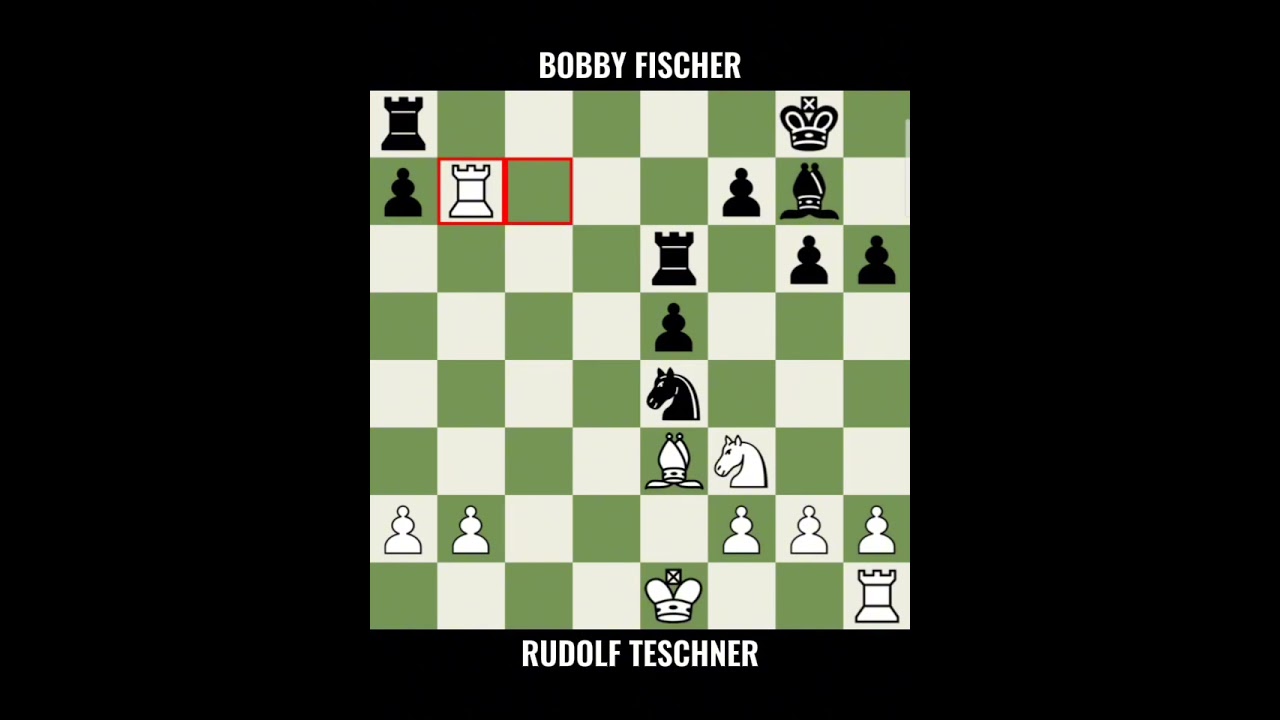
Fischer ramped up the pressure with 33. Kg3 Re3 34. Qd2 Rbe8 35. Rhe1 h5, threatening to crack open lines with h4+. Larsen's 36. Bf1 Nxg4 exploited the pinned f-pawn, forcing 37. Rxe3 Rxe3 38. Kh3 Qe7 39. g3 Bxc3 40. bxc3 Rxf3. Here, Fischer's tactical precision shone: 41. Re1 Re3 42. Rxe3 Qxe3 43. Qxe3 Nxe3 left Larsen hopelessly down material, with his bishop trapped and kingside in ruins. Larsen resigned after 43...Nxe3, as any attempt to save the position would lose even more pawns or pieces – for instance, checks with the knight could capture on g3 or c3, netting Fischer a four-pawn advantage. Larsen's key errors included inefficient bishop maneuvers, overambitious knight sacrifice without follow-up, and passive defense on the queenside, while Fischer's brilliance lay in his precise exchanges, queenside breakthrough, and relentless kingside exploitation. This victory was part of Fischer's remarkable second-half surge in the tournament, where he climbed from near-last to second place behind Boris Spassky, showcasing his resilience. Notably, this was the rematch after Larsen had beaten Fischer earlier in the event – the only win Larsen ever scored against him – adding personal stakes to the battle.
---
Bobby Fischer vs Bent Larsen 1966, Second Piatigorsky Cup chess analysis, King's Indian Defense E75, Fischer win Larsen loss, chess history iconic games, Averbakh Variation Benoni, Fischer kingside attack, Larsen mistakes 1966, Piatigorsky Cup round 15, chess tactics sacrifices, Bobby Fischer comeback story, Bent Larsen vs Fischer rematch, classic chess middlegame strategies, endgame domination Fischer, historical chess tournament highlights
----
#BobbyFischer #BentLarsen #ChessLegends #KingsIndianDefense #PiatigorskyCup #ChessHistory #FischerWins #ChessAnalysis #GrandmasterBattles #ChessTactics #EpicChessGames #1966Chess #ChessMasterclass #KingsideAttack #ChessBrilliancy







Информация по комментариям в разработке