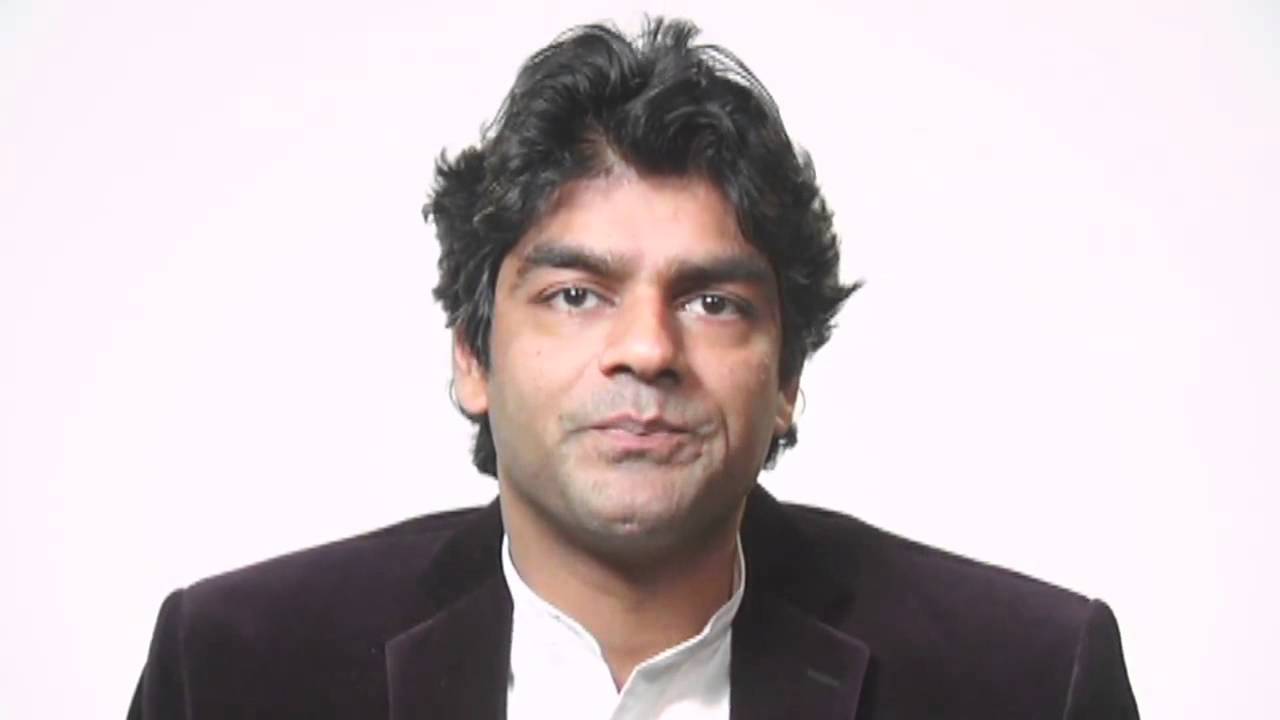
A Big Think Interview With Raj Patel
New videos DAILY: https://bigth.ink/youtube
Join Big Think Edge for exclusive videos: https://bigth.ink/Edge
----------------------------------------------------------------------------------
A conversation with the British author and activist.
----------------------------------------------------------------------------------
Raj Patel:
Raj Patel has worked for the World Bank and WTO and been tear-gassed on four continents protesting against them. Writer, activist, and academic, he is currently a visiting scholar at UC Berkeley’s Centre for African Studies, a researcher at the School of Development Studies at the University of KwaZulu-Natal, and a fellow at The Institute for Food and Development Policy, also known as Food First.
----------------------------------------------------------------------------------
TRANSCRIPT:
Question: Where are you from?
Raj Patel: I was born in London, but I’m a mutt. My mother was born in Kenya, my father was born in Fiji, my ancestors are from India. And I grew up in London and spent, basically, most of my time in the basement of the convenience store that my parents ran. [
Question: What inspired your activism?
Raj Patel: Growing up in Britain, but as part of a south Asian family was big in ways that I didn’t expect. There was this transformative moment for me that I remember – I think I was about six years old. My parents had taken me and my brother to India so that we would ‘know what is it to be Indian,’ and we would learn some Guarati, which is the language my parent spoke at home. And we were at a stop light in Bombay, I think, and we were inside a taxi and it was raining. And all of a sudden, there was this knocking sound at the window, a sort of tap, tap, tap. And outside the window was a girl, I would imagine she was an adolescent, and in her hands was a tiny baby and the baby was crying and crying and crying. And there was screaming outside the car and she was tapping on the window asking for money. And soon there was screaming inside the car because I was howling. I wanted it to stop. I wanted my parents to give her some money. And then as we drove away from the lights, I kept on howling. And I wanted to know why that was? Why was she on the outside of the car and why were we on the inside? Why does she not have a home and we did? How come we could afford to fly to India and she was begging at a street light?
Now, that kind of experience – I’m not trying to make myself out as anyone special, everyone has that moment. One of the most – something you’re guaranteed to hear in any playground are howls of “that’s not fair.” We all have that. But for me, that moment never really left me. I still carry that little girl around with me.
And after that happened, I went back to Britain and I started renting out my toys to my friends and their parents would give them pocket money so that they could play with whatever toy it was that I had. And I would give that money to charity, to aid – the thing in the news then was the famine in Ethiopia, so we sent the money off to Ethiopia. And I found myself to be a sort of junior capitalist turned philanthropist. But there is only so much toy rental you can do before you realize actually, the problem is still there. And being exposed to the persistent problems in India, year after year, made me realize that short-term fixes like sending overseas aid, while tremendously important, are not sufficient, and you need to get to the deeper root causes of things.
I studied in Britain and in the United States and in South Africa both looking for those answers and also learning from people who purported in some cases and who actually did, in other cases, have answers to how to address the deeper root causes of poverty.
Question: What is a common misperception about hunger?
Raj Patel: One of the things that I learned from groups around the world, particularly looking at issues of hunger, is that the root cause of hunger isn’t that there is a shortage of food. There’s more than enough food on earth today to feed everyone 1 ½ times over. We’ve go plenty of food on this planet. But there reason people are going hungry is not because of a shortage of food, but because of poverty. So, people are not sitting idly by waiting for food to fall into their laps. There is that kind of vision, particularly when we are thinking about how to change the world. Sometimes you’ll hear this line of “Give a man a fish and you feed him for a day, but teach a man to fish and you feed him for a lifetime.” All of us can kind of get behind that, and think, yeah that’s pretty cool. Yeah, teach a man fish feed him for a lifetime. But the trouble is, think about what sort of image that rests upon. It has at heart, the idea that you’ve given a man a fish –
Read the full transcript at https://bigthink.com/videos/a-big-thi...

Информация по комментариям в разработке