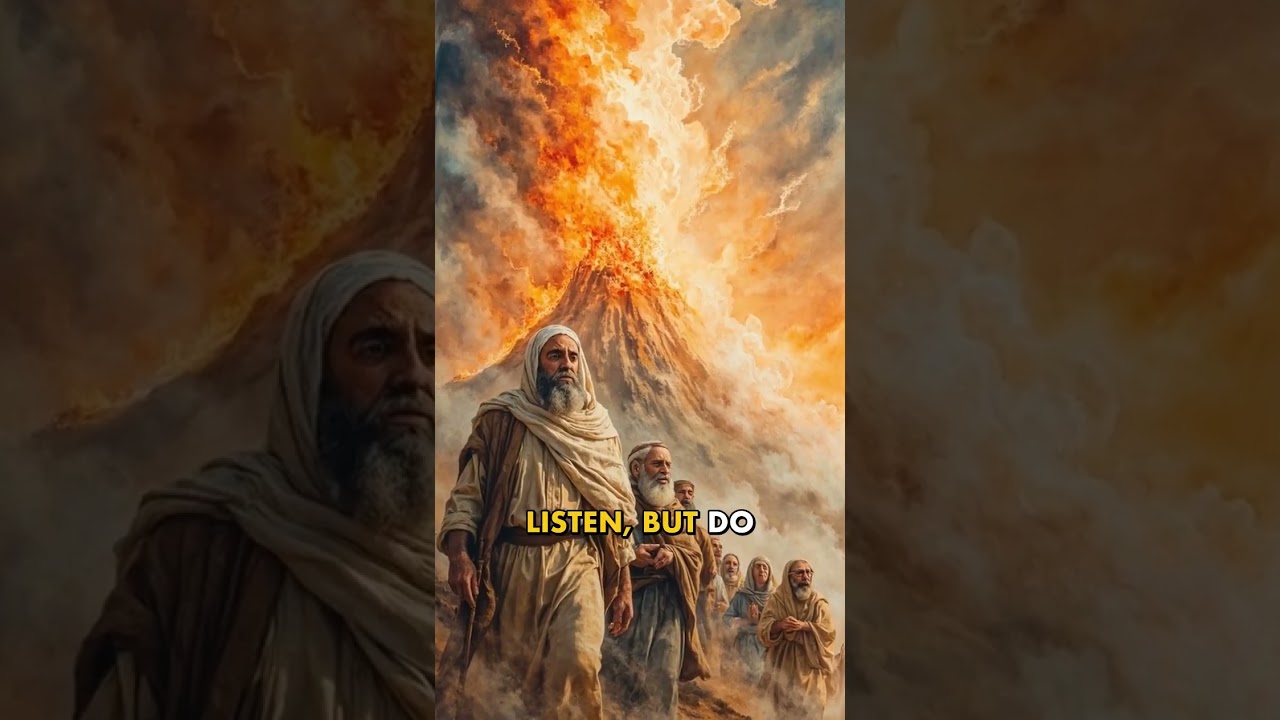
Picture this: A mountain wrapped in thick smoke, trembling violently as thunder crashes overhead. Lightning tears through dark clouds while a trumpet blast grows louder and louder. At the base of this terrifying scene, an entire nation stands in fear, witnessing something no human had ever seen before. This is Mount Sinai, and God is about to change history forever. Three months have passed since the Israelites escaped Egypt's brutal slavery. They've crossed the Red Sea on dry ground, watched their enemies drown, and journeyed through the wilderness. Now they're camped at the foot of Mount Sinai in the desert, approximately two million people waiting for something extraordinary. God has brought them here for a specific purpose: to transform them from a group of freed slaves into His holy nation, bound by covenant and law. Moses stands at the center of this story. He's the eighty-year-old leader who confronted Pharaoh, who raised his staff over the Red Sea, and who now serves as mediator between God and Israel. God calls Moses up the mountain and delivers a message for the people. In Exodus 19:5-6, God declares, "Now if you obey me fully and keep my covenant, then out of all nations you will be my treasured possession. Although the whole earth is mine, you will be for me a kingdom of priests and a holy nation." Moses descends and shares God's words with the elders. The people respond unanimously, promising to do everything the Lord commands. But they have no idea what's coming. God instructs Moses to consecrate the people, to have them wash their clothes and prepare themselves. For three days, they must purify themselves because on the third day, God Himself will descend upon Mount Sinai in the sight of all the people. God establishes strict boundaries around the mountain. No person or animal can touch it, or they'll die. The holiness of God's presence is so intense that even proximity without permission means death. This isn't arbitrary harshness. It's a profound lesson about God's nature. He's not a cosmic buddy or a divine vending machine. He's the Creator of the universe, perfectly holy, and His presence is both wonderful and terrifying. The third day arrives. Morning breaks over the desert, and suddenly the mountain erupts with supernatural phenomena. Thick clouds descend upon Sinai's peak. Thunder booms across the valley. Lightning flashes continuously. A trumpet sound, not made by human hands, blasts louder and louder until the people tremble with fear. The entire mountain shakes violently, as if the earth itself can barely contain God's presence. Smoke billows up like a furnace because the Lord has descended in fire. Moses leads the people out of camp to meet with God, and they stand at the foot of the mountain. The trumpet grows impossibly loud. Moses speaks, and God answers him in thunder. The spectacle is overwhelming. These people have seen the plagues in Egypt, they've walked through the parted sea, but nothing compares to this moment. God is revealing Himself in power and majesty. God calls Moses to the summit. Alone, this elderly shepherd climbs into the smoke and fire, into the very presence of God. What happens next will echo through all of human history. God speaks the Ten Commandments, and these aren't suggestions or helpful guidelines. They're the foundational laws for human society, the moral framework that will influence civilization for thousands of years. The first commandment establishes priority: "You shall have no other gods before me." In a world filled with idols and false deities, God demands exclusive worship. The second forbids making idols or images to worship. God is spirit, and He won't be reduced to human craftsmanship. The third protects God's name from misuse, demanding reverence in speech. The fourth sets apart the Sabbath day as holy, creating rhythm between work and rest, between human effort and divine provision. Then the commandments shift from our relationship with God to our relationships with each other. The fifth commands honoring parents, establishing family structure and generational respect. The sixth forbids murder, protecting human life's sanctity. The seventh forbids adultery, guarding marriage's covenant. The eighth forbids stealing, securing property rights and economic justice. The ninth forbids false testimony, making truth the foundation of justice. The tenth forbids coveting, addressing not just actions but the heart's desires. These ten statements cover everything: worship, speech, time, family, life, marriage, property, truth, and contentment. They're brilliantly comprehensive, addressing both external behavior and internal attitude. They reveal God's character and His expectations for human society.

Информация по комментариям в разработке