#kolkata #kolkataairport #ccu
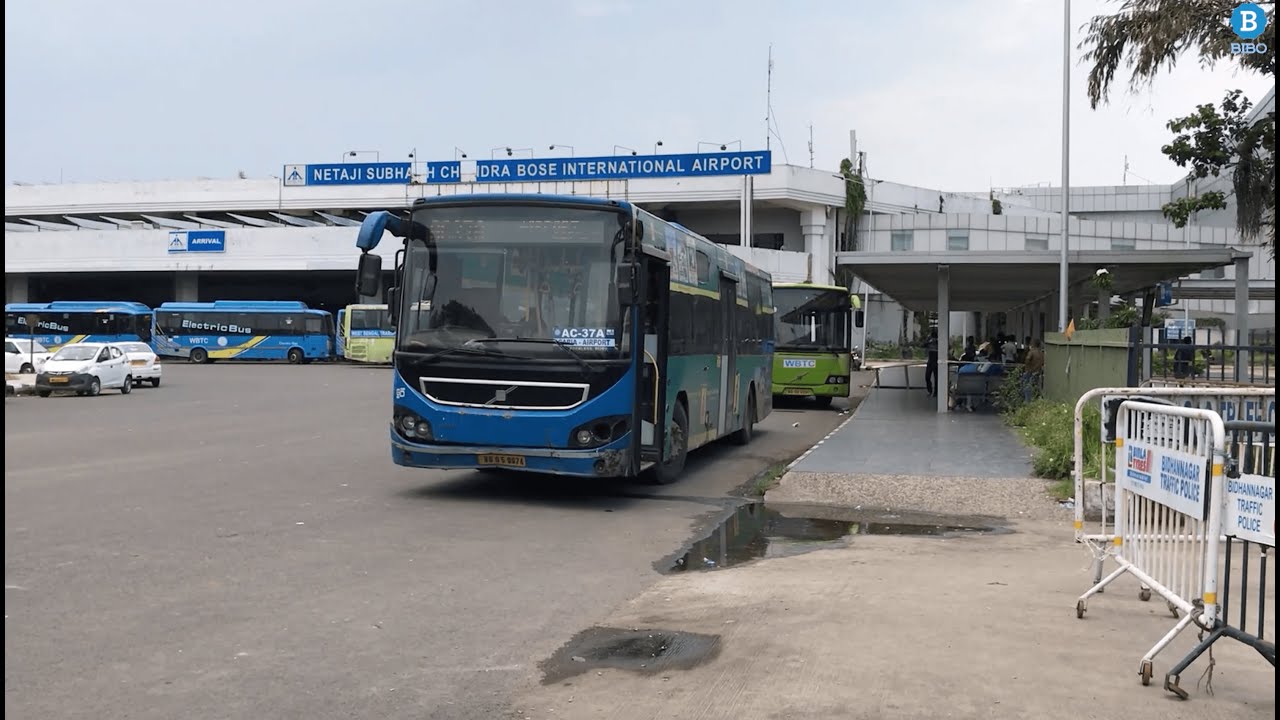
Netaji Subhas Chandra Bose International Airport (IATA: CCU, ICAO: VECC), also known as Kolkata Airport and Calcutta Airport, serves Kolkata, capital of West Bengal state, India.
KOLKATA AIRPORT SERVICES
See some of the Services and Amenities at Kolkata Airport:
Free Wi-Fi
Baby care facilities
ATMs
Currency exchange
Shops and Restaurants
Duty free stores
Medical Services
Pharmacy
CONTACT
Address: Jessore Rd, Dum Dum, Kolkata, West Bengal, 700052, INDIA
Phone (24x7 Helpline): +91 3325118036
Email: [email protected]
Netaji Subhas Chandra Bose International Airport (IATA: CCU, ICAO: VECC) is an international airport located in Dum Dum, West Bengal, India, serving the Kolkata metropolitan area.[4] It is located approximately 17 kilometres (11 mi) from the city centre. The airport is locally known as Kolkata Airport and also was earlier known as Dum Dum Airport before being renamed in 1995 after Netaji Subhas Chandra Bose, a prominent leader of the Indian independence movement. Kolkata Airport is one of the oldest airports in India, which was opened in 1924.
Spread over an area of 1,641 acres (664 ha), Kolkata Airport is the largest hub for air traffic in the eastern part of the country and one of two international airports operating in West Bengal, the other being Bagdogra. The airport handled almost 20 million passengers in financial year 2017-18 making it the fifth-busiest airport in India in terms of passenger traffic after airports at Delhi, Mumbai, Bangalore and Chennai. The airport is a major centre for flights to Northeast India, Bangladesh, Bhutan, China, Southeast Asia and the Middle Eastern cities of Dubai, Abu Dhabi and Doha. In 2014 and 2015, Kolkata Airport won the title of Best Improved Airport in the Asia-Pacific region awarded by the Airport Council International.
Kolkata Airport traditionally served as a strategic stopover on the air route from Europe to Indochina and Australia. Many pioneering flights passed through the airport, including Amelia Earhart's in 1937. In 1924, KLM began scheduled stops at Calcutta, as part of their Amsterdam to Batavia (Jakarta) route.The same year, a Royal Air Force aircraft landed in Calcutta as part of the first round-the-world expedition by any air force.
The airport began as an open ground next to the Royal Artillery Armoury in Dum Dum.Sir Stanley Jackson, Governor of Bengal, opened the Bengal Flying Club at Calcutta aerodrome in February 1929 In 1930, the airfield was made fit for use throughout the year,and other airlines began to utilise the airport. Air Orient began scheduled stops as part of a Paris to Saigon route,and Imperial Airways began flights from London to Australia via Calcutta in 1933.This began a trend that drew many airlines to Calcutta airport.
Calcutta played an important role in the Second World War. In 1942, the United States Army Air Forces 7th Bombardment Group flew B-24 Liberator bombers from the airport on combat missions over Burma. The airfield was used as a cargo aerial port for the Air Transport Command, and was also used as a communication centre for the Tenth Air Force.
Passenger services grew after the Second World War. Calcutta became a destination for the world's first jet-powered passenger aircraft, the de Havilland Comet, on a British Overseas Airways Corporation (BOAC) route to London. Furthermore, in 1964 Indian Airlines introduced the first Indian domestic jet service, using Caravelle jets on the Calcutta–Delhi route.
Between the 1940s and 1960s, the airport was served by several major airlines including Aeroflot,Air France,Alitalia, Cathay Pacific, Japan Airlines,Philippine Airlines,KLM, Pan Am,Lufthansa,Swissair and SAS.
Due to the introduction of longer-haul aircraft and the poor political climate of Calcutta during the 1960s, several airlines discontinued their service to the airport. The 1971 Bangladesh Liberation War saw a large increase of both refugees and disease in Calcutta, causing more airlines to cease services to the city. In 1975, the airport opened the first dedicated cargo terminal in India.
In the early 1980s, plans emerged to connect the airport with the city center by tram. The proposed route went to the airport from Maniktala, via Vivekananda Road, Ultadanga and Kazi Nazrul Islam Avenue. The line partly completed 1985, but further expansion to the airport was cancelled due to the financial downing of Calcutta Tramways Company. The extension proposal re-appeared in 1999, but was cancelled.
The 1990s saw new growth for Calcutta airport, as the Indian aviation industry saw the arrival of new airlines such as Jet Airways and Air Sahara. A new domestic terminal named Terminal 2 was opened in 1995 making the international one Terminal 1, and the airport was renamed in honour of Netaji Subhas Chandra Bose.In 2000, a new international arrival hall was opened.

Информация по комментариям в разработке