Institute of Archaeology and Ethnology of the Polish Academy of Sciences and Institute of Archaeology of the National Academy of Sciences of Ukraine organized at November 5–6, 2021 International scientific conference: Olbia during the reign of the Huns, IV-V centuries
More info at / 3098222473835465
Maria V. Novichenkova
Metal objects from the R-23 excavation area in Olbia Pontica (2016–2018, 2021): Classical, Roman and Chernyakhov culture periods
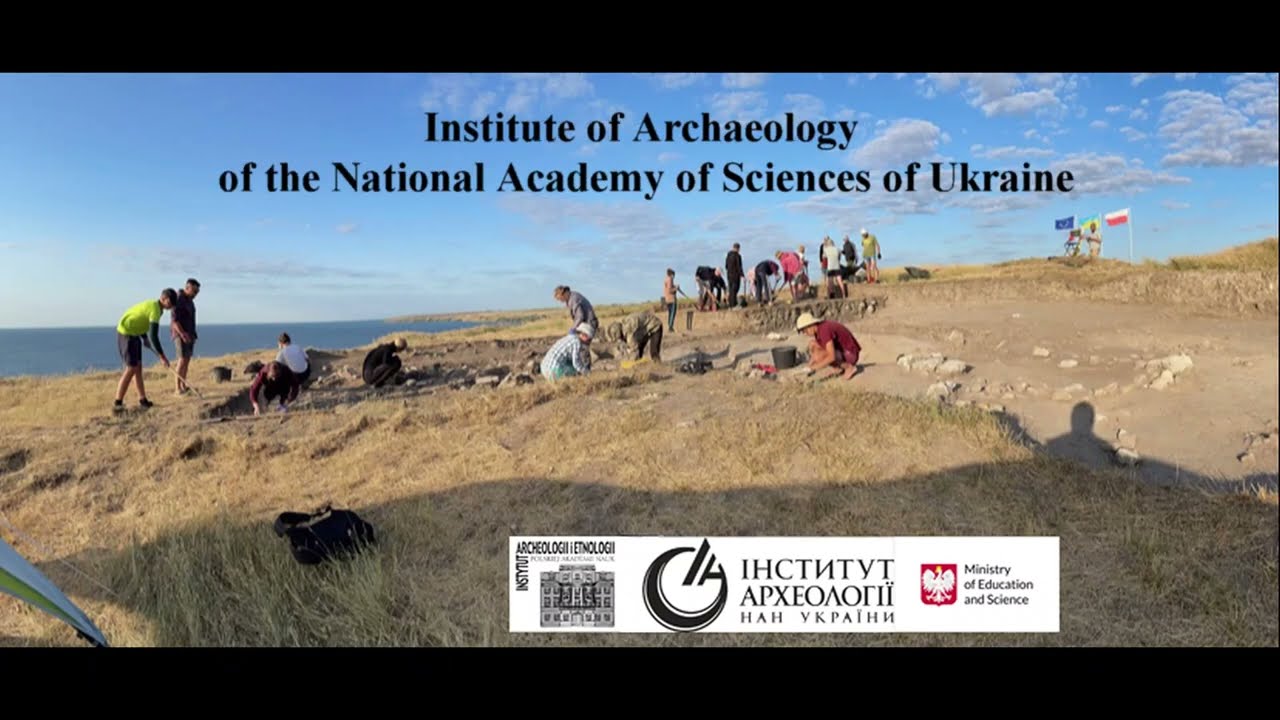
The previously unexplored site R-23 in the southeastern part of the Olbia citadel, excavated from 2016 within the frame of the Ukrainian–Polish project, had proved the significant scientific results from the first years of investigations. The selection of area for research located promisingly on the highest promontory in the Dnieper-Bug estuary, in the central part of the citadel, suggested that this territory could actively develop in antiquity, as a location of great strategic importance for the city. Geophysical prospection of the area has revealed the presence of large architectural structures constituting a part of planned urban development.
The socio-cultural and chronological section, reflecting the peculiarities of life in this territory in different historical periods, was the study of metal items from the R-23 site. The artifacts, a high saturation of which was recorded in all of the strata investigated at this site, cover objects made of silver, bronze, iron and lead, silver and bronze coins included. They represent the main stages of urban and economic development in Olbia, focusing in particular on the Roman and Late Antique periods.
During the study of the upper strata and objects of the Late Antique time, for the first time on the R-23 site on a wide area, the study of the quarter development was partially revealed and began to study - the objects of stone construction, a detached building and a semi-dugout with the remains of hearths, confidently correlated with the carriers of the Chernyakhov culture. Along with ceramics and glass items, metal objects were revealed in the layer, which are clear chronological markers fixing and confirming the existence and development of the Chernyakhov culture in Olbia in the last third of the 3rd - 4th centuries AD, highlighting the final stage of its existence, as well as the life of the settlement, which ended in the first third - first half of the 5th century AD.
The Roman phase is characterized by extensive economic and building activities in this area of an Upper City associated primarily with the deployment of a part of the Roman vexillatio in this section of the Olbia citadel in the 2nd through the first half of the 3rd centuries AD. The metal artifacts from the Roman period are represented by Roman cingulum militare personal equipment, ship nails, camp and household items, including Roman provincial bronze ware, locks, medical instruments, samples of local products from the workshops of the Northern Black Sea region.
The peculiarities of an area location and the finds of redeposited votive metal objects of Classical and Hellenistic attribution, residual in the Roman and Late Antique layers, are both a tentative indication of function of a cult structure in this area — the third after the Central and the recently discovered Southern temenoi — during the existence of Olbia as a polis.

Информация по комментариям в разработке