Click for more info and reviews of this Draw-Tite Trailer Hitch:
https://www.etrailer.com/Trailer-Hitc...
Check out some similar Trailer Hitch options:
https://www.etrailer.com/fitguide.htm
Search for other popular GMC Acadia parts and accessories:
https://www.etrailer.com/vehicle/2016...
https://www.etrailer.com
Don’t forget to subscribe!
/ etrailertv
Full transcript: https://www.etrailer.com/tv-install-t...
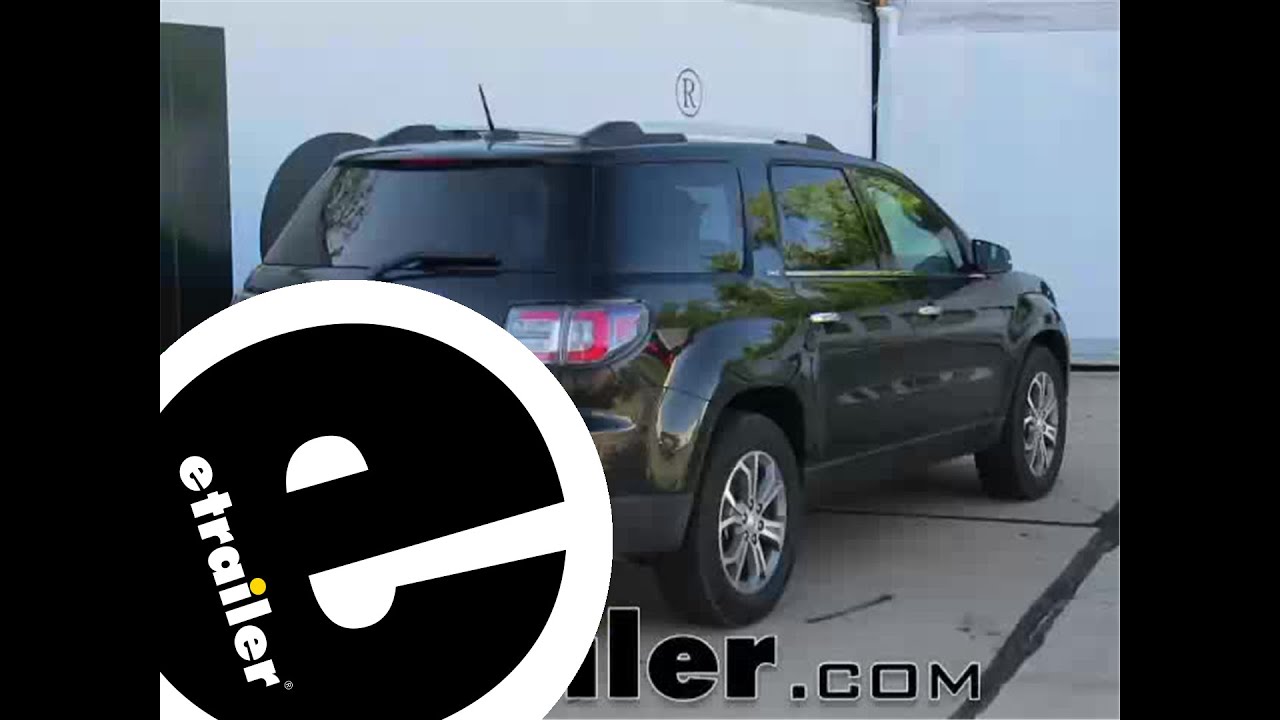
Today on our 2016 GMC Acadia we're going to review and install the Draw-Tight Class 3 2" Receiver Tube Hitch, part number 75528. Now, here's what our hitch is going to look like once it installed. This application has a nice stylish round cross-tube design that comes into the receiver tube. It's a fully-welded construction and the entire hitch has a nice black powder-coated finish to resist rust and corrosion. One of the really nice features about this hitch is the pre-installed bracket. This bracket could be used to attach your trailer or electrical accessories.
Here on each side of the receiver tube is the easily-accessible chain hold downs. We've got a standard 5/8" pin hole going all the way through the receiver tube along with a secondary 1/2" pin hole. This is designed for the j-pin style anti-rattle bolt and lock. This a Class 3 2" by 2" receiver tube that's capable of up to 750 pounds of tongue weight and a 5,000 pound tow capacity. Next, we'll go ahead and give you a couple of measurements to assist you in selecting accessories for your new hitch. From the center of the hitch pin hole to the outermost edge of the bumper is 5".
From the top of the receiver tube opening down to the ground is 18-3/4". This will assist you in selecting accessories such as a ball mount, bike rack, or cargo carrier. Now I'll go ahead and show you just how easy it is to install the hitch. To begin our install, we need to remove the rear fascia panel. To do that, we simply unlock it, one on each corner, then we'll pull it down. It'll release the fasteners here across the top.
Next, we need to lower the exhaust, but before we do that, we want to put a safety strap in place to help hold the weight of the exhaust once we remove the hangers. Now, we're going to have a total of three rubber isolators that need to be removed from the metal hangers. To do that, we'll first spray each one with a spray lubricant. We have one here on the inside of the muffler, one on the outside of the muffler, one forward of the rear axle, just behind the front muffler. Now, to remove each one of these rubber isolators from the metal hangers, we're going to use a pry bar and pliers, just to slide one end off. Just like that, we've lowered the exhaust and exposed the frame rail.
Now, we're going to have a total of six attachment points, three on each side. These attachment points here in the bumper beam are pre-drilled holes. Note, in some applications, they could also be weld nuts. You'll have hardware for both options. Here at the frame rail, we're going to have two weld nuts. These weld nuts are built into the frame by the manufacturer, so only simply add hardware to secure the hitch. Now, before we attempt to install the hardware into the weld nuts, we're going to want to clean them out, because over time they build up with rust, dust, dirt, and debris. Using a spray penetrant and 1/2" nylon tube brush, part number 814092, we can thoroughly clean out the threads. This will make it easier to get the new hardware started and installed. Once we have it cleaned out, we'll go ahead and take one of the new fasteners, thread it into the weld nut to make sure it'll go nice and easily. Once we have it cleaned out and tested, we'll go ahead and repeat the same process for the remaining weld nuts. Each on of the weld nuts is going to get a bolt and a conical-tooth washer. The teeth of the washer will face the hitch as the 12mm bolt will go through the hitch and into the manufacturer's weld nut. We're now ready to put our hitch in place. It's a good idea to get an extra set of hands to help you hold the hitch while you install your fasteners. We'll bring the hitch up to the frame and start by installing the weld nut hardware. As we install each fastener, we'll just go finger tight until they're all in place. Now, for our center attachment points at the bumper beam. If you have a weld nut, we'll use the same 12mm bolt and conical-tooth washer into the weld nut. For this application, it's just a pre-drilled hole, so we'll add our spacer block that'll go between the hitch and the bumper. Then, going through the access hole, we're going to use a 1/2" handle nut. This will go through the hole and line up with the pre-drilled hole in the bumper beam and our attachment point at the hitch. Then we'll take our 1/2" bolt and conical-tooth washer, going through the hitch, through the block, into the bumper channel, and then, ultimately, into the

Информация по комментариям в разработке